
When you look at your contact lens prescription, you'll see a few key numbers. One of the most important, yet often overlooked, is the base curve, or BC. This number, measured in millimeters, defines the curvature of the back surface of your contact lens.
Think of it this way: your cornea (the clear front part of your eye) has its own unique curve. The base curve of your contact lens is designed to perfectly match that specific shape. Getting this number right is the absolute foundation for a comfortable fit and crisp, stable vision.
Decoding Contact Lens Base Curve
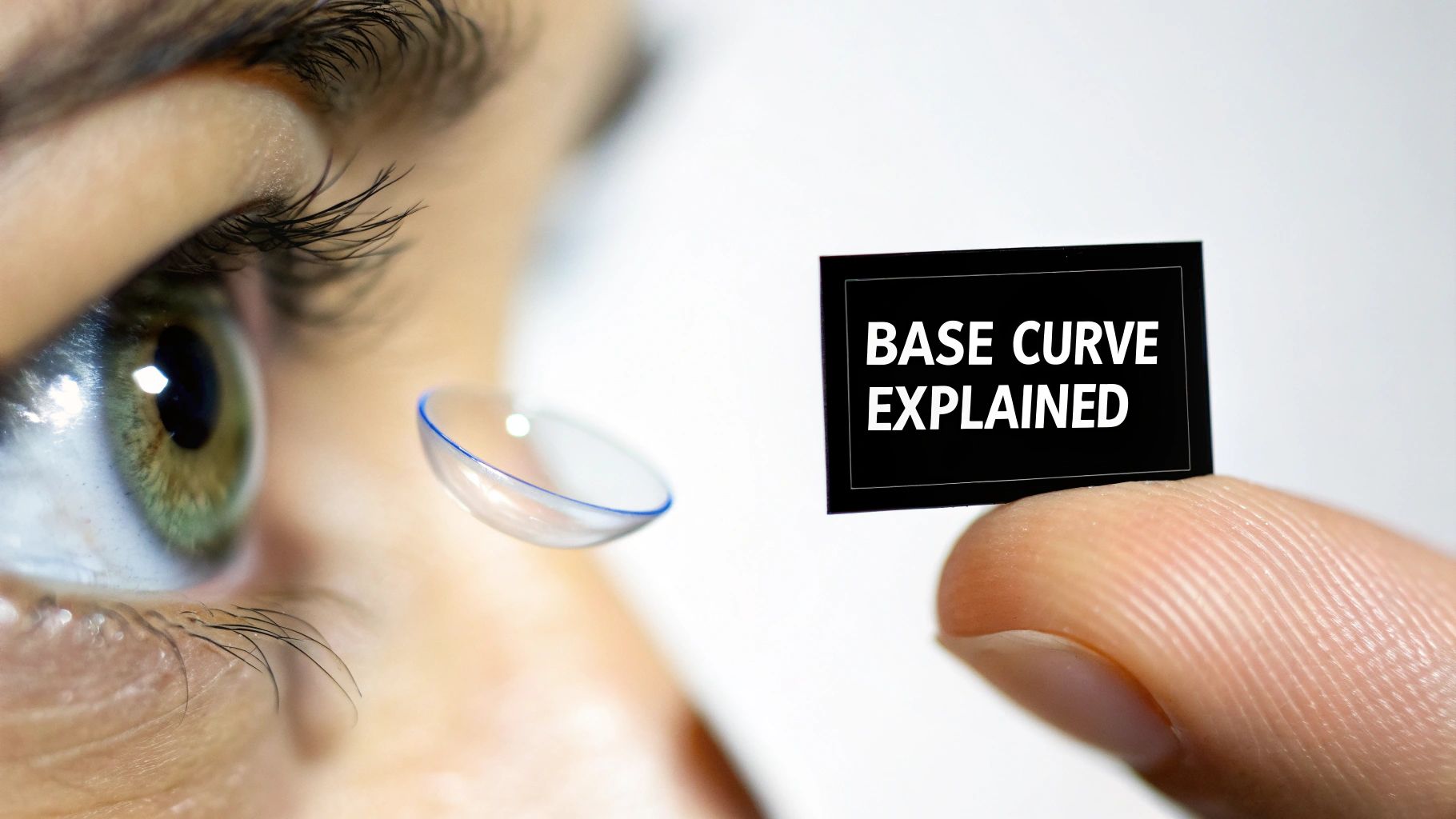
Imagine trying to place a shallow bowl upside down on a baseball. It would wobble all over the place, right? Now, imagine trying to fit that same bowl over a much larger, flatter dinner plate—it just wouldn’t work. The same logic applies to fitting a contact lens to your eye.
Your cornea isn't one-size-fits-all, and neither are contact lenses. The base curve is the measurement that ensures the lens sits snugly and securely on your eye's surface. It's a critical part of your prescription for a very good reason. A mismatch can do more than just feel a little "off"; it can cause significant discomfort and even impact your eye health.
Why the Right Fit Is Essential
A well-fitted contact lens should feel like it's not even there. It stays centered over your pupil, moves just the right amount when you blink to keep your eye hydrated with tears, and delivers consistently clear vision. When the base curve is wrong, however, you run into two common problems:
- A lens that’s too tight (a "steep" fit): This happens when the base curve is too small (a lower number) for your cornea's shape. The lens clamps down too tightly, almost like a suction cup, trapping debris and cutting off the healthy flow of oxygen and tears. This can quickly lead to redness, irritation, and potentially more serious issues down the line.
- A lens that’s too loose (a "flat" fit): This is the opposite problem, where the base curve is too large (a higher number). The lens will slide around excessively every time you blink. This not only causes blurry, unstable vision but also creates a constant, annoying sensation that something is moving in your eye. In some cases, it might even pop right out.
A contact lens is a medical device tailored to your unique eye anatomy. The base curve isn't a "one-size-fits-all" number; it’s a precise measurement determined by an eye care professional to ensure safety, comfort, and optimal vision.
To get a quick overview of these concepts, here’s a simple breakdown.
Base Curve At a Glance
| Concept | What It Means | Why It Matters |
|---|---|---|
| Base Curve (BC) | The curvature of the back of the contact lens, measured in millimeters. | It must match the curvature of your cornea for a proper fit. |
| Steep Fit (Too Tight) | The lens curve is tighter than the cornea's curve (e.g., BC 8.4 on a cornea needing 8.8). | Can cause irritation, redness, and limit oxygen flow to the eye. |
| Flat Fit (Too Loose) | The lens curve is flatter than the cornea's curve (e.g., BC 8.8 on a cornea needing 8.4). | Leads to excessive movement, blurry vision, and discomfort. |
Ultimately, understanding the role of the base curve makes it clear why a professional fitting is non-negotiable. Your eye doctor uses a special instrument called a keratometer to precisely measure your corneal curvature, taking the guesswork out of finding the perfect lens for you.
How to Read the Numbers on Your Contact Lens Box
Ever glanced at your contact lens box and felt like you were trying to crack a code? You're not alone. All those abbreviations and numbers—BC, DIA, PWR—are the secret to a perfect fit, but they can be a bit intimidating at first.
Think of these numbers as the custom blueprint for a lens designed to fit your unique eye. They work together to make sure your vision is sharp and your lenses feel like they’re not even there. Let's break down what each part means.
Distinguishing Base Curve from Other Metrics
When you're scanning your prescription or the side of the box, the base curve is easy to spot. It’s always marked as BC, followed by a number like 8.6 or 8.4. This single measurement, in millimeters, dictates the curvature of the lens's inner surface. It’s what makes the lens hug your cornea just right.
So, how is that different from the other numbers?
- Power (PWR or SPH): This is all about your vision correction. Measured in diopters, it’s the number with a plus (+) for farsightedness or a minus (-) for nearsightedness. It has nothing to do with how the lens fits, only how well you see through it.
- Diameter (DIA): This is the lens's total width from edge to edge, also in millimeters. It determines how the lens drapes across your cornea and rests on the white part of your eye (the sclera). It's a key part of the fit, but it’s completely separate from the curvature.
Getting a handle on these terms is the first step to feeling confident about your contacts. For a deeper dive into all the details, check out our guide on understanding contact lens prescriptions.
What the Base Curve Number Represents
So, what does that little BC number actually tell you? It’s a direct measurement of how "steep" or "flat" the lens is.
A smaller number, like 8.3 mm, points to a steeper curve. This kind of lens is made for someone whose cornea has a more rounded, dome-like shape. On the flip side, a larger number, like 8.9 mm, means the lens has a flatter curve, designed for an eye with a gentler slope.
Historically, most soft contact lenses fall somewhere between 8.0 mm and 9.0 mm. This range covers the vast majority of human corneal shapes, a standard developed over decades of research. If you're curious about the data, you can discover more insights about these prescribing trends and see how the industry landed on these numbers.
Key Takeaway: The BC number on your box is matched directly to the shape of your eye. Getting it right is non-negotiable for comfort, clear vision, and even the health of your cornea. The wrong BC can make a lens feel painfully tight or, just as annoyingly, slide around every time you blink.
Why a Perfect Base Curve Fit Is So Important
It's one thing to read the numbers on your contact lens box, but it's another thing entirely to understand why that little "BC" number is so critical. A perfect fit isn't just a "nice-to-have" for comfort—it's absolutely essential for keeping your eyes healthy in the long run. The right base curve ensures the lens sits on your eye just right, while the wrong one can cause everything from minor annoyance to serious problems.
Think of it like a perfectly tailored suit. When it fits just right, it moves with you, feels like a second skin, and you forget you're even wearing it. But a poorly fitted lens? That’s like wearing shoes two sizes too small—a constant source of irritation that can cause real harm.
When the Fit Is Too Tight
A contact lens with a base curve that's too steep for your cornea (meaning the BC number is too small) acts like a tiny suction cup. It clamps down on the surface of your eye, creating a seal that stops your tears from flowing naturally underneath. This is way more than just uncomfortable; it's a recipe for trouble.
A tight-fitting lens can lead to a few major issues:
- Oxygen Deprivation: Your cornea doesn't have blood vessels; it gets its oxygen from the air and your tear film. A tight lens chokes off that supply, which can lead to swelling and hazy vision.
- Trapped Debris: Without proper tear exchange, tiny bits of dust, protein deposits, and other gunk get trapped under the lens. This creates a breeding ground for irritation and increases your risk of infection.
- Redness and Discomfort: The constant pressure can leave your eyes feeling sore, strained, and looking noticeably red, especially as the day wears on.
When the Fit Is Too Loose
On the flip side, a lens with a base curve that's too flat (a larger BC number) is like a ring that's a size too big. It just slides around on your eye every time you blink, never quite settling where it needs to be over your pupil. All that movement isn't just distracting; it messes with your vision and irritates your eye.
This kind of loose fit brings its own set of problems:
- Unstable Vision: Because the lens is constantly shifting, your vision can flicker in and out of focus. It's especially noticeable when you glance around quickly.
- Corneal Irritation: The edge of the lens rubbing against your cornea with every blink can cause significant discomfort and even lead to tiny scratches on the eye's surface.
- Risk of Falling Out: A loose lens is much more likely to just pop out of your eye, which always seems to happen at the worst possible moment.
A base curve mismatch can easily lead to complications like corneal abrasions or hypoxia (lack of oxygen). In fact, you can read the full research about these fitting dynamics to see just how important a precise fit is for avoiding these issues.
The infographic below breaks down the key measurements your eye doctor takes to find that perfect, safe fit.
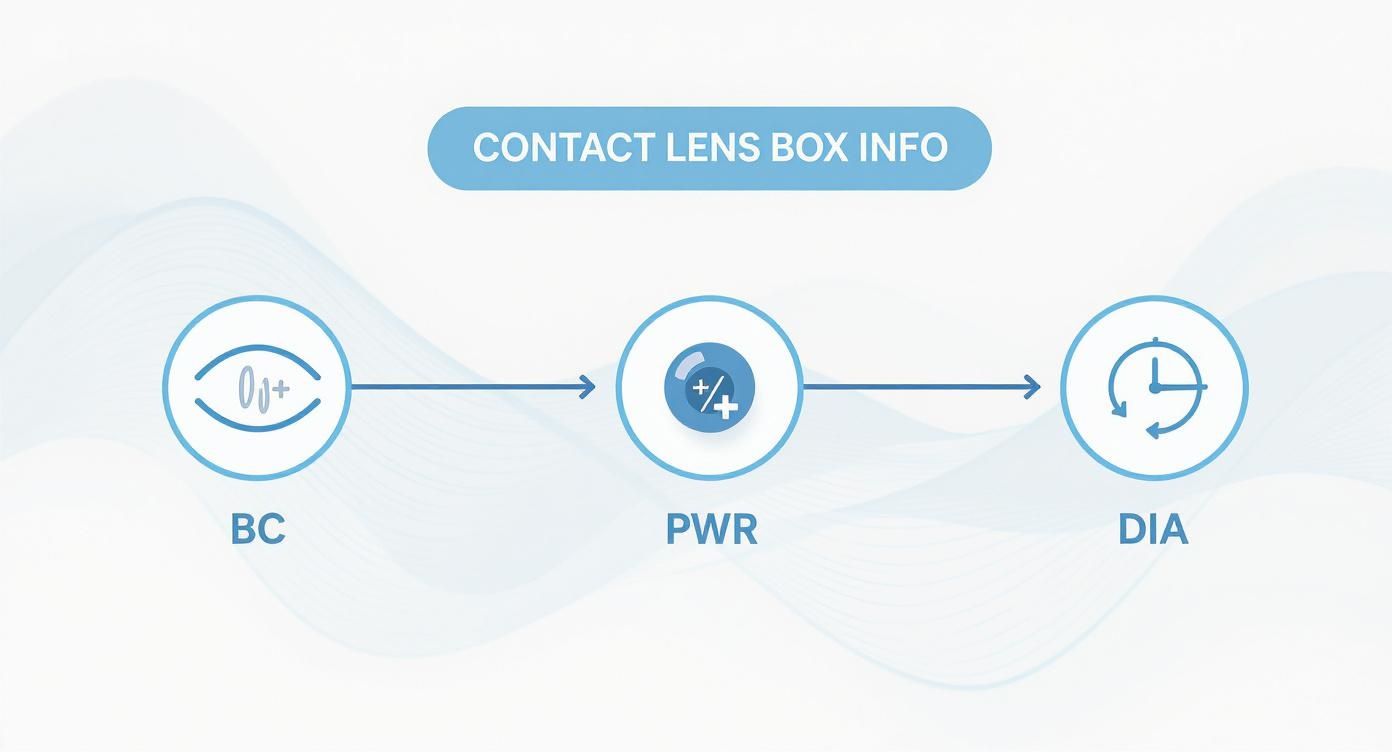
As you can see, the base curve, power, and diameter are all distinct but equally vital parts of your prescription. Symptoms of a poor fit, like dryness and irritation, can be especially tough to deal with. If that sounds familiar, our guide to managing dry eyes and contacts has some great tips that can help.
The Essential Takeaway: Your base curve isn't a suggestion or a preference—it's a precise medical measurement. Trying to wear a different BC than what you were prescribed can seriously compromise your comfort, vision, and the safety of your eyes. Always stick to the prescription from your eye care professional.
How Your Eye Doctor Measures Your Cornea's Curve
Figuring out your contact lens base curve isn't a guessing game. It’s a precise measurement process that blends sophisticated technology with your optometrist's hands-on expertise. They use special tools to map the unique surface of your cornea, which is the first and most important step to finding a lens that will fit just right.
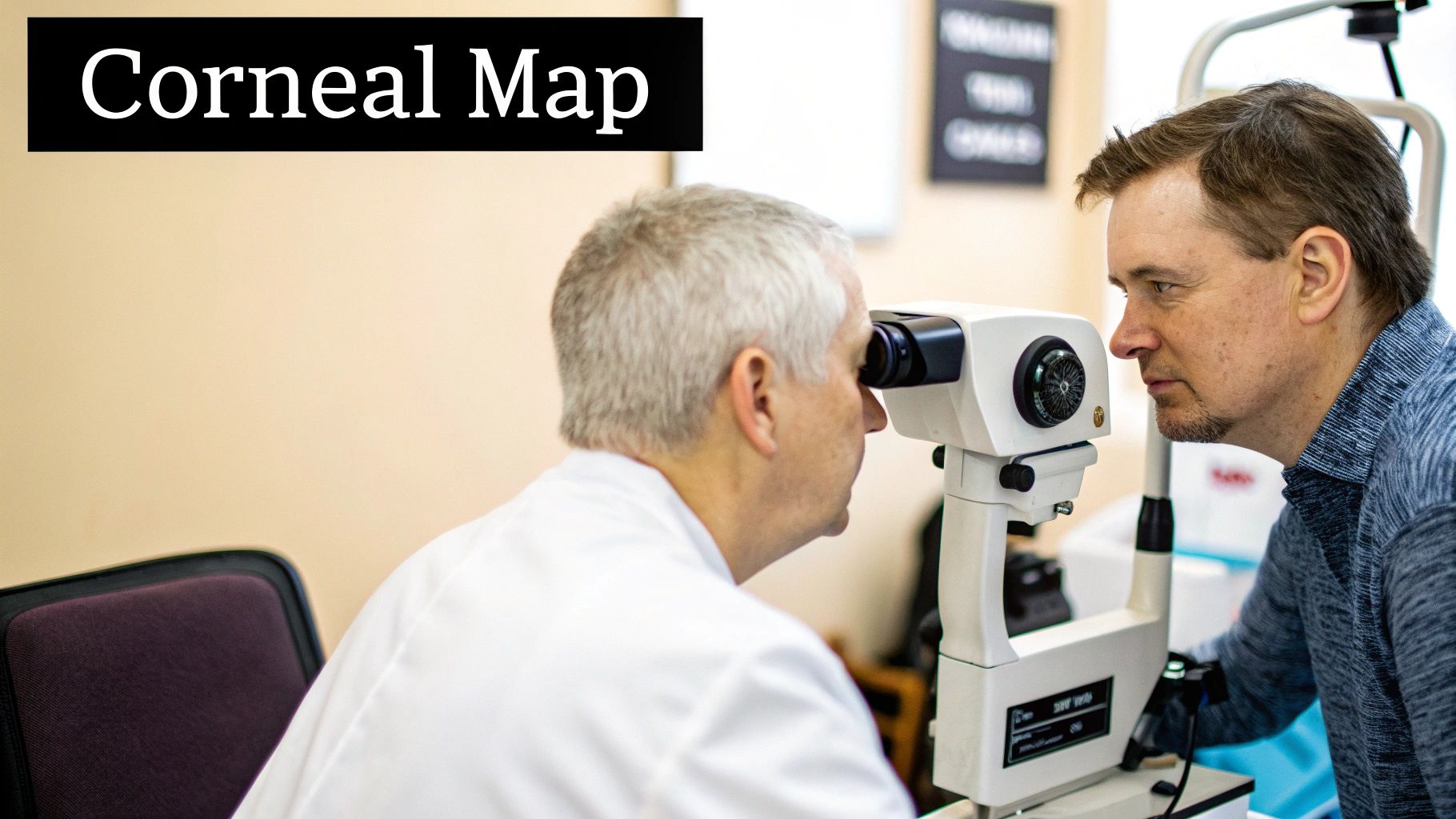
The entire measurement is quick and completely painless. Think of it like a tailor taking your measurements for a custom-fit suit—getting that initial precision right is what makes all the difference in the final product.
The Tools of the Trade
To get this critical measurement, your eye doctor will likely use one of two main instruments. Each gives a different level of detail about your eye's specific shape.
-
The Keratometer: This is the classic, go-to device you'll find in most offices. It shines a circular pattern of light onto your cornea and then measures how that light reflects back. By analyzing the shape of the reflections, the keratometer calculates the curvature of your central cornea, giving your doctor what's known as a "K reading."
-
The Corneal Topographer: For a much more detailed picture, your doctor might use a corneal topographer. This advanced instrument scans thousands of points across the entire corneal surface, creating a detailed, color-coded 3D map. This map reveals even the tiniest bumps or irregularities, making it indispensable for fitting specialty lenses or for people with conditions like astigmatism.
This measurement is a core part of any contact lens fitting, which itself is an extension of a comprehensive eye check-up.
From Measurement to a Perfect Fit
Once the instruments give your doctor the numbers, the process shifts from raw data to a real-world trial. They'll choose a diagnostic contact lens with a base curve that closely matches your cornea's measurements.
This is where the real expertise comes into play. Your optometrist will have you wear the trial lens and then use a slit lamp—a powerful microscope for your eyes—to check a few key things:
- Centration: Does the lens sit right in the middle of your pupil where it should?
- Movement: Does it move just a little bit with each blink? (A tiny amount of movement is actually healthy!)
- Coverage: Is the lens large enough to comfortably cover your entire cornea?
A successful contact lens fitting is a blend of science and art. The instrument provides the numbers, but the doctor's expertise ensures the lens interacts correctly with your unique eye physiology for all-day comfort and clear vision.
This in-eye evaluation is absolutely essential. It’s the only way to confirm that the base curve is right, allowing for proper tear flow underneath the lens and enough oxygen to reach your eye. Both are crucial for keeping your eyes healthy in the long run.
Interestingly, the average adult corneal curvature is around 43 diopters, which usually translates to a base curve of about 8.5 mm. This is why you’ll see most manufacturers produce lenses in that range, catering to the most common eye shapes.
Understanding Common Base Curve Values
Once your optometrist has taken those precise measurements of your eye, it helps to see where your own prescription fits into the bigger picture. Think of it like shoe sizes—everyone's feet are unique, but most fall within a standard range. The same goes for the curvature of your corneas, and understanding this spectrum can finally explain why one brand of contacts feels great while another just doesn't.
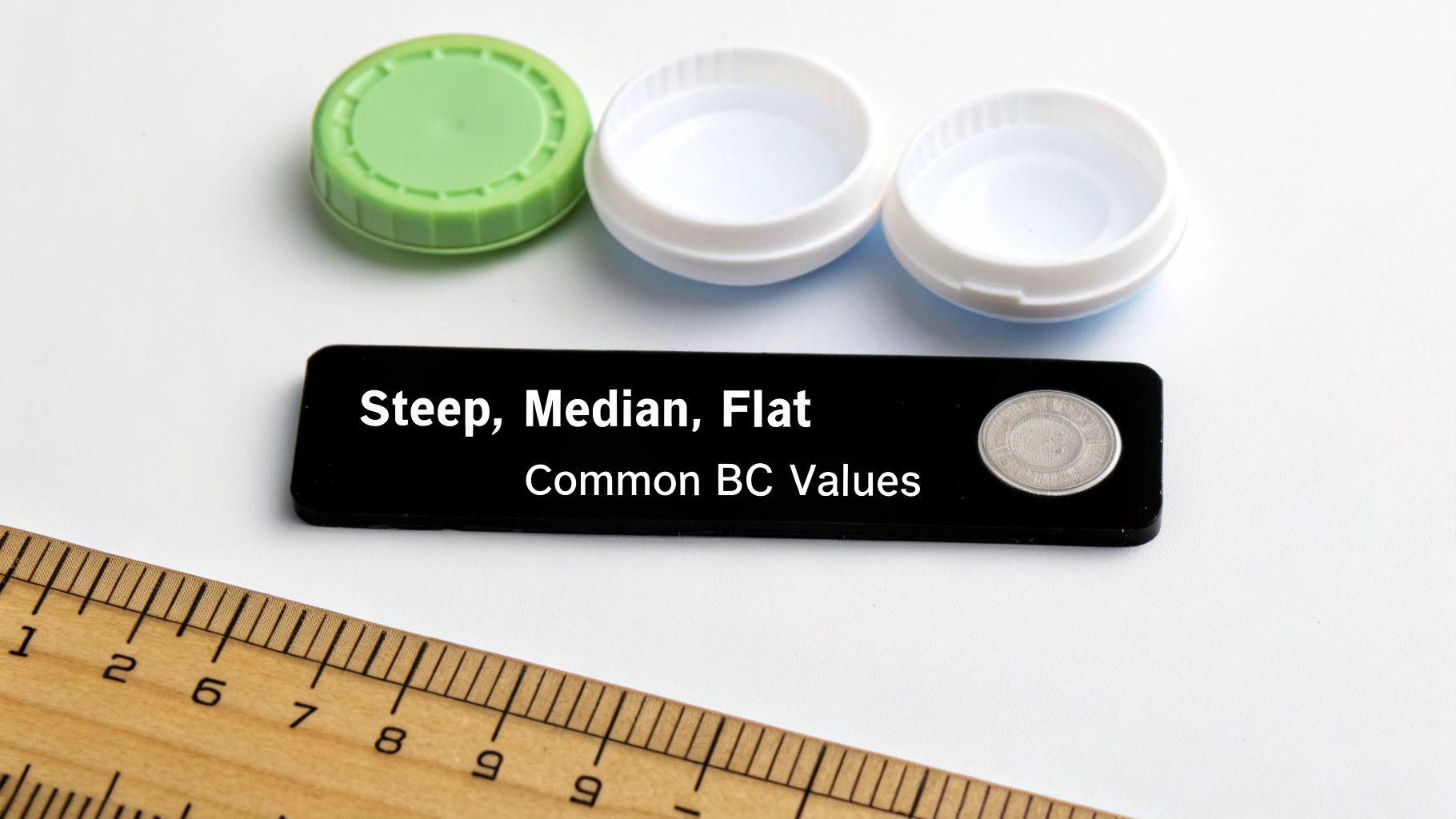
Most people have a corneal shape that lines up perfectly with the most common base curve values, which usually fall somewhere between 8.4 mm and 8.8 mm. Of course, some of us have naturally steeper (more curved) or flatter corneas that need something outside this median range. This is completely normal, but it's exactly why a "one-size-fits-all" approach to contact lenses is a recipe for discomfort.
The good news is that the vast majority of soft contact lenses on the market are made with base curves between 8.0 mm and 9.0 mm. This range is intentionally designed to comfortably fit around 90% of all contact lens wearers. You can always learn more about these contact lens market findings to see the data that drives these manufacturing standards.
Where Does Your Prescription Fall?
Seeing how these numbers relate to your actual eye shape makes a prescription feel less like a random string of digits and more like a custom blueprint. The base curve value directly corresponds to the kind of fit you need.
The table below breaks down these common ranges, helping you visualize whether your cornea is considered steep, average, or flat. Just remember, "steep" simply means more curved, and "flat" means less so. Neither is better or worse; they just need the right lens to match.
Typical Base Curve Ranges and Corneal Fit
This chart gives a general idea of how base curve measurements correspond to different corneal shapes.
| Base Curve Range (Approximate) | Fit Description | Typical Corneal Shape |
|---|---|---|
| 8.0 mm – 8.4 mm | Steep Fit | More curved or "dome-shaped" cornea |
| 8.5 mm – 8.8 mm | Median Fit | Average or most common corneal curvature |
| 8.9 mm – 9.2 mm+ | Flat Fit | Less curved cornea with a gentler slope |
Matching the lens curve to your cornea's curve is the key to a comfortable, stable fit.
Why Brand Selection Matters for Fit
Ever wonder why your eye doctor recommends a specific brand of contacts? Your base curve is almost always a huge part of that decision. Some brands might only produce their lenses in one or two "median" base curve options, like 8.5 mm. This is fine for a large chunk of the population, but it won’t work for someone with a steeper or flatter cornea.
This is precisely why grabbing the same brand as your friend can be a bad idea. The best brand for them might be a terrible fit for you if your corneas are shaped differently—even if you have the exact same vision power.
Other brands, thankfully, offer a much wider array of base curve values to accommodate more eye shapes. If your BC is 8.3 mm or 9.0 mm, your optometrist will hunt down a brand that actually manufactures lenses in that exact size. This is how they ensure your lens provides the safe, stable, and comfortable fit your eyes need to stay healthy and see clearly all day.
Can You Use a Different Base Curve Than Prescribed?
I get this question all the time, and my answer is always a firm, straightforward "no." You should never, ever wear a contact lens with a different base curve than the one your eye doctor prescribed. Think of your prescription as a custom-tailored medical specification, not a friendly suggestion.
It's easy to forget that contact lenses are regulated medical devices. Changing your BC—even by what seems like a tiny amount, like going from an 8.6 mm to an 8.4 mm—can completely throw off the fit. This kind of mismatch isn't just uncomfortable; it's a recipe for serious trouble, including painful corneal scratches, a higher risk of nasty eye infections, and long-term issues from starving your cornea of oxygen.
Why the Risks Aren't Worth the Convenience
So, you found a great sale on a different brand, but the base curve isn't quite right. Is it really a big deal? Absolutely. Sacrificing a proper fit for a bit of convenience is a gamble you don't want to take with your eyes.
An ill-fitting lens can lead to some pretty significant problems:
- Corneal Hypoxia: A lens that’s too tight acts like a suction cup, cutting off oxygen flow. This can cause your cornea to swell, leading to blurry, hazy vision.
- Infection: When a lens doesn't fit right, it can trap debris and bacteria underneath. This creates the perfect breeding ground for an infection.
- Chronic Discomfort: A lens that's constantly irritating your eye isn't just annoying—it can cause cumulative damage to the surface of your eye over time.
Today’s advanced materials make a precise fit more important than ever. For instance, silicone hydrogel lenses, which accounted for over 88% of market revenues in 2023, are designed for superior oxygen flow. But to get that benefit, the base curve has to be an exact match to allow for proper movement and tear exchange.
Your contact lens prescription is tailored specifically to your eyes for a reason. Never swap out your prescribed base curve for another one without your eye care professional fitting you first. It's the only way to guarantee your lenses are both safe and effective.
Your vision is precious, and following your doctor’s prescription is the first step in protecting it. When you're ready to reorder your supply, our guide on how to buy contact lenses online will walk you through how to do it safely with your valid prescription.
Got Questions About Base Curve? We’ve Got Answers.
Even with the basics down, it's natural to have a few lingering questions about your contact lens base curve. Let's tackle some of the most common ones to make sure you're crystal clear on what it all means for your eyes.
Do All Contact Lens Brands Have the Same Base Curve?
Definitely not, and this is a really important detail. Every contact lens manufacturer designs its lenses with specific base curve and diameter combinations.
One brand might only offer a single, common option like 8.5 mm, designed to fit the average eye. Another brand, however, might provide a whole range of choices to accommodate people with steeper or flatter corneas. This is exactly why your eye doctor doesn't just hand you any box off the shelf—they prescribe the specific brand that's a perfect match for your eye's unique shape.
Can My Base Curve Change Over Time?
For most adults, the answer is no. Your corneal curvature is generally a stable measurement. Think of it like your shoe size—it doesn't typically change once you're fully grown.
That said, certain eye conditions or surgical procedures can alter the shape of your cornea. If that happens, you would absolutely need a new contact lens fitting to find a new, appropriate base curve. This is just one more reason why sticking to your annual eye exam schedule is so crucial.
Key Insight: Your base curve is a static measurement of your eye's unique anatomy. While your vision power (PWR) can fluctuate over the years, the physical shape of your cornea usually stays the same, making the BC a consistent part of your prescription.
What if I Can't Find Lenses with My Exact Base Curve?
You've got your prescription, but the brand you're looking at doesn't seem to offer your exact BC. It might be tempting to just pick the closest number, but you should never do that. An improper fit isn't just uncomfortable; it can be bad for your eye health.
The right move is to call your optometrist. They know your eyes better than anyone and can recommend an alternative brand that does make a lens with your precise base curve. Think of them as your personal lens matchmaker—always consult them before trying something new.
At Contact Lens HQ, we believe that understanding your prescription is the first step toward better eye health. For more expert-led guides and trustworthy information, explore our resources at https://contactlenshq.com.


