
Good news for those with astigmatism: yes, TOTAL30 makes a toric lens specifically for your needs. Alcon designed this monthly lens to tackle the two biggest challenges for astigmatism wearers: keeping vision stable and clear while ensuring comfort that lasts all month long.
Your Guide to TOTAL30 Lenses for Astigmatism
If you have astigmatism, you know that standard contact lenses just don't cut it. Your eye is shaped a bit more like a football than a perfect sphere, which causes light to scatter incorrectly. The result? Blurry or distorted vision, whether you're looking near or far. That's why you need a special "toric" lens designed to correct for this unique curvature.
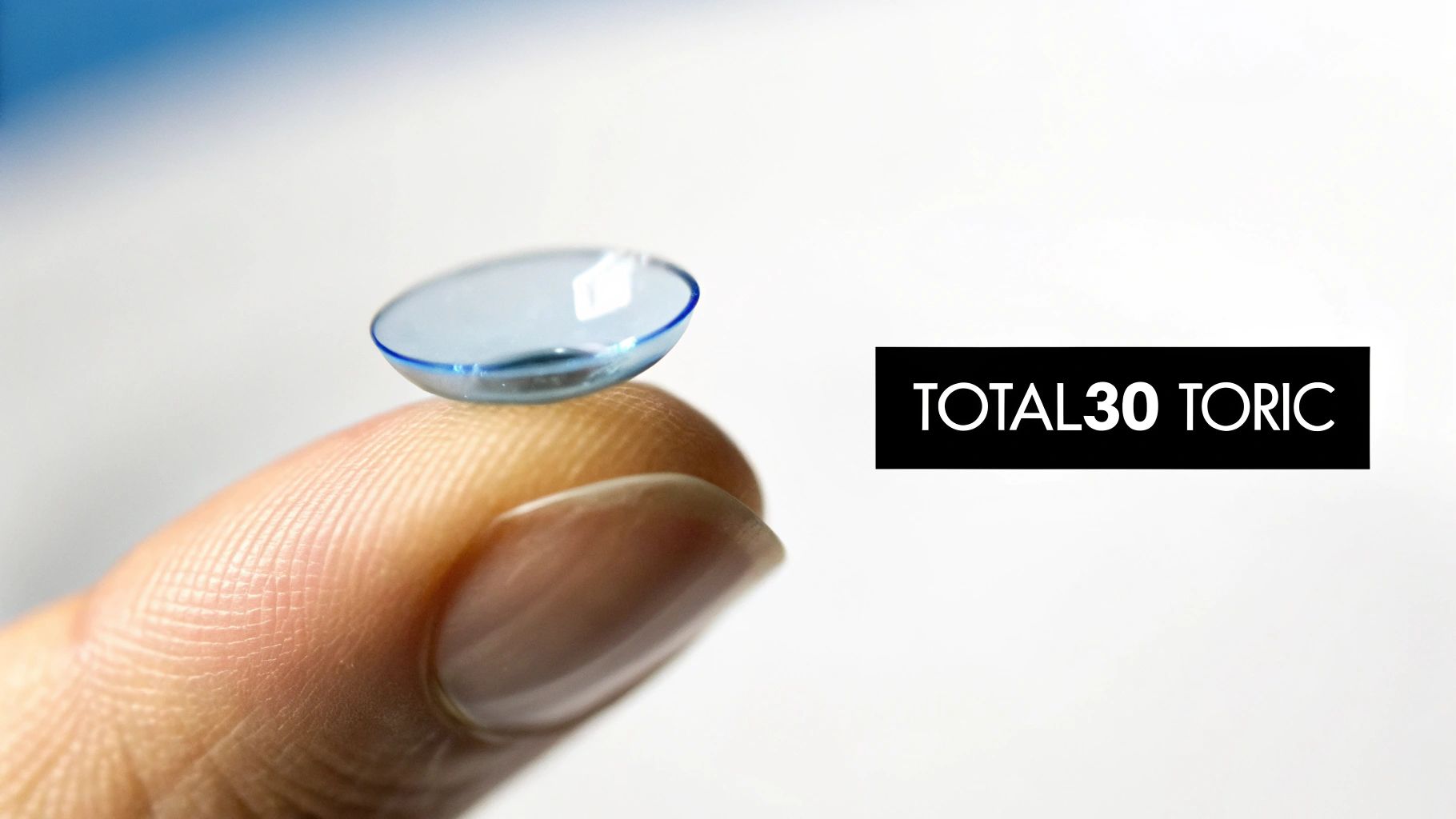
The TOTAL30 for Astigmatism is Alcon's answer, and it’s built on some pretty clever technology. First up is the Water Gradient Technology. Imagine a lens with a super-breathable core that gradually transitions to a surface made of nearly 100% water. This creates a gentle cushion of moisture that sits against your eye, designed for incredible comfort that lasts from day one all the way to day 30.
Advanced Tech for Crisp, Stable Vision
The second piece of the puzzle is CELLIGENT Technology. This is a cool innovation that helps the lens surface mimic your cornea's natural structure. Think of it as a protective layer that’s much better at resisting irritating bacteria and protein buildup. In short, it helps your lenses stay cleaner and feel better throughout the entire month.
To give you a clearer picture of what these lenses offer, here’s a quick rundown of their main features.
TOTAL30 for Astigmatism at a Glance
| Feature | Description |
|---|---|
| Material | Lehfilcon A |
| Technology | Water Gradient, CELLIGENT Technology, PRECISION BALANCE 8 |
| Water Content | Core: 55%, Surface: nearly 100% |
| Wear Schedule | Daily wear, monthly replacement |
| UV Blocking | Class 1 UV Blocker (blocks >90% UVA and >99% UVB) |
| Visibility Tint | Light blue (AQUABLUE®) for easy handling |
This table covers the essentials, but the real magic for astigmatism correction lies in how the lens stays put on your eye.
What truly sets this lens apart for astigmatism is its stabilization method, the PRECISION BALANCE 8|4 Design. You can think of it as tiny, invisible anchor points that keep the lens oriented perfectly on your eye, preventing it from rotating. This is absolutely critical for anyone with astigmatism, as even a slight rotation can turn clear vision into a blurry mess.
If you’ve ever looked at your prescription, you've seen the "axis" and "cylinder" values. That stability design is what ensures those corrections stay exactly where they need to be. Our guide on understanding contact lens prescriptions dives deeper into what those numbers mean for your vision.
Let's explore what all this technology means for your daily experience and whether TOTAL30 for Astigmatism could be the right choice for you.
Why Astigmatism Needs a Special Kind of Lens
If you have astigmatism, you know the frustration. The world can look a little blurry or distorted, whether you're looking at something up close or far away. It's not a disease, but a very common hiccup related to the shape of your eye. Getting a handle on that shape is the first step to understanding why a regular contact lens just won't cut it.
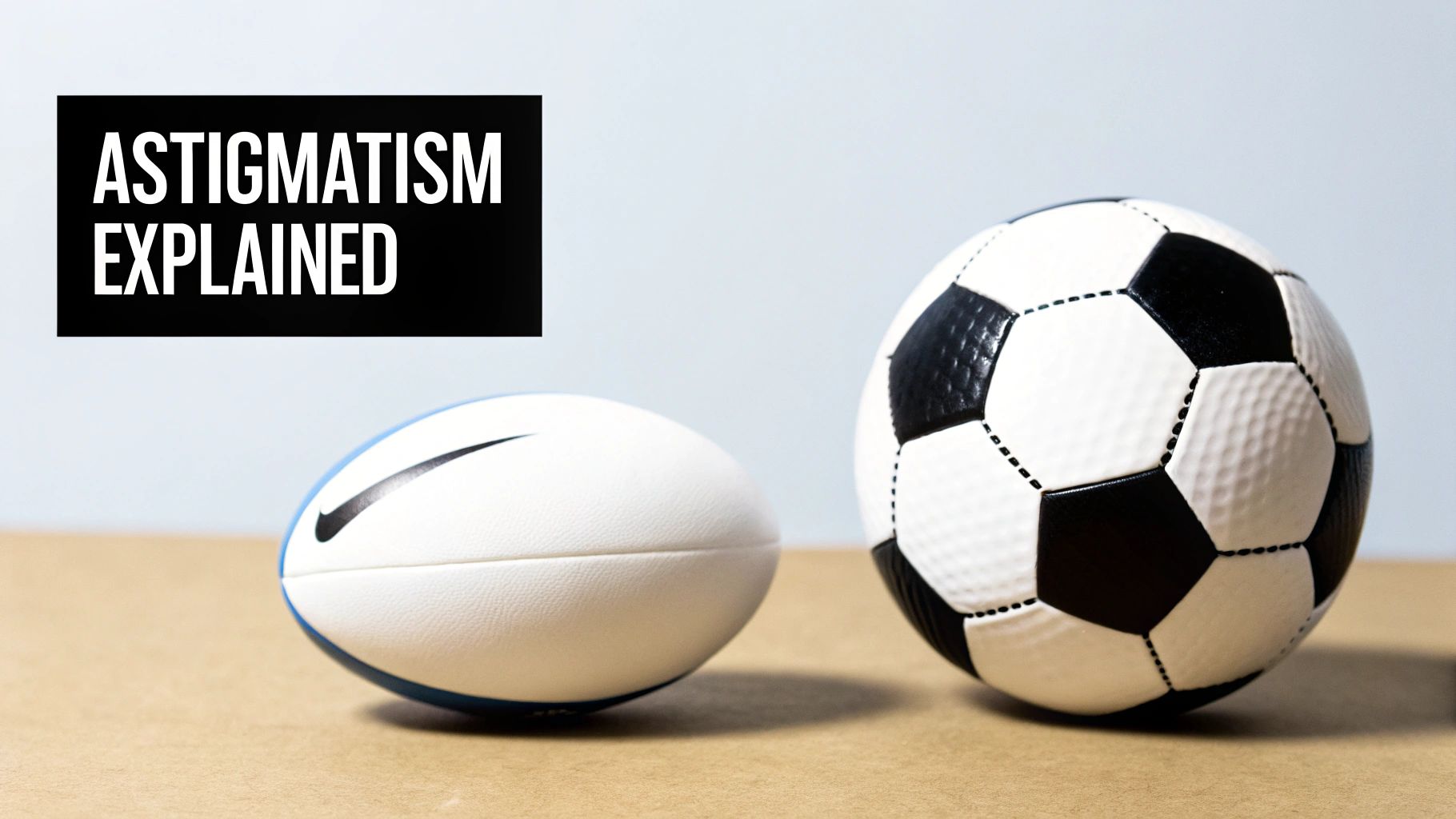
Picture a perfectly round soccer ball. When light enters an eye shaped like this, it all comes together at a single, neat point on the retina. The result? A crystal-clear image. A standard "spherical" contact lens is built for exactly this kind of eye.
Now, think about a rugby ball. That more oblong, irregular shape is a fantastic way to visualize an eye with astigmatism. Because the cornea or lens has this kind of curve, light doesn't focus properly. Instead of hitting one spot, it scatters and focuses on multiple points.
What Happens With Multiple Focal Points?
That scattering of light is the root cause of that signature astigmatism blur. Your eye is essentially trying to process two different images at the same time, which can lead to some really frustrating symptoms beyond just fuzzy sight.
Many people with uncorrected astigmatism deal with:
- Constant eye strain, especially after reading or staring at a screen.
- Headaches that just won't quit, caused by your eyes working overtime to focus.
- Squinting all the time, which is your brain's automatic attempt to sharpen things up.
- Trouble driving at night, often seeing halos or starbursts around headlights.
A standard, soccer-ball-shaped contact has the same prescription power all the way around. It's simply not equipped to wrangle those multiple focal points. Trying to correct astigmatism with one is like putting a round lid on an oval-shaped bowl—it’s never going to be a good fit.
An eye with astigmatism needs a lens with different powers in different areas to cancel out the eye's irregular shape. This brings all the scattered light back to a single focal point, giving you clear, crisp vision.
This is exactly where specialized "toric" lenses, like the TOTAL30 contact lenses for astigmatism, come in. They are designed with a very specific shape and stabilizing features that cater to the unique needs of an astigmatic eye, delivering both the comfort you want and the precise vision you need.
A Closer Look at the Tech Inside TOTAL30 for Astigmatism
So, what makes TOTAL30 contact lenses for astigmatism stand out in a pretty crowded market? It really comes down to how Alcon combined three key pieces of technology to tackle the biggest complaints from people with astigmatism: blurry vision from rotating lenses, end-of-day dryness, and that gritty feeling from deposits.
Let's break down what's going on under the hood. The lens itself starts with a silicone hydrogel core. This is the engine of the lens, so to speak, and it's designed to be super breathable, letting a steady flow of oxygen get to your cornea. That's a huge deal for keeping your eyes healthy and comfortable, especially for a monthly lens. If you want to dive deeper into why this material is so common now, we have a whole guide on silicone hydrogel vs. hydrogel contact lenses.
Keeping Your Vision Locked In: The PRECISION BALANCE 8|4 Design
If you have astigmatism, you know the frustration. Your vision is sharp one minute and blurry the next because the lens has shifted. This is the number one problem that any toric lens has to solve. Alcon’s answer is their time-tested PRECISION BALANCE 8|4 Design.
Imagine a small boat in the water—it needs a weighted keel to stay upright. That's basically how this design works. The lens has two tiny, slightly thicker zones at the 8 and 4 o'clock positions. These act as little anchors that interact with the pressure from your eyelids every time you blink, quickly settling the lens into the right spot and keeping it there. The goal is simple: stable, clear vision all day long, no matter what you're doing.
Like a Pillow of Moisture: Water Gradient Technology
Clear vision is one thing, but if the lens feels like sandpaper by 3 PM, what's the point? This is where comfort comes in, and TOTAL30 uses Alcon's well-known Water Gradient Technology. It's a clever way of building the lens in two distinct parts.
The core of the lens has a water content of 55%, which is perfect for maximizing that oxygen flow we talked about. But the very outer surface—the part that actually rests against your eye and eyelid—is completely different. It transitions to an ultra-soft, gel-like surface that's almost 100% water. The result is a silky, smooth cushion that minimizes friction every time you blink. It's designed to give you that "I forgot I was wearing my lenses" feeling.
A Smart Shield Against Grime and Buildup
A monthly lens has to be tough. It needs to resist a whole month's worth of proteins, lipids, and whatever else is in your tear film without getting cloudy or uncomfortable. To handle this, Alcon developed CELLIGENT Technology.
This technology is biomimetic, which is a fancy way of saying it mimics nature. The surface of the lens is covered in polymer nanofibers that are designed to look and act a lot like the cells on your own cornea. This "smart" surface is selective—it attracts water and other helpful parts of your tears while actively repelling bigger things like bacteria and lipid deposits that cause irritation.
This built-in shield is what helps the lens feel clean and fresh from day one all the way to day thirty. It's no surprise that the demand for this kind of innovation is booming. The global market for astigmatism treatments, including advanced lenses like these, is set to grow from $15 billion to over $25 billion by 2033. That’s a huge jump, and it shows just how much people are looking for better solutions. You can find more data on this market's growth on datainsightsmarket.com.
Together, these three technologies work in concert to give wearers of total 30 contact lenses for astigmatism a lens that aims to deliver on all fronts: stable vision, lasting comfort, and month-long performance.
How TOTAL30 Stacks Up Against Other Toric Lenses
When you have astigmatism, picking the right monthly contact lens can feel like a tough choice. There are several great options on the market, so how do you know which one is for you? To get a clear picture, let's compare Alcon's TOTAL30 for Astigmatism against two other heavy hitters: CooperVision's Biofinity Toric and Bausch + Lomb's ULTRA for Astigmatism.
Each of these lenses has a different philosophy when it comes to keeping your eyes comfortable and your vision sharp.
The TOTAL30 Difference: A Cushion of Moisture
The standout feature for TOTAL30 is its unique Water Gradient Technology. Think of it like a tiny cushion of moisture sitting between the lens and your eye. The surface of the lens is nearly 100% water, which is a massive win for anyone who struggles with that dry, scratchy feeling at the end of the day.
This is a totally different approach from other lenses that build moisture-retaining agents into the lens material itself. TOTAL30 focuses on creating an incredibly smooth, slick surface for ultimate comfort.
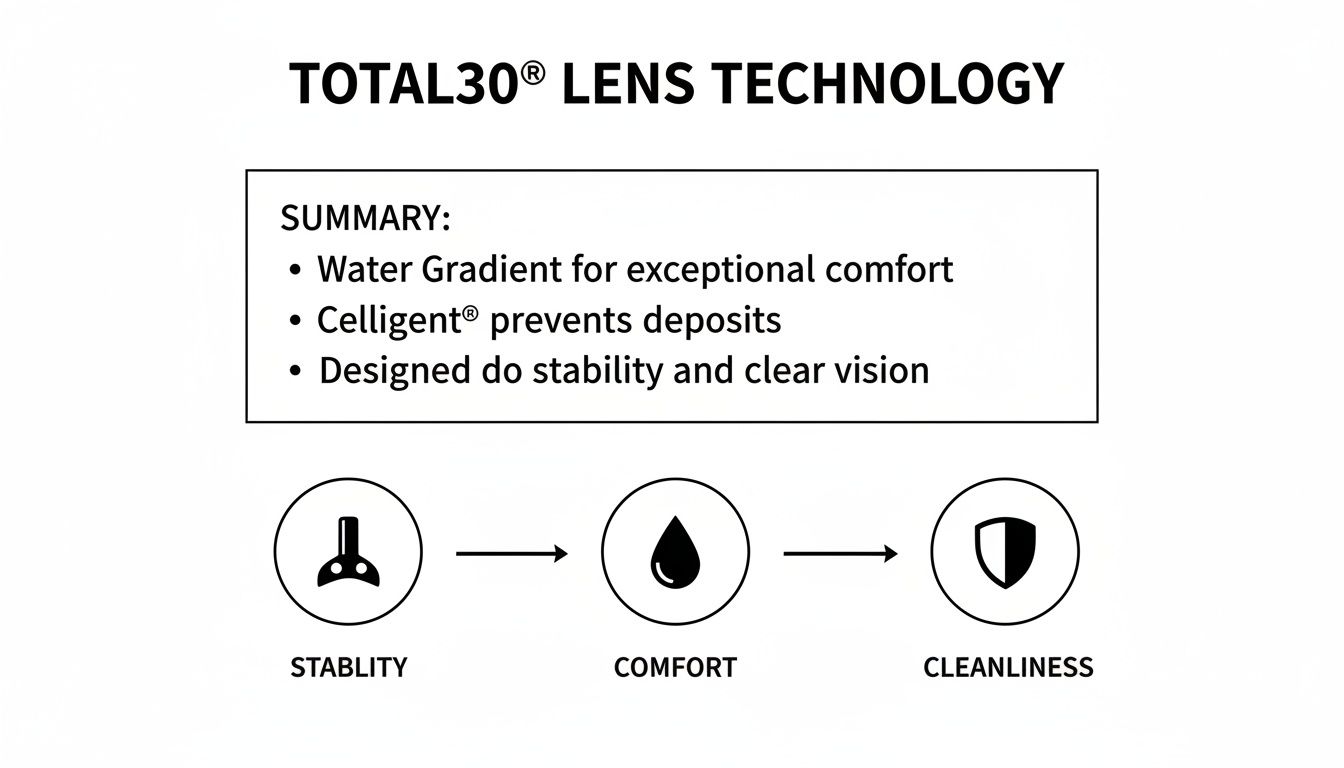
The combination of this water cushion, a stable design, and a clean surface directly tackles the biggest challenges for people with astigmatism.
How the Competition Approaches Comfort and Stability
So, what are the other guys doing?
Biofinity Toric has been a reliable workhorse for years, and for good reason. It uses Aquaform Technology, which makes the lens material naturally attract and hold water. This means it doesn't need special surface coatings to stay moist, helping it resist deposit buildup and feel comfortable all month long. Many long-time wearers swear by its consistent, breathable performance.
Then you have Bausch + Lomb's ULTRA for Astigmatism. This lens was engineered for our modern, screen-heavy lives. Its MoistureSeal Technology is designed to fight the dryness that comes from staring at digital devices. If you spend your days glued to a computer, ULTRA’s claim to retain 95% of its moisture for a full 16 hours is pretty compelling.
The demand for these advanced lenses is booming. With astigmatism affecting 30-40% of people, the global contact lens market is projected to hit $12.1 billion by 2026 and surge to $18.9 billion by 2035. You can dive deeper into these trends by checking out the full contact lenses market report.
Monthly Toric Lens Showdown: TOTAL30 vs. Competitors
The "best" lens is always the one that works best for your eyes, tear film, and daily routine. This table breaks down the core differences to help you have a more productive conversation with your eye doctor.
| Feature | TOTAL30 for Astigmatism | Biofinity Toric | ULTRA for Astigmatism |
|---|---|---|---|
| Key Comfort Tech | Water Gradient Surface | Aquaform Technology | MoistureSeal Technology |
| Material | Lehfilcon A | Comfilcon A | Samfilcon A |
| Water Content | 55% Core, Near 100% Surface | 48% | 46% |
| Best For | End-of-day comfort, sensitive eyes | Consistent, reliable all-month performance | Heavy digital device users, dryness |
| Stabilization | PRECISION BALANCE 8|4 | Optimized Toric Lens Geometry | OpticAlign Design |
Ultimately, this chart is just a starting point. Nothing beats actually trying the lenses out.
Your eye care professional is the only person who can properly fit you and determine the best lens for your specific prescription and eye shape. Use this comparison to ask informed questions during your next appointment.
Whether it’s the unique water surface of TOTAL30 contact lenses for astigmatism or the screen-fatigue focus of ULTRA, finding your perfect match is the key to unlocking crisp, comfortable vision.
A Practical Guide to Wearing and Caring for Your Lenses
Getting your hands on TOTAL30 contact lenses for astigmatism is a fantastic first step, but the real secret to clear, comfortable vision lies in how you handle them day-to-day. Think of your lenses like any other piece of high-performance equipment—they need proper maintenance to do their job right. And that starts before you even pop open the blister pack.
The number one rule? Only wear lenses that have been fitted by your eye doctor. An optometrist does way more than just hand you a prescription. They measure the unique curve of your eye to make sure the lens sits just right, which is key for avoiding discomfort and vision issues. Trying to guess your fit based on an old glasses prescription is just asking for trouble.
Your Daily Lens Care Routine
Once you've got your properly fitted lenses, a solid cleaning routine is non-negotiable. Because you're wearing the same pair for an entire month, keeping them pristine is absolutely essential for your eye health.
Here’s the simple nightly ritual you need to adopt:
- Wash Your Hands: First thing’s first. Use soap and water, then dry your hands with a lint-free towel to avoid transferring any gunk or germs to your lenses.
- Rub and Rinse: Drop a lens into your clean palm, add a few drops of fresh multipurpose solution, and gently rub it with your fingertip for about 15-20 seconds. Don't skip this step! The rubbing action is what physically breaks up all the protein and gunk that builds up during the day.
- Final Rinse: Give the lens a good rinse with more fresh solution to wash away all the debris you just loosened.
- Soak Overnight: Pop the lens into a clean case filled with fresh solution. Never, ever just top off the old stuff—it loses its germ-killing power and can quickly turn into a swamp of bacteria.
This whole process takes less than two minutes, and it's your best defense against irritation and nasty eye infections. For a deeper dive into lens care, check out our guide on disposable monthly contact lenses.
Understanding the Wear Schedule
The name "TOTAL30" can sometimes trip people up, so let's clear up what it means for your daily routine.
The "30" in TOTAL30 refers to 30 days of daily wear. These lenses are not approved for continuous or overnight wear. You must take them out every single night for cleaning and disinfecting.
Sleeping in lenses that aren't specifically designed for it is one of the riskiest things you can do for your eyes. Stick to the daily wear schedule and keep up with your hygiene, and you’ll get the full month of crisp, comfortable vision that TOTAL30 contact lenses for astigmatism are known for.
Got Questions About TOTAL30 for Astigmatism? We’ve Got Answers.
Alright, so we've covered the tech and the benefits, but you probably still have some practical, day-to-day questions running through your mind. That's completely normal. Getting straight answers to these common concerns is the final piece of the puzzle to feeling confident about trying these lenses.
Let's dive into the questions we hear most often from wearers about everything from sleep schedules to costs and troubleshooting.
Can I Sleep in TOTAL30 for Astigmatism Lenses?
This is a big one, and the answer is a hard no. TOTAL30 for Astigmatism lenses are approved for daily wear only, which means you absolutely must take them out every single night. Before you go to sleep, they need to be removed, cleaned, and stored in fresh contact lens solution.
The "TOTAL30" name can be a bit confusing, but it refers to 30 days of daily use, not 30 days of continuous, around-the-clock wear. Trying to sleep in lenses that aren't specifically designed for it is a serious gamble with your eye health. It dramatically increases the risk of nasty eye infections and other vision-threatening problems by cutting off the oxygen supply to your cornea.
How Much Do TOTAL30 for Astigmatism Lenses Cost?
Since these are premium monthly lenses packed with some of the latest technology, they do tend to be priced a bit higher than older toric options. The exact cost you'll pay can swing quite a bit depending on where you buy them, what your vision insurance covers, and whether any manufacturer rebates are available.
As a ballpark figure, you can expect a six-month supply (that's one box for each eye) to run you somewhere between $120 and $160. Always, always buy your lenses from an authorized source, like your eye doctor's office or a reputable online retailer. This ensures you're getting a genuine, safe product. Shopping around online can sometimes save you a few bucks, especially if you're buying a full year's supply.
Remember, while saving money is great, your eye health is priceless. The "best" lens is the one that gives you crisp, comfortable vision all day long without compromising safety—and that’s a decision best made with your eye care provider after a proper fitting.
What Should I Do If My Vision Is Still Blurry?
It's super frustrating when you pop in a new pair of toric lenses and things just don't look sharp. But don't panic! More often than not, it's a simple fix. The first thing to suspect is that the lens isn't sitting correctly on your eye.
Here’s a quick troubleshooting checklist:
- Start over. With clean, dry hands, gently remove the lens.
- Give it a rinse. Use some fresh multipurpose solution to wash away any smudges or debris.
- Do the "taco test." Place the lens on the tip of your finger. If it forms a perfect little bowl with the edges pointing straight up, you're good to go. If the edges flare out like a soup bowl, it's inside-out. Flip it.
- Try again. Reinsert the lens and blink a few times to help it settle into place.
If your vision is still blurry after running through these steps, take the lens out and give your eye doctor a call. The fit might need a small adjustment, or your prescription may need a slight tweak. Persistent blurriness isn't something you should just live with.
Is It Normal to Feel the Lens When I First Wear It?
Whenever you switch to a new type of contact lens, there's often a brief "awareness" period. You might feel the edge of the lens for a little while as your eyelid gets used to the new sensation. This is totally normal, but it should fade away within just a few minutes.
However, if you're experiencing ongoing discomfort, a constant "something in my eye" feeling, redness, or watery eyes, that's your cue to take the lens out immediately. This isn't a normal part of getting used to them. Check the lens for any tiny rips or nicks. If it looks fine but still irritates your eye when you put it back in, leave it out and contact your optometrist. It could be a sign of a poor fit or another issue that needs a professional look.
At Contact Lens HQ, our mission is to give you clear, reliable information to help you navigate your vision care. Head over to our site for more expert guides and reviews.


