
Welcome to the world of special effects contact lenses—the ultimate tool for anyone serious about cosplay, Halloween, or bringing a character to life. These aren't your standard vision-correcting contacts. Think of them as costume prosthetics, designed to completely transform your eyes and create a truly jaw-dropping effect.
A Guide to Transformative Eye Effects
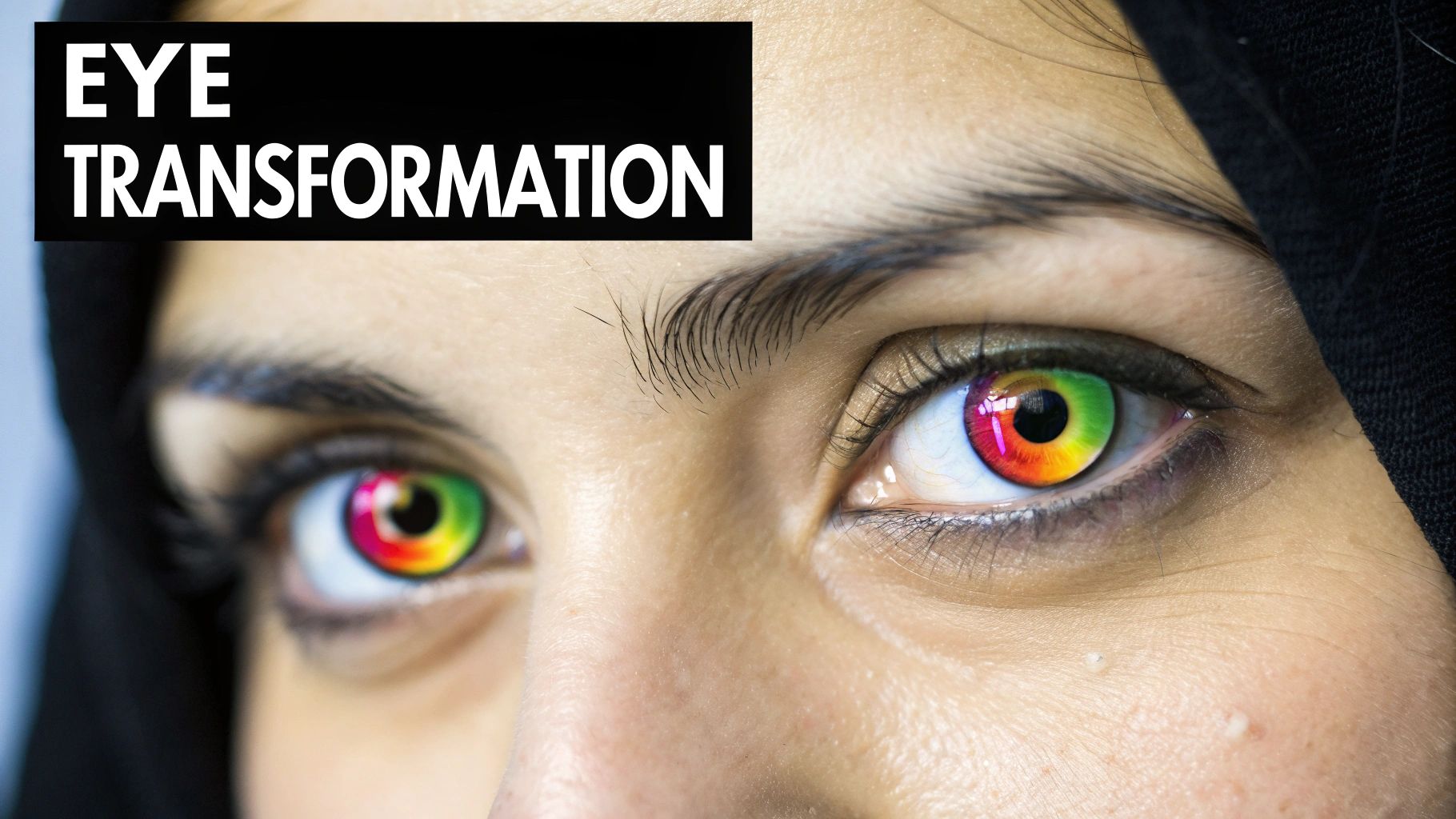
It’s best to view special effects (SFX) contact lenses as a critical piece of your costume, not just a fun accessory. They do far more than just change your eye color; they can give you the intricate, piercing gaze of a cat, the vacant stare of a zombie, or the fiery eyes of a demon. For creators and performers, these lenses are often that final, crucial detail that takes a great costume and makes it absolutely unforgettable.
But here’s the most important thing to remember: even if you have perfect 20/20 vision, these lenses are medical devices. Using them safely requires real knowledge and care, which is exactly why I've put this guide together.
What This Guide Covers
We're going to walk through everything you need to know to make your experience both safe and visually stunning. My goal is to give you a solid foundation so you can choose, wear, and care for your lenses like a pro.
Here’s a look at what we’ll dive into:
- The Different Lens Types: We'll break down all the options, from the dramatic full sclera lenses that cover your entire eye to standard-sized lenses with wild patterns.
- Safety and Hygiene: This is non-negotiable. I'll cover the essential rules for cleaning, storing, and handling your lenses to avoid nasty eye infections.
- Legal Requirements: We'll talk about why a prescription is required for all contact lenses in the United States, even the non-corrective ones you see online.
- Application and Styling Tips: You'll get practical advice on how to actually put the lenses in and make them work with your makeup for a seamless character design.
By the time you're done with this guide, you won't just know what special effects contacts are. You'll understand how to wield them as a powerful creative tool while keeping your eyes healthy. That's the key to safely unlocking your character's full potential.
Exploring the Different Types of SFX Lenses
When you first dip your toes into the world of special effects contacts, you'll find an amazing array of options out there. Each one is designed to create a very specific, often dramatic, look. Picking the right one isn't just about the cool pattern; it's about understanding how the lens actually covers your eye and what that means for the overall effect and your comfort.
Think of it like an artist choosing their tools. A fine-tipped brush is for intricate details, while a broad brush makes big, bold strokes. Each type of SFX lens is a unique tool for your creative vision.
For most people, the journey starts with standard cosmetic lenses. These are the same size as regular contacts, so they only cover your iris. But don't let their size fool you—they pack a punch with designs that can give you the sharp, slitted pupil of a cat's eye or the chilling, vacant stare of a zombie. They're usually the most comfortable and the easiest to get used to, making them a fantastic starting point.
Of course, sometimes you need to go bigger for a more jaw-dropping transformation. The growing popularity of these dramatic eye effects is a big reason the global contact lens market is booming. Valued at about USD 14.18 billion in 2024, the market is expected to climb to USD 22.10 billion by 2032. This isn't just about vision correction; it's about the incredible creative freedom SFX lenses offer. You can find more insights on the contact lens market's growth and what's driving it.
The image below gives a great overview of how we can break down these lenses—not just by their look, but by their material, design, and how long you can safely wear them.
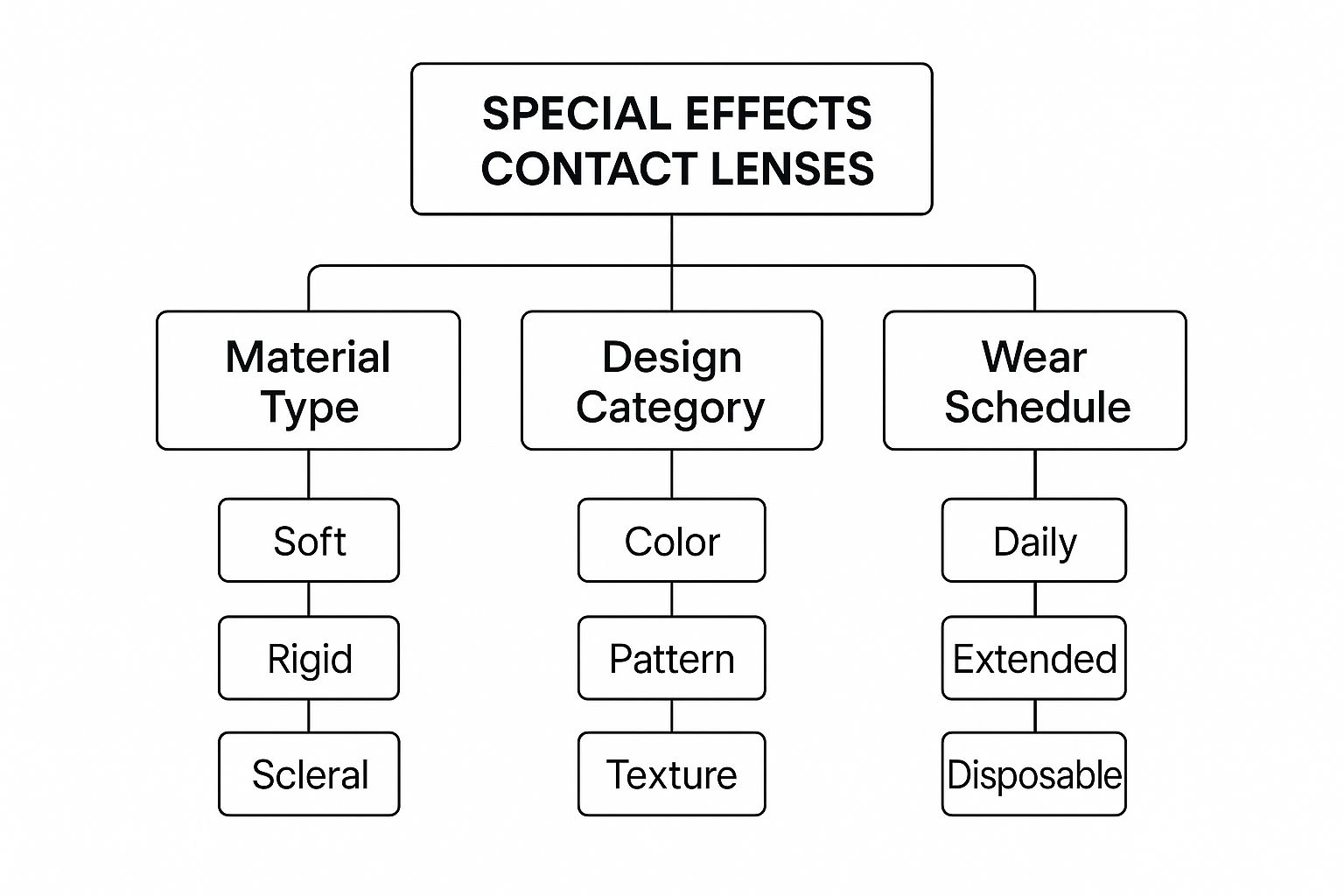
As you can see, there's more to a lens than meets the eye. Its material and wear schedule are just as important as the design itself when you're making a choice.
Standard Lenses For Detailed Effects
Standard-sized SFX lenses are the real workhorses for cosplayers and Halloween enthusiasts. They offer a mind-boggling range of detailed, vibrant designs without being as intimidating as the larger lenses. Because they're designed to fit right over your iris, they’re a great gateway into the world of costume contacts.
Some of the most popular designs you'll find in this category are:
- Vertical Pupil Lenses: These give you that classic slitted pupil, perfect for any reptilian, cat-like, or alien character you can dream up. A clear opening in the middle means your own vision stays perfectly clear.
- Mesh Lenses: Want that creepy, "hazy" or possessed look? Mesh lenses cover both your iris and pupil with a fine grid pattern. The trade-off is that they do make it harder to see, so they’re better suited for photoshoots than walking around a crowded convention.
- Blind Lenses: These opaque lenses create a solid-colored effect that completely covers your iris and pupil. As the name suggests, your vision in that eye will be extremely limited. For safety, it's a good idea to wear just one at a time.
Sclera Lenses For Maximum Impact
When your goal is to look truly out of this world, nothing beats sclera lenses. Unlike standard contacts that just sit on your iris, these lenses cover part—or even all—of the sclera (the white part of your eye). The result is a transformation that's on a whole other level.
Expert Tip: Because they're so much larger, sclera and mini-sclera lenses can be tricky to put in and take out at first. I always tell people to practice handling them a few times before the day of their event. It builds confidence and makes the whole experience much smoother.
There are two main types you'll encounter:
- Mini-Sclera Lenses: These are the next step up from standard lenses, usually measuring around 17mm in diameter. They cover your entire iris plus a small ring of the sclera, which makes your eyes look bigger and way more intense without going all-in on a full scleral lens.
- Full Sclera Lenses: At 22mm, these are the big guns. They cover the entire visible surface of your eye and are the secret to achieving those iconic solid-black demon eyes or blood-red vampire stares. Their sheer size means they can feel less comfortable and typically have a shorter recommended wear time.
Comparing Special Effects Contact Lens Types
To help you decide which lens is right for your next project, here's a quick side-by-side look at the different types. This table breaks down their coverage, visual punch, and what they're best used for.
| Lens Type | Coverage Area | Visual Impact | Typical Wear Time | Best For |
|---|---|---|---|---|
| Standard Cosmetic | Iris only (14-15mm) | High detail, vibrant color | 6-8 hours | Beginners, detailed character work, general costume parties |
| Mini-Sclera | Iris & partial sclera (17mm) | Enlarged, intense look | 4-6 hours | Demonic, alien, or doll-like characters needing extra impact |
| Full Sclera | Entire visible eye (22mm) | Total, dramatic transformation | 2-4 hours | Maximum-impact horror, fantasy, and otherworldly creatures |
| Mesh/Blind | Iris & pupil | Obscured, eerie effect | 2-4 hours | Photoshoots and controlled environments due to vision impairment |
Ultimately, the best lens depends entirely on the character you're creating and your personal comfort level.
UV-Reactive and Novelty Lenses
Beyond just size and pattern, some SFX lenses come with a hidden surprise. A great example is UV-reactive lenses. In regular daylight, they look like any other brightly colored contacts. But step under a blacklight, and they burst into an intense, otherworldly glow.
This makes them a huge hit for raves, haunted attractions, and clubs—anywhere you want to add an element of shock and awe. Just remember, they aren't "glow-in-the-dark." They need a UV light source to really pop.
How Safe Lens Materials and Designs Protect Your Eyes
When you see a pair of wild special effects contacts, it’s all about the design. But under that intricate pattern is a sophisticated piece of medical technology, engineered for one primary purpose: keeping your eyes safe. Understanding what goes into them helps explain why sticking to high-quality, reputable lenses is so critical.
A costume is just fabric, but a proper contact lens is a complex device. Reputable makers don’t just slap a design onto a piece of plastic. They use advanced manufacturing to make sure the lens is comfortable, breathable, and—most importantly—that the pigment never actually touches your eye.
Let's pull back the curtain on the two key elements that make this possible: the materials themselves and the clever way the designs are locked in.
The Science of Breathable Lens Materials
Here’s a fascinating fact about your eyes: the cornea, that clear dome at the front, gets most of its oxygen directly from the air, not from your blood vessels. When you put a contact lens over it, you're essentially placing a barrier between the cornea and the air it needs to breathe. That's why the material a lens is made from matters so much.
Think of it like wearing a cheap plastic raincoat versus a modern GORE-TEX jacket. The plastic traps moisture and you get sweaty, but the GORE-TEX is breathable, letting vapor out while keeping rain away. Contact lenses work on a similar principle.
- Standard Hydrogel: This is an older, water-loving plastic. It holds a lot of water, which helps ferry oxygen to the cornea. The catch? Its oxygen delivery is capped by its water content.
- Silicone Hydrogel: This is the GORE-TEX of the lens world. It combines the moisture of hydrogel with silicone, a material that’s amazing at letting oxygen pass straight through. The result is a highly breathable lens that keeps the cornea much healthier during wear.
A key measurement here is oxygen permeability, noted as Dk/t. The higher the Dk/t value, the more oxygen reaches your eye. This is absolutely essential for comfortable wear and avoiding issues like redness or swelling.
These advanced materials have really changed the game. They've helped special effects lenses evolve from uncomfortable novelties into genuinely wearable accessories.
How Designs Are Safely Encapsulated
A common worry is that the cool pigments used to create a dragon eye or zombie gaze might flake off and harm the eye. With professionally made lenses, this is virtually impossible. Why? Because of something called encapsulation technology.
Instead of printing the design on the surface, manufacturers sandwich the delicate pigment layer between two ultra-thin, clear layers of the lens material. It’s a lot like a laminated ID card—your photo is safely sealed inside, protected from the elements.
This layered construction means only the smooth, biocompatible hydrogel material ever touches the sensitive surface of your cornea. This is a huge deal for a few reasons:
- It Prevents Irritation: Since the design is sealed in, no dye particles can come loose and cause a painful scratch or an allergic reaction.
- It Ensures Durability: The pattern is shielded from your blinking eyelids and cleaning solutions, so it stays vibrant and won't wear off.
- It Maintains Comfort: A perfectly smooth surface is vital for a lens you can wear all day without feeling it.
This meticulous engineering is what separates legitimate, regulated special effects lenses from the cheap, illegal counterfeits you might find online. Those dangerous knock-offs often have the color printed right on the surface, posing a massive risk to your vision. To learn more about the plastics and polymers involved, check out our guide on what contact lenses are made of. It’s this kind of knowledge that helps you appreciate the quality behind a truly safe and effective lens.
Mastering Lens Safety and Hygiene
While the wow-factor of special effects lenses is undeniable, nothing is more important than the health of your eyes. Let's get one thing straight: your safety and hygiene routine isn't just a list of suggestions. It’s your mandatory, pre-flight checklist before those lenses go anywhere near your face.
Getting this right is the most critical part of wearing any contact lens, especially cosmetic ones. Even a tiny shortcut can introduce nasty bacteria to your eyes, leading to painful infections or, in the worst-case scenario, permanent vision damage. The steps are simple, but you have to be disciplined and follow them perfectly every single time.
The Golden Rule: Your Hands Must Be Spotless
Before you even think about touching a lens, your hands need to be impeccably clean. This is your first and most important line of defense against eye infections. A quick rinse under the tap just won't cut it; you have to get rid of the oils and microbes that are all too happy to jump from your fingers to your lenses.
Follow this exact process, every time:
- Grab a mild, lotion-free soap. Soaps with extra moisturizers or perfumes can leave a microscopic film on your hands that will make your eyes sting.
- Lather up for a solid 20 seconds. Really get in there—scrub between your fingers and underneath your nails where germs love to hide.
- Rinse every last bit of soap off your hands.
- Dry your hands with a clean, lint-free towel. Using a regular hand towel can leave tiny, invisible fibers on your fingertips that will feel like a boulder in your eye once the lens is in.
Proper Cleaning: The Rub and Rinse Method
After you take your lenses out, you need to clean them properly to remove the day's buildup of proteins, oils, and general gunk from your tears and the environment. Just letting them soak overnight isn't enough to get them truly clean.
The "rub and rinse" technique is the gold standard for a reason—it works.
- Place one lens in the clean palm of your hand and add a few drops of fresh, store-bought contact lens solution. Never, ever use tap water, saliva, or any homemade concoction.
- Using your fingertip, gently rub the lens back and forth for about 15-20 seconds. This physical rubbing is what actually dislodges the stubborn deposits.
- Give the lens a generous rinse with more fresh solution to wash away all the debris you just loosened.
- Pop the clean lens into your storage case, making sure it's filled with fresh disinfecting solution.
This is the cornerstone of safe lens wear. For a more in-depth guide, check out our walkthrough on how to clean contact lenses properly to make sure you’ve got it down pat.
Storage and Case Care
Your lens case is just as important as the lenses it holds. A grimy, old case is a breeding ground for bacteria, and it will contaminate your lenses the moment you put them in, no matter how well you cleaned them.
Think of your lens case like a toothbrush—it has an expiration date. Eye care pros recommend tossing your case and getting a new one at least every three months.
To keep your case clean and safe for storage:
- After you put your lenses in your eyes, dump out all the old solution.
- Rinse the case thoroughly with fresh contact lens solution, not water.
- Leave the case open and upside down on a clean tissue to air dry completely.
Critical Safety Rules to Never, Ever Break
Beyond the daily routine, there are a few hard-and-fast rules that are completely non-negotiable. Breaking them can have serious consequences for your vision.
Absolutely Never:
- Share Your Lenses: This is like sharing a toothbrush, but a thousand times worse. It's a surefire way to transmit dangerous, infection-causing germs directly into your eye.
- Sleep in Your Lenses: Your cornea (the clear front part of your eye) needs to breathe. Sleeping in lenses—unless they are specifically approved for overnight wear by your doctor—suffocates it and dramatically increases your risk of infection.
- Use Water on Your Lenses: Tap water is not sterile. It contains nasty microorganisms, including a particularly dangerous amoeba called Acanthamoeba, that can cause a severe, sight-threatening infection.
- Reuse Old Solution: Multipurpose solution loses its disinfecting power after one use. Topping off the old liquid is like trying to wash your hands in dirty water. Always use fresh solution, every single time.
Why You Absolutely Need a Prescription for All Contact Lenses
Let's clear up one of the most dangerous myths in the world of costume and cosplay right now: the idea that you don't need a prescription for special effects contact lenses if you have perfect 20/20 vision. That's just not true, and believing it can lead to some seriously painful eye problems. A prescription is so much more than a number for correcting your sight; it's a precise map for a medical device to fit your unique eyes safely.
Think of it this way—your eyes are as individual as your fingerprints. A contact lens isn't a one-size-fits-all accessory you can just pop in. It's a medical device that rests directly on the incredibly delicate surface of your cornea. For it to fit properly, an eye doctor has to take very specific measurements of your eye's unique shape and curvature.
It’s All About the Fit, Not Just the Focus
When an optometrist writes you a contact lens prescription, they are measuring two key factors that have absolutely nothing to do with correcting vision. These numbers are all about ensuring the lens sits on your eye correctly, allowing it to breathe and move naturally.
- Base Curve (BC): This is the measurement of how curved your cornea is. If the lens has the wrong base curve, it can be too tight and literally suffocate the eye, or it can be too loose, sliding around and causing constant irritation.
- Diameter (DIA): This measures the lens's width from one edge to the other. It ensures the lens is big enough to comfortably cover your cornea without pinching or digging into the surrounding tissue.
A poorly fitting lens, even one with zero corrective power, is a recipe for disaster. It can lead to painful scratches on your cornea (called abrasions), inflammation, and can even cut off the oxygen your eye needs to stay healthy. For a deeper dive into what these numbers mean, our guide on understanding contact lens prescriptions is a great resource.
Why It's the Law
The U.S. government doesn't take this issue lightly. The Food and Drug Administration (FDA) classifies all contact lenses—including the purely decorative ones—as medical devices. This isn't just a label; it carries serious legal weight.
Under federal law, it is illegal for anyone in the United States to sell any type of contact lens without a valid prescription from a licensed eye care professional. This applies to everyone, from online stores to Halloween pop-up shops.
This law isn't just red tape. It's a critical safety net put in place to protect you from potentially irreversible eye damage. Any seller who is willing to ignore this requirement is showing you they care more about making a sale than about your health. Those are not the people you want to buy from.
Ultimately, getting a proper fitting and a prescription is a small but essential step to protect your vision. It's the only way to ensure you can rock that incredible new look without risking your eye health. Always play it safe and only buy from legitimate vendors who require a valid prescription.
Styling and Makeup Tips to Complete Your Look
Special effects contact lenses can be the show-stopping centerpiece of a dramatic transformation, but they don't work in a vacuum. How you style the rest of your look is what makes them truly pop. It’s all about strategy—thinking about both the visual impact and your own safety. The best way to approach this is to treat your lenses as the very first piece of the puzzle.
Here's the golden rule, and it's not one you want to break: lenses in first, makeup on second. Seriously. Trying to put your lenses in after your face is already done is asking for trouble. You’ll inevitably transfer powders, oils, and glitter from your fingers straight to the lens, which is a one-way ticket to irritation, or worse, a damaged lens. Always start with a clean slate by popping in your lenses before anything else touches your face.
Safe Makeup Application with Lenses
Okay, so your SFX lenses are in and feeling comfortable. Now the real artistry can begin. But hold on—the products you choose make a huge difference. Tiny particles from loose powders or that fabulous chunky glitter can easily migrate into your eye, getting stuck under the lens and feeling like you’ve got sand in your eye. It’s not just uncomfortable; it can be painful and even scratch your cornea.
To keep your eyes happy, follow these tried-and-true tips from the pros:
- Stick with Creams: Cream-based products are your new best friend. Think cream eyeshadows, liners, and even foundations. They stick to your skin much better and create way less fallout than powders.
- Lock It Down: A good quality setting or sealing spray isn't just for the end. A light mist before you start your eye makeup can create a slightly tacky surface that helps everything adhere better, minimizing the chance of flakes.
- Mascara with a Mission: When you apply mascara, concentrate on the middle of your lashes up to the tips. Steer clear of the base right near your waterline to stop clumps from breaking off and falling into your eye. Pro tip: waterproof formulas tend to flake less once they’re dry.
When the night is over, just reverse the order. Take your lenses out first—with squeaky clean hands—and then grab your makeup remover. This keeps all those removers and oils from getting on your lenses while you're trying to clean them for storage.
Building a Cohesive Character
Now for the fun part: bringing your character to life. The most stunning and believable looks happen when the eyes, makeup, and costume all work together to tell the same story. Your SFX lenses should be the creative director for your entire look, not just an afterthought.
Think about it this way: if you're wearing reptilian lenses with a slitted pupil, don't just stop there. Grab some stencils and iridescent cream shadows to create a scaly texture on your skin. If you've got demonic, solid-black sclera lenses, use heavy contouring to give your face a sunken, hollowed-out feel. For a cyborg or robot character with mesh lenses, lean into metallic pigments and sharp, graphic eyeliner that looks like circuitry.
Your lenses set the stage. Let your makeup and styling tell the rest of the story.
Got Questions About Special Effects Lenses? We’ve Got Answers.
Even after you've nailed down the types, materials, and safety rules, a few practical questions always seem to come up right when you’re about to pop in a pair of SFX lenses. Let's walk through some of the most common ones so you can feel completely confident for your next cosplay, photoshoot, or Halloween party.
Can I Wear SFX Lenses if I Already Have Glasses?
You absolutely can. Most special effects lenses actually come in two different versions. The first is what we call “plano,” which basically means it has zero corrective power and is made for people with perfect or glasses-corrected vision. The second type is a prescription lens, built with a specific power just like your everyday contacts.
When you go for your required eye exam, your optometrist will give you a prescription tailored to your vision. This means you can order SFX lenses that not only complete your look but also let you see everything clearly—no glasses needed.
A quick heads-up: not every single crazy design is available in every prescription. It’s always smart to double-check with the retailer to make sure the style you love comes in the vision correction you need.
How Long Can I Actually Wear These Things?
This is a huge one, and the answer really depends on the lens. For a standard-sized cosmetic lens made from a modern, breathable material, you can often wear it for up to 8 hours. But when you start getting into the larger lenses, that wear time shortens considerably.
- Mini-Sclera Lenses: These cover more of your eye's surface, which cuts down on oxygen. You’ll want to keep these in for about 4-6 hours at most.
- Full Sclera Lenses: Because these behemoths cover the entire white part of your eye, they're really only for short-term impact. Plan on wearing them for a maximum of 2-4 hours.
Always, and I mean always, stick to the manufacturer's specific guidelines. Trying to stretch the wear time is just asking for irritated, unhappy eyes and can lead to some pretty serious problems. The moment your eyes feel dry, red, or just plain weird, take the lenses out.
Will Special Effects Lenses Hurt?
If they’ve been properly fitted by your eye doctor, a good-quality pair of special effects lenses shouldn't hurt at all. You might feel a little bit of "lens awareness" when you first put them in, especially if you’re new to contacts or are trying out massive sclera lenses, but it should never be painful.
Sharp pain, stinging, or any kind of persistent discomfort is a major red flag. If that happens, take the lens out immediately. Check it for any rips, tears, or little bits of debris. If the pain doesn’t go away after you’ve removed it, call your eye doctor. Pain is your body’s alarm system—listen to it.
Here at Contact Lens HQ, our whole mission is to give you doctor-vetted, trustworthy information so you can have fun with the creative side of contact lenses without risking your eye health. For more expert guides and resources, head over to https://contactlenshq.com.


