
So, what exactly are monthly contact lenses? Put simply, they're reusable lenses you can wear every day for up to 30 days straight. Unlike dailies that you toss out at night, monthlies just need a quick clean and soak in a storage case before you pop them in again the next morning.
Breaking Down Monthly Contact Lenses
Let’s skip the dense, technical jargon. Think of monthly lenses as a dependable, long-term partner for clear vision, not some complicated medical device. The routine is straightforward: you wear them, clean them, store them overnight, and repeat this cycle for a month before you switch to a fresh pair.
This system strikes a great balance between convenience and personal responsibility. It’s convenient because you only need to open a new pack of lenses twelve times a year, which means fewer trips to the store and a lot less packaging waste.
It’s Like Your Favorite Coffee Mug
A perfect way to wrap your head around the different lens types is to think about your morning coffee.
- Daily Disposable Lenses: These are the paper cups of the contact lens world. You use one and throw it away. Super easy, for sure, but the cost can really add up over time, and it creates more trash.
- Monthly Contact Lenses: This is your trusty, reusable travel mug. It needs a quick rinse each night, but it's way more budget-friendly and better for the planet in the long run.
This simple comparison gets right to the heart of the matter. With monthlies, you're trading a couple of minutes of cleaning time each day for significant savings and a smaller environmental footprint.
The nightly cleaning routine isn't just a suggestion—it's absolutely essential for anyone wearing monthly lenses. This small habit is the single most important thing you can do to keep your eyes healthy, comfortable, and infection-free for the full 30-day cycle.
Built to Last
You might be asking, "How can one little lens possibly last for 30 days?" It all comes down to their design. Monthly contacts are specifically engineered for durability.
Most are made from advanced materials like silicone hydrogel, which is incredibly "breathable." This allows plenty of oxygen to reach your cornea, which is key for keeping your eyes healthy and feeling comfortable from the first day of the month to the last.
The material itself is also tougher than what you’ll find in a daily disposable. It’s built to handle daily cleaning and handling without losing its shape or clarity. Once you grasp that monthlies are built from the ground up for reuse, you’re in a much better position to decide if they fit your lifestyle.
Weighing the Pros and Cons of Monthlies

Choosing the right contacts isn’t just about vision—it’s about finding the perfect fit for your lifestyle. Every type of lens comes with its own trade-offs, and monthly contact lenses are no exception. To figure out if they’re right for you, we need to look at both the compelling advantages and the responsibilities they demand.
Let’s dive into the full picture, so you can see clearly whether the benefits line up with your daily habits and priorities.
The Clear Advantages of Monthly Lenses
One of the biggest reasons people gravitate toward monthlies is the long-term cost savings. When you do the math, even after factoring in cleaning solutions, the annual cost is almost always lower than daily disposables. After all, you're buying just 24 lenses for the year, not 730.
This also has a huge environmental upside. Fewer lenses mean significantly less plastic and foil packaging waste heading to landfills. If you’re trying to reduce your environmental footprint, this is a major plus.
Then there’s the sheer convenience. You only have to worry about buying new lenses a handful of times a year. For anyone with a packed schedule, this "set it and forget it" aspect is a welcome relief from another recurring to-do list item.
Finally, we have to talk about comfort. Modern monthly lenses are typically made from advanced silicone hydrogel materials.
Think of silicone hydrogel as a high-tech sponge for your eyes. It lets up to five times more oxygen reach your cornea compared to older materials, which is key to keeping your eyes feeling fresh and looking healthy all day long.
The Necessary Responsibilities and Potential Drawbacks
Now for the other side of the coin. The biggest "con" of monthlies is the non-negotiable daily cleaning routine. This isn't just a suggestion; it's a critical step for your eye health. Every single night, you have to properly clean and disinfect your lenses to get rid of bacteria, debris, and protein deposits.
Skipping this routine dramatically increases your risk of developing painful and potentially sight-threatening eye infections. If you know you're the type to cut corners or fall asleep with your lenses in, monthlies probably aren't your safest bet.
Over the 30-day wear period, there's also the potential for protein and lipid buildup. These are natural substances in your tears that can cling to the lens surface. Without proper cleaning, this buildup can lead to irritation, foggy vision, or just a general feeling of discomfort as you near the end of the month. This really highlights why that "rub and rinse" step is so vital—it physically scrubs those stubborn deposits away.
The market reflects that for many, the pros are worth the effort. Valued at around USD 5 billion, the global monthly lens market continues to grow, partly thanks to the widespread adoption of these comfortable silicone hydrogel materials. You can find more details about monthly contact lenses' growth on archivemarketresearch.com.
This steady growth shows that plenty of people find the required diligence a small price to pay for the benefits.
Monthly Lenses At a Glance
To make your decision a bit easier, here’s a quick rundown of what you gain and what you need to be mindful of when you choose monthly contact lenses.
| Benefit | Challenge |
|---|---|
| Lower Long-Term Cost | Requires Daily Cleaning Discipline |
| Significantly more affordable over the course of a year, even with solution costs. | You must commit to a strict "rub and rinse" routine every night without fail. |
| Reduced Environmental Waste | Potential for Buildup |
| Far less plastic and packaging waste compared to daily disposables. | Protein and lipid deposits can accumulate, causing irritation if not cleaned well. |
| Convenience of Fewer Purchases | Higher Risk If Hygiene Is Poor |
| You only need to purchase lenses a few times per year. | Improper care can lead to a greater risk of eye infections. |
| High Oxygen Permeability | Less Ideal for Occasional Wear |
| Advanced materials like silicone hydrogel ensure excellent eye health and comfort. | Daily disposables may be more practical if you only wear contacts sporadically. |
Ultimately, it comes down to a simple trade-off: a little more responsibility in exchange for greater savings and convenience.
Your Daily Care Routine for Monthly Lenses
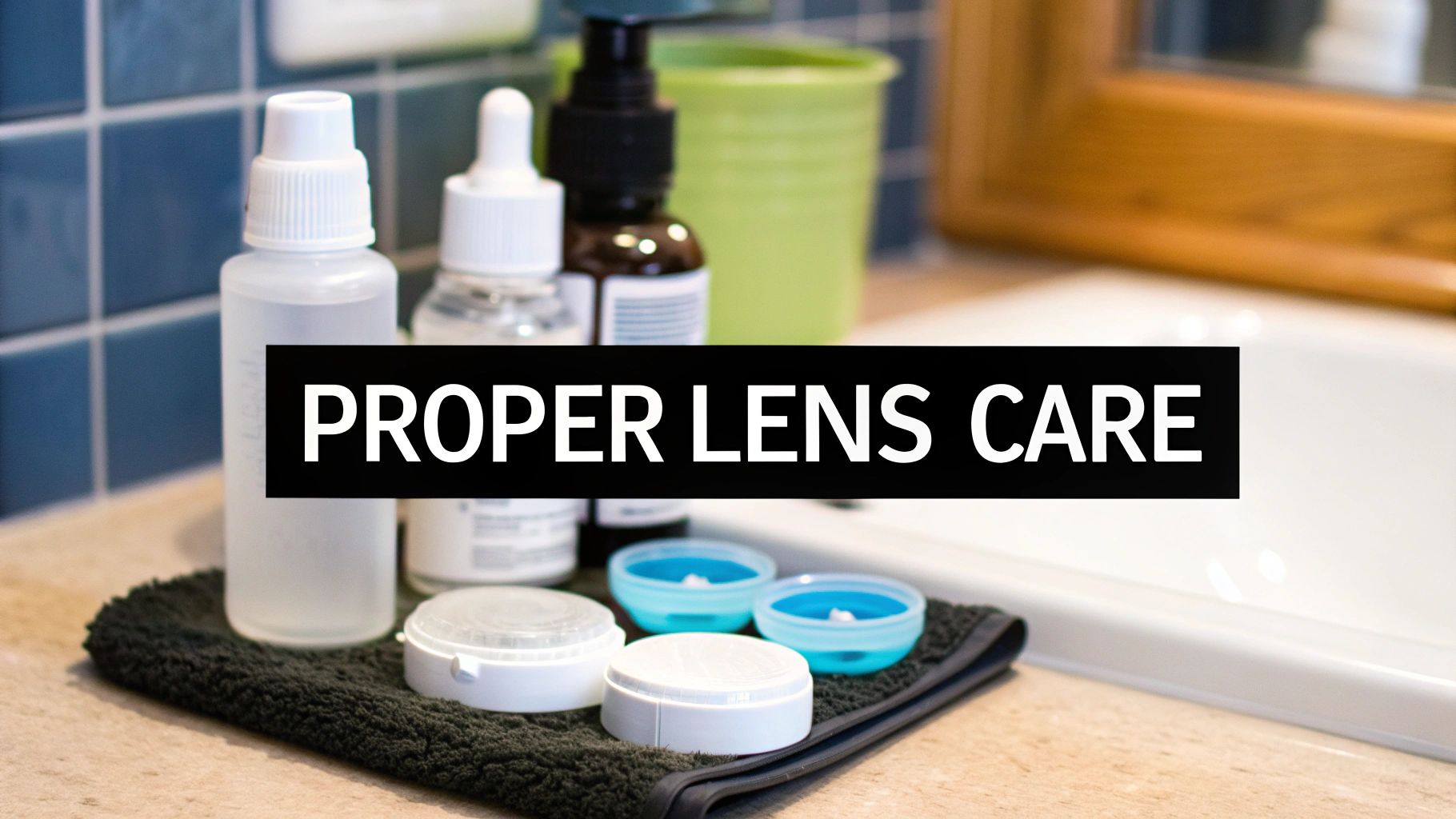
Getting the most out of monthly contact lenses comes down to one thing: a solid daily care routine. Don't think of it as a chore. It's really just a simple, two-minute habit at the end of the day that makes all the difference for your eye health.
Nailing this routine is what keeps your lenses feeling fresh and comfortable for the full 30 days. We'll walk through the gold standard for lens care—the "rub and rinse" method. This is how you manually get rid of the invisible gunk (think proteins, oils, and germs) that builds up on your lenses all day long.
The Essential Rub and Rinse Method
Before you even think about touching your lenses, you have to start with clean hands. This part is absolutely non-negotiable.
-
Wash and Dry Your Hands: Lather up with a simple, lotion-free soap for at least 20 seconds. Then, dry your hands completely with a lint-free towel. You don't want any tiny fuzzies hitching a ride onto your lens.
-
Work One Lens at a Time: Get into the habit of always starting with the same eye—righty first, for example. This is a foolproof way to avoid mixing up your lenses if you have different prescriptions. Pop one lens out and place it in the palm of your clean, dry hand.
-
Apply Fresh Solution: Squeeze a few drops of your recommended multi-purpose solution directly onto the lens. And I mean only solution. Never use tap water, saliva, or anything else. Ever.
-
Gently Rub the Lens: With your fingertip, gently rub both sides of the lens back and forth for about 15-20 seconds. This friction is key; it’s what actually breaks up the stubborn deposits that a simple rinse would leave behind.
-
Rinse Thoroughly: After rubbing, give the lens a good final rinse with more fresh solution to wash away all the debris you just loosened up.
The whole process is incredibly quick once you get the hang of it. For a deeper dive, you can learn more about how to clean contact lenses properly in our dedicated guide.
Caring for Your Lens Case
Your lens case is just as important as your lenses. It’s their home overnight, and you want it to be a clean one.
-
Empty and Rinse: Every morning after you put your lenses in, dump out all the old solution. Rinse the case wells with fresh contact lens solution—never water.
-
Air-Dry Correctly: Leave the case open and upside down on a clean tissue to air-dry. This keeps bacteria from setting up shop in a dark, damp environment.
-
Replace It Regularly: A lens case isn't meant to last forever. You should toss it and start a new one at least every three months. A good rule of thumb is to grab a new case every time you open a new bottle of solution.
A study on contact lens case contamination found that a significant percentage of cases harbor harmful bacteria. Simply replacing your case on a regular schedule is one of the easiest and most effective ways to reduce your risk of a serious eye infection.
Critical Mistakes to Avoid at All Costs
While the right way is simple, taking shortcuts can lead to serious problems. Please, steer clear of these common but dangerous habits.
Topping Off Solution
Never just add a splash of new solution to the old stuff in the case. Think of it like trying to wash your hands in a dirty sink—it just doesn't work. Topping off dilutes the disinfectant, basically turning your lens case into a petri dish for germs. Always dump, rinse, and refill with fresh solution.
Using Tap Water
Tap water might be safe to drink, but it's a huge danger to your eyes. It contains microorganisms, including a nasty parasite called Acanthamoeba, that can attach to your lens, cause a blinding infection, and lead to permanent vision loss. The only liquid that should ever touch your lenses or your case is sterile, approved contact lens solution. Period.
Showdown: Monthly vs. Daily Contact Lenses
Choosing between monthly and daily contacts is one of the first big decisions you’ll make when you get lenses. It really boils down to how they fit into your life—your daily habits, your budget, and what you find most convenient. This isn't about which one is "best" overall, but about finding the perfect match for you.
Let's break down the real differences between these two popular options, looking at everything from long-term costs and daily convenience to eye health.
The Financial Breakdown: Cost Over Time
For many of us, the conversation starts with cost. A single box of daily lenses might look cheaper on the shelf, but when you do the math for a full year, the story changes completely.
Think about it: with monthlies, you only need to buy 24 lenses for the entire year. With dailies, that number jumps to a staggering 730 lenses. Even when you factor in the cost of cleaning solution and cases, monthly contact lenses almost always come out as the more affordable choice. We're often talking about saving hundreds of dollars a year.
This quick comparison shows just how much those savings can add up.
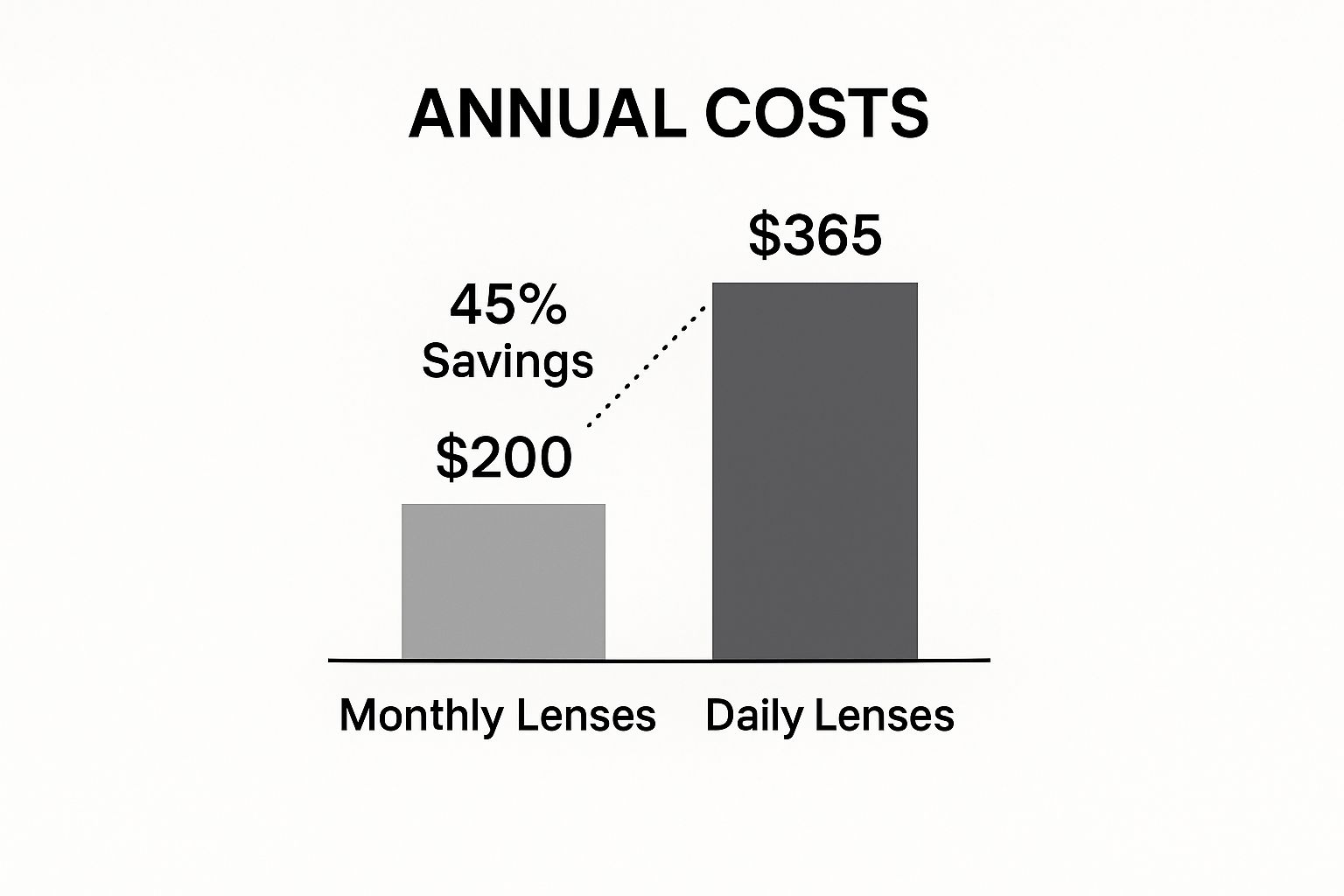
As you can see, sticking with monthlies can lead to roughly 45% in savings each year compared to using daily disposables.
Convenience and Lifestyle Fit
Beyond the price tag, you have to ask which lens truly suits your lifestyle. This is where the two options couldn't be more different.
-
Daily Lenses: Their biggest selling point is pure, unmatched simplicity. You pop in a fresh pair in the morning and simply toss them out before bed. No cleaning, no solutions, no cases to worry about. This is a game-changer for people who travel a lot, have a hectic schedule, or just hate the idea of one more daily chore.
-
Monthly Lenses: These require a bit of discipline. You’ll need to commit to a quick, two-minute cleaning routine every single night. It’s a non-negotiable step that quickly becomes second nature for most people. For those who like a set routine and prefer the ease of only buying a few boxes a year, monthlies offer their own unique brand of convenience.
At the end of the day, you have to be honest with yourself. Are you the type of person who can stick to a nightly cleaning routine, or does the grab-and-go freedom of dailies sound much more appealing?
A Word on Hygiene and Eye Health
From a purely hygienic standpoint, daily disposables have a natural edge. Every morning, you're starting with a perfectly sterile lens, which dramatically cuts down the risk of protein buildup or contamination. This makes them a fantastic option for anyone with sensitive eyes or seasonal allergies.
That said, it doesn't mean monthly lenses are any less safe. When you follow the cleaning and disinfecting instructions to the letter, they are perfectly healthy. Nearly all hygiene issues with monthlies come down to user error—things like topping off old solution instead of using fresh, skipping the "rub and rinse" step, or trying to stretch a 30-day lens into 45 days.
If you’re still weighing the health aspects, our guide on whether daily contacts are better for eye health provides a much deeper dive.
Showdown: Monthly vs. Daily Lenses
Sometimes, seeing it all laid out side-by-side makes the decision crystal clear. This table cuts through the noise and compares the two options on the features that matter most.
| Feature | Monthly Contact Lenses | Daily Disposable Lenses |
|---|---|---|
| Annual Cost | Lower (includes lenses + solution) | Higher (lenses only) |
| Daily Routine | Requires nightly cleaning & storage | None (wear and toss) |
| Convenience | Fewer purchases per year | Fresh pair every day, ideal for travel |
| Hygiene | Safe with proper, consistent care | Highest level of hygiene, less risk |
| Best For | Budget-conscious, routine-oriented users | Busy lifestyles, sensitive eyes, part-time wearers |
| Environmental Impact | Less plastic and packaging waste | More daily waste generated |
Ultimately, there’s no single right answer. The best lens is the one that you'll wear correctly and that seamlessly fits into your life without adding stress.
The Real Price Tag: Breaking Down the Cost of Monthly Lenses
When you're weighing your contact lens options, money is almost always part of the conversation. Monthlies have a reputation for being the wallet-friendly choice, but the "true cost" isn't just what you pay for the lenses themselves. To get the full picture, you have to add in the cost of keeping them clean and safe.
Think of it this way: the price of the lenses is just the down payment. Because you're reusing them, you'll also need a steady supply of multi-purpose cleaning and disinfecting solution. A standard bottle usually lasts about a month, so this becomes a regular, recurring expense you need to build into your budget.
On top of that, you need a clean place to store them. A grimy case is a breeding ground for nasty eye infections. That's why eye doctors recommend swapping out your storage case at least every three months. The good news? Most bottles of solution come with a fresh case, which makes it easy to stay on top of this crucial habit.
A Sample Annual Budget
So, what does this all add up to over a year? Let's crunch some numbers. Just remember, these are ballpark figures—your actual costs will depend on your specific brand, prescription, and where you buy everything.
- The Lenses: A one-year supply of standard monthly contacts typically runs between $200 to $350.
- The Solution: You'll need about 12 bottles a year, which will likely cost somewhere in the range of $100 to $150.
- The Cases: If your solution doesn't include them, a pack of four for the year is a tiny expense, usually under $10.
Do the math, and you're looking at a total annual cost of roughly $310 to $510. For a deeper dive into all the factors that influence these numbers, our guide on how much prescription contact lenses cost has you covered.
When you put this up against dailies, the savings really start to show. A year's supply of daily disposables can easily set you back $500 to $800, sometimes even more. Once you calculate the full annual investment, the financial advantage of monthlies becomes crystal clear.
How Specialty Lenses Affect the Price
Of course, not all eyes are the same. If you have astigmatism, you’ll need toric lenses, which have a more complex design to correct that specific issue and, you guessed it, cost more than standard ones. The same goes for multifocal lenses, which are for people who need help seeing both up close and far away (presbyopia). These specialty lenses come with a higher price tag.
Smart Ways to Save on Your Lenses
The good news is you don’t have to pay full price. There are some really effective ways to keep your monthly lens costs down without cutting corners on your eye health.
- Lean on Your Vision Insurance: Most plans give you a pretty generous annual allowance for contact lenses. Use it! It can dramatically lower what you pay out-of-pocket, and in some cases, cover the entire cost.
- Buy in Bulk: Don't just buy one box at a time. Purchasing a full year's supply at once often qualifies you for big discounts and mail-in rebates from the manufacturer that you simply can't get otherwise.
- Check Out Online Retailers: Buying contacts online has become a game-changer. It’s a huge market, especially in places like Europe, where the industry is expected to hit USD 27.8 billion by 2035. Online services can offer very competitive prices and even set you up with a subscription so you never have to worry about running out. You can read the full research about the contact lens market to see just how big this trend is.
Answering Your Top Questions About Monthlies

Even after sorting through the pros, cons, and costs, you probably have a few more questions rattling around. That’s a good thing. When it comes to your eyes, being well-informed is non-negotiable.
Let's dive into some of the most common things people ask when they're considering monthly contacts. We'll give you the straight answers you need to feel confident in your choice.
Can I Sleep in My Monthly Contact Lenses?
This is a big one, and the answer for most people is a hard no. The vast majority of monthly contact lenses on the market are designed for daily wear only. That means taking them out every single night, without exception.
Think of it this way: sleeping in a standard monthly lens is like putting a plastic bag over your cornea. It chokes off the oxygen supply your eye needs to stay healthy. This oxygen starvation skyrockets your risk for some pretty nasty and painful eye infections.
Now, there is one exception to this rule: "extended wear" contacts. These are a special type of lens made from super-breathable materials that are FDA-approved for overnight wear.
You should never sleep in any contacts unless your eye doctor has specifically prescribed you extended wear lenses and given you the green light. They are the only ones who can determine if your eyes are healthy enough to handle them.
What Happens If I Wear Lenses Longer Than 30 Days?
We get it. It's tempting to try and stretch that last pair for another week or two to save a little money. But this is one of the worst gambles you can take with your eye health.
Imagine your contact lens is a tiny sponge. For 30 days, it’s constantly absorbing proteins, lipids, and all sorts of gunk from your tears. After that mark, the material starts to break down. It can't let enough oxygen through, its surface gets rough, and no amount of cleaning solution can truly get it clean.
Pushing a lens past its expiration date can lead to a whole menu of problems:
- Vision that’s blurry or feels hazy
- Serious discomfort, irritation, and redness
- A much higher risk for sight-threatening infections like microbial keratitis
That 30-day replacement schedule isn’t a suggestion—it’s a safety mandate from the manufacturer and the FDA. Sticking to it is the only way to keep your eyes safe.
Can I Swim or Shower While Wearing My Contacts?
Another absolute no. Never, ever let your contacts come into contact with water. That means no showering, swimming in a pool, hopping in a hot tub, or even opening your eyes in a lake or ocean while wearing them.
Water is teeming with microorganisms you don't want anywhere near your eyes. The most infamous is a nasty little amoeba called Acanthamoeba. If it gets trapped under your lens, it can cause Acanthamoeba keratitis—a severe, incredibly painful infection that can lead to permanent vision loss and even blindness.
Always take your lenses out before your head goes near water. If you get splashed by accident, the safest bet is to remove the lenses right away. Either clean and disinfect them obsessively or, better yet, just toss them and start with a fresh pair.
How Do I Know If Monthly Lenses Are Right for Me?
The best lens for you really comes down to a mix of your lifestyle, budget, and how disciplined you are with routines.
Monthlies could be a perfect match if:
- You're watching your budget. For full-time wearers, they are hands-down the most cost-effective option.
- You're a creature of habit. If you can commit to a nightly cleaning routine without fail, you're a great candidate.
- You like simplicity. Fewer boxes and less waste is a nice environmental and organizational perk.
On the other hand, if your schedule is all over the place, you travel a lot, or you know you’ll be tempted to crash without cleaning them, daily disposables might be a safer and more convenient choice.
Ultimately, there’s only one way to know for sure. Book a visit with your optometrist for a full eye exam and contact lens fitting. They'll evaluate your eye health, talk through your daily habits, and help you find the lens that gives you sharp, comfortable, and healthy vision.
At Contact Lens HQ, our mission is to provide you with the most accurate and reliable information, reviewed by eye care professionals, so you can make the best decisions for your vision. Explore our extensive library of guides and reviews to learn more at https://contactlenshq.com.


