
So, what's the magic number for how long you can keep daily disposable contact lenses in? The quick and easy answer is somewhere between 8 and 16 hours.
Think of daily disposables like a fresh pair of socks you put on every morning. They're designed to give you one full day of crisp, clear, and comfortable vision before you toss them out for good. Sticking to this timeframe is the best way to make sure your eyes are getting all the oxygen they need to stay happy and healthy.
The 8 to 16 Hour Rule for Daily Contacts
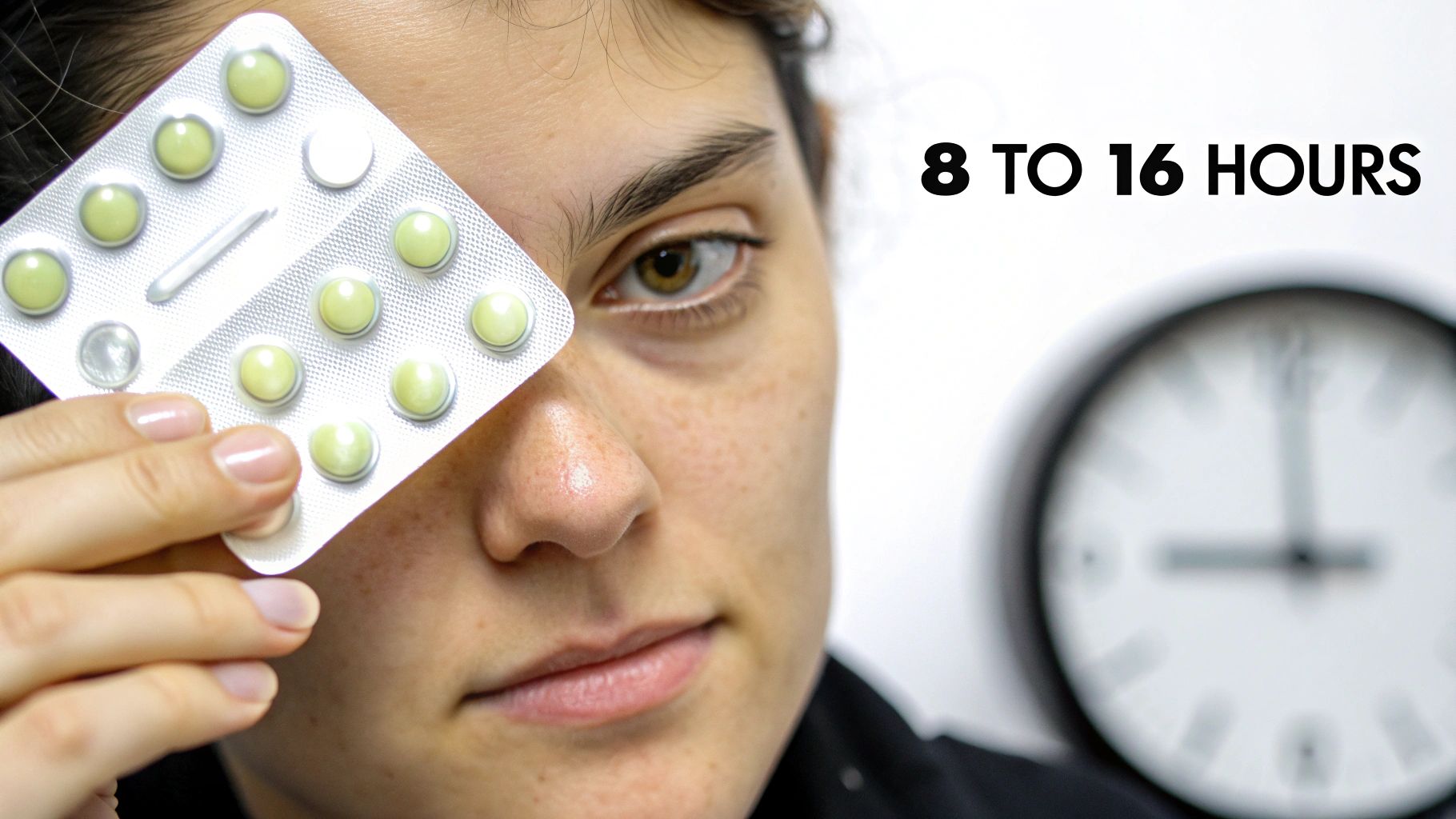
Now, while that 8-to-16-hour window is a great rule of thumb, it’s not set in stone. The truth is, the perfect wear time is unique to you. It really comes down to a mix of your personal eye health, your daily routine, and even the specific brand of contacts you’re using. At the end of the day, your eyes will tell you what they can handle.
For instance, if you spend your day in a dry, air-conditioned office staring at a screen, you might find your eyes start feeling tired after about 10 hours. On the other hand, someone in a more humid climate might easily hit that 16-hour mark without a problem. This is exactly why it’s so important to get a feel for your own personal comfort zone to keep your eyes in great shape for years to come.
This general guideline isn’t just pulled out of thin air; it’s backed by real-world experience and clinical data. Studies have shown that while some of the newer, more advanced lenses can stay comfortable for up to 16 hours, most people naturally average around 8 hours of daily wear.
Quick Guide to Daily Contact Lens Wear Times
To give you a better idea of where you might fall, this table breaks down some common scenarios. Think of it as a handy cheat sheet, but remember, nothing beats the personalized advice you get from your own eye doctor.
| User Profile | Recommended Maximum Wear Time | Key Considerations |
|---|---|---|
| New Wearers | 4-6 hours, gradually increasing | Your eyes need time to get used to the lenses. Starting slow helps build tolerance and avoid irritation. |
| Experienced Users | 12-16 hours | This assumes you don't have issues like dry eye and depends heavily on the lens material. |
| Users with Dry Eyes | 8-10 hours | A shorter wear time is key to preventing discomfort and keeping irritation at bay. |
| Office Workers | 10-12 hours | Hours of screen time and recycled office air can dry out your eyes, so breaks and shorter wear are a must. |
This table helps put things in perspective, but it's not a substitute for paying attention to your body.
The most important rule is simple: if your eyes feel tired, dry, or irritated, it’s time to take your lenses out, regardless of how long you’ve had them in. Listening to your body is the best way to prevent complications.
If you're curious about how this compares to other types of lenses, our guide on how long to wear contacts provides a more complete look at different wear schedules.
Understanding the Science Behind Wear Time Limits
Ever wondered why your eye doctor is so strict about the time limit on daily contacts? It’s not just an arbitrary rule. It all comes down to a delicate balancing act between oxygen, moisture, and basic hygiene that your eyes absolutely need to stay healthy. A contact lens, no matter how high-tech, is still a foreign object sitting directly on your cornea.
Here’s something fascinating about your cornea: it doesn't have any blood vessels. Instead of getting oxygen from your blood, it has to "breathe" directly from the air. A contact lens creates a thin barrier over it, and while modern lenses are incredibly breathable, they still reduce the oxygen supply. The longer you wear it, the more oxygen-deprived your cornea becomes.
Think of a fresh daily lens like a tiny, perfectly hydrated sponge. The moment you put it in, it’s soft, flexible, and full of moisture, giving you that crystal-clear, comfortable vision. But as the hours tick by, that little sponge starts to interact with everything in its environment—namely, your tears.
The Role of Your Tear Film
Your tear film isn't just salty water; it’s a complex, three-layered coating that keeps your eyes lubricated, washes away debris, and protects against infection. A contact lens floats right on top of this film. To stay soft and pliable, the lens naturally soaks up some of your tears throughout the day.
After 8 or 10 hours, this can start to thin out your natural tear layer, leading to that gritty, dry-eye feeling we all know and hate. This is a huge reason why the comfortable wear time for daily lenses often feels shorter as the day wears on, especially if you’re already prone to dry eyes.
Buildup Is the Enemy of Comfort
It's not just about moisture loss. Your tears are also full of natural stuff like proteins, lipids (fats), and calcium. Over a day of wear, these substances inevitably start clinging to the surface of your contact lenses, creating a hazy film. Daily disposables are simply not built with the robust, deposit-resistant coatings that you’d find on monthly lenses.
This gunk creates a few big problems:
- It can cloud your vision, making everything look a bit blurry or foggy.
- It creates a rough, abrasive surface that can make it feel like you have a grain of sand stuck in your eye.
- It becomes a perfect breeding ground for bacteria, which dramatically increases your risk of a nasty eye infection.
Because daily lenses are so thin and designed for one-time use, there's no safe way to clean this buildup off. Trying to reuse them is like eating off a dirty paper plate—you're just asking for trouble and gambling with your vision.
The materials in today's daily disposables are true marvels of engineering, specifically optimized for a single day of high performance. To get a better sense of the technology, you can dive deeper into the differences between silicone hydrogel and hydrogel contact lenses in our guide. By sticking to the recommended wear schedule, you get all the amazing benefits of these lenses without any of the scary risks.
How Your Lifestyle Affects Your Wear Time
That official 8 to 16-hour recommendation for daily contacts? Think of it less like a daily goal and more like a maximum speed limit. The real answer for how long you can wear daily contact lenses safely and comfortably is deeply personal, and it changes based on your eyes, your health, and even where you spend your day. It’s like a personal wear-time "clock" that speeds up or slows down depending on a few key things.
Your own biology is the biggest factor. If you're someone who naturally has dry eyes or battles seasonal allergies, your comfortable wear time is almost certainly going to be shorter. These conditions mess with your tear film—the thin layer of moisture that keeps your eyes lubricated—making it tough for your eyes to stay happy with a lens sitting on them. For many, this can shrink the wear window down to just a few hours.
Your Environment Matters More Than You Think
Where you are and what you're doing has a huge impact on how your lenses feel. Imagine an office worker in a dry, climate-controlled building staring at a computer screen all day. That's practically a perfect storm for contact lens misery. The low humidity pulls moisture right out of the lenses, and since we blink less when focused on a screen, our tears don't get a chance to rewet them properly.
On the flip side, someone spending their day outdoors in a humid, clean-air environment might find they can easily wear their lenses for the full recommended time without a hint of trouble.
This is all about keeping your cornea—the clear front part of your eye—healthy. It needs a good balance of oxygen and moisture to thrive.
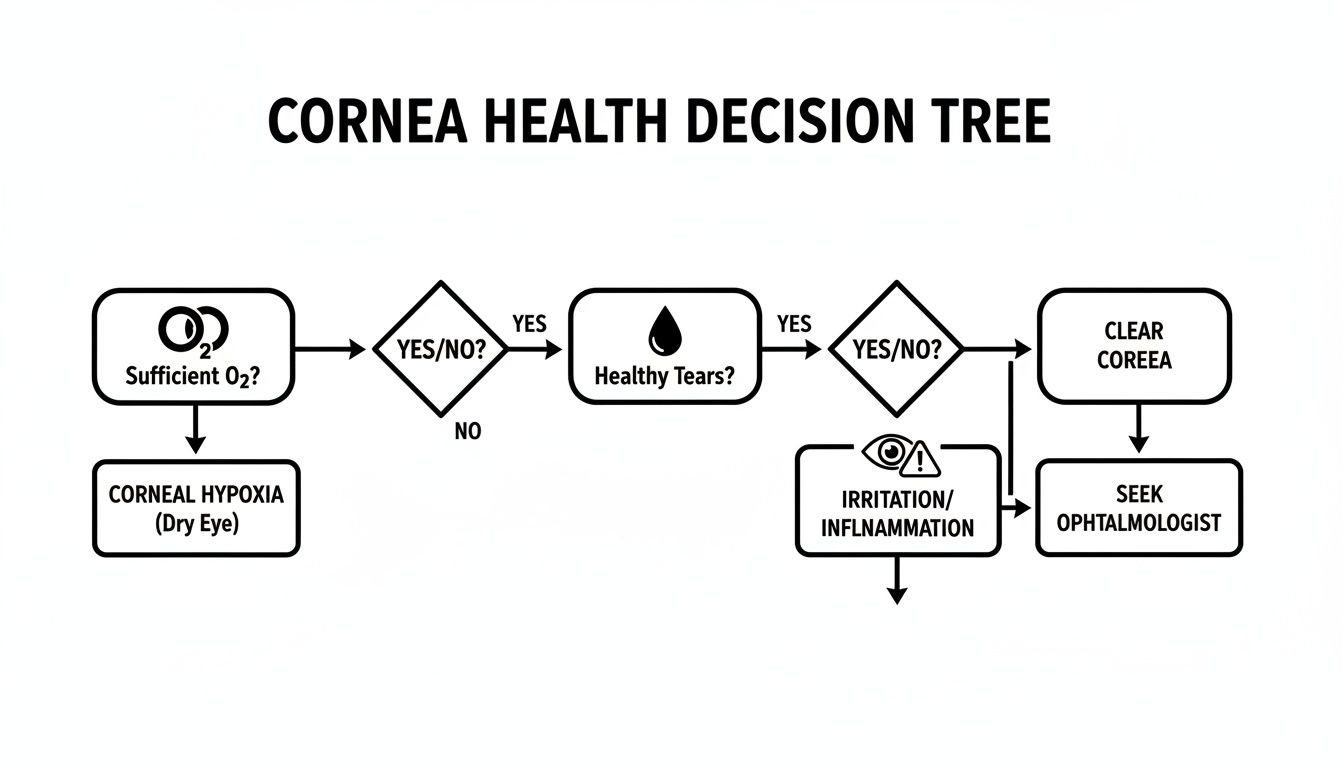
As the diagram shows, a healthy cornea depends on getting enough oxygen and maintaining a stable tear film to avoid irritation.
Lens Technology and Your Personal Tolerance
The material of the lens itself plays a massive role. Newer silicone hydrogel lenses are a game-changer because they're designed to let way more oxygen pass through to the eye compared to the older hydrogel plastics. For many people, this superior breathability is what makes longer wear times possible.
But even with the most advanced lens technology, your personal tolerance is the final judge. We're all different. One study looking at 53 female soft lens wearers found the average wear time was just 8.19 hours. In fact, nearly 70% of them wore their lenses for 8 hours or less. This just goes to show that plenty of people reach their personal comfort limit long before they hit the number printed on the box. You can read more about these personal tolerance findings to see how your own experience stacks up.
The most important thing is to listen to your eyes. The number on the box is a guideline. The feeling of dryness, irritation, or blurry vision is your body telling you, loud and clear, that it's time to take them out.
Ultimately, you have to become the expert on your own eyes. Pay attention to how they feel throughout the day and in different situations. When you understand how your daily life affects your comfort, you can create a wear schedule that works for you, keeping your eyes healthy and comfortable for years to come.
Warning Signs It’s Time to Take Your Lenses Out
While the 8 to 16-hour window is a great starting point, your body is the ultimate authority on contact lens wear time. Your eyes are actually pretty good at telling you when they’ve had enough. The real skill is learning to listen to them.
Ignoring discomfort and trying to "tough it out" is one of the worst things you can do. Pushing your lenses past their limit can quickly turn a minor annoyance into something much more serious, like a corneal scratch or a nasty infection.
Your Eyes Are Talking—Are You Listening?
If you notice any of the following, it’s a non-negotiable sign to take your lenses out right away. This isn't about being overly cautious; it's about protecting your vision.
- Redness: Are your eyes looking more pink or bloodshot than usual? That’s a classic sign of irritation and a cry for more oxygen.
- Gritty Sensation: If it feels like you have a grain of sand stuck in your eye, your lenses are likely too dry or have built up deposits.
- Sudden Blurry Vision: Your vision through contacts should be sharp and clear. Any fogginess or haziness means something is off—the lens might be dirty, damaged, or simply not sitting right anymore.
- Light Sensitivity: Is that normal overhead light suddenly feeling painfully bright? This often points to inflammation and stress on your cornea.
- Watery Eyes: It sounds backward, but sometimes your eyes will start tearing up like crazy in response to extreme dryness or irritation. It's your body's emergency lubrication system kicking in.
- Pain or Stinging: This one’s a no-brainer. Contact lenses should be comfortable—so comfortable you forget they're there. Any stinging, burning, or actual pain is a major red flag.
When you experience any of these symptoms, your eyes are begging for a break. Taking the lenses out lets your cornea breathe, rehydrate, and recover.
When in doubt, take them out. This is the single most important rule of contact lens wear. Your vision is too precious to risk for the sake of a few more hours of wear.
Ultimately, understanding how long you can wear daily contact lenses is less about watching the clock and more about paying attention to your own body. Always, always prioritize how your eyes feel over how many hours have passed.
Daily Disposable vs. Extended Wear Lenses
New contact lens wearers often get tangled up on this point: if some contacts are safe to sleep in, why are my daily disposables so different? It’s a great question, and the answer comes down to how these lenses are fundamentally designed.
Think of it this way. A daily disposable lens is like a paper plate—perfectly clean, super convenient for one meal, and meant to be tossed. An extended wear lens is more like a sturdy ceramic plate, engineered for repeated use as long as you clean and care for it properly.
Core Differences in Lens Design
You can't swap one for the other because their very construction is worlds apart. Daily disposable contact lenses are made from an incredibly thin, soft material. The goal is maximum comfort and enough oxygen flow to get you through a single day. But that delicate build makes them too fragile to handle cleaning.
Extended wear lenses are a different beast entirely. They’re crafted from advanced materials like silicone hydrogel, which is not only tougher but also far more breathable. This high level of oxygen permeability is the key—it’s what allows them to be worn for longer stretches, sometimes even overnight, without depriving your cornea of the oxygen it needs to stay healthy.
Trying to clean and re-wear a daily lens is asking for trouble. The material can easily develop microscopic tears you can't even see. These tiny rough patches can scratch your eye and become a breeding ground for nasty bacteria.
To make these critical differences crystal clear, let's look at them side-by-side.
Daily Disposable vs. Extended Wear Lenses
This table breaks down the key features and safety protocols for each type, showing why their wear schedules are so different.
| Feature | Daily Disposable Lenses | Extended Wear Lenses |
|---|---|---|
| Approved Wear Time | Single Day (8-16 hours) | Up to 7 days continuously (brand specific) |
| Material Thickness | Very thin and flexible | Thicker and more durable |
| Oxygen Permeability | High for single-day wear | Very high to support overnight wear |
| Cleaning Required | None; discard after use | Daily cleaning and disinfection required |
| Risk of Buildup | Low (discarded before buildup occurs) | Higher (requires diligent cleaning) |
Getting a handle on these distinctions is fundamental to understanding how long you can wear daily contact lenses safely. The rules simply aren't interchangeable. Daily disposables offer unmatched convenience and hygiene, but each lens type is a specialized tool for a specific job. Using them correctly is non-negotiable for protecting your vision.
Tips for Comfortable All-Day Lens Wear
Getting through a long day with your contacts feeling as fresh as they did when you first put them in is absolutely achievable. It all comes down to a few smart habits that support your eye health and keep you comfortable from morning until night.
You'd be surprised how small tweaks to your routine can make a huge difference in how your eyes feel after hours of lens wear. These simple strategies help tackle the usual suspects behind discomfort, like dryness and that all-too-familiar digital eye strain.
Smart Habits for Maximizing Comfort
Weaving these practices into your day can help you get the most out of your lenses and keep your eyes happy.
-
Use the Right Rewetting Drops. This is a big one. Not all eye drops are the same, and using the wrong kind can actually damage your lenses or irritate your eyes. Make sure the bottle is specifically marked "for use with soft contact lenses."
-
Stay Hydrated from Within. It's a simple truth: if you're dehydrated, your eyes will be, too. Drinking plenty of water throughout the day helps your body produce a healthy tear film, which is your eyes' natural lubricant.
-
Follow the 20-20-20 Rule. Staring at a screen for hours on end is a surefire way to get dry, tired eyes. The fix is easy. Every 20 minutes, look away from your screen at something about 20 feet away for at least 20 seconds. This little break gives your eye muscles a chance to relax and helps you remember to blink.
The single biggest mistake I see people make is trying to "power through" discomfort. Your eyes are telling you something! Proactive care, like using the right drops and taking screen breaks, is the secret to wearing your lenses comfortably all day without pushing them past their limits.
A Gradual Start for New Wearers
If you're just starting out with daily contacts, please don't jump straight into a 12-hour day. That’s a fast track to irritation. Your eyes need some time to get used to having a lens on them, and a slow, steady approach is the best way to build up your wear time comfortably.
Most eye doctors will recommend a break-in schedule. You might start with just a few hours—say, two to four—on the very first day. After that, you can add an hour or two each day, working your way up to a full, comfortable day of wear. By the end of the first week, many new wearers can easily handle 10 hours. For a deeper dive into these protocols, you can find more professional insights on new wearer adaptation strategies at pmc.ncbi.nlm.nih.gov.
Got More Questions About Daily Contacts?
We've covered the basics, but let's be honest, real-life situations always bring up more specific questions. Here are a few common ones I hear all the time, with straightforward answers to help you navigate your daily lens wear with confidence.
Can I Pop My Dailies Out for a Nap and Put Them Back In?
This is a big no-no. Once you take a daily disposable lens out, it needs to go straight into the trash—even if it's only been in for a few minutes.
Think of that blister pack as a sterile, one-time seal. As soon as you open it and handle the lens, it's no longer sterile. Trying to reinsert it is like inviting bacteria from your fingers and the air right into your eye. These lenses aren't built for cleaning or storing, so reusing them is a surefire way to risk a nasty infection.
Think of a daily disposable lens like a single-use bandage. You wouldn't take one off, set it on the counter, and then put it back on a cut later. Treat your eyes with the same care—one and done.
What if I Accidentally Fall Asleep in My Daily Lenses?
It happens to the best of us. Dozing off for a quick nap in your dailies isn't the end of the world, but it’s definitely not a habit you want to get into. You’ll probably wake up with your eyes feeling dry, gritty, and red, and the lens might feel like it's suction-cupped to your eye.
The key is not to panic and try to rip it out. Your first move should be to rehydrate everything. Use plenty of sterile saline or some contact lens-approved rewetting drops to moisten the lens. Wait a few minutes, blink a few times, and it should loosen up enough to remove gently. If you notice any lingering pain, vision changes, or redness that won't go away, give your eye doctor a call just to be safe.
Are There Better Daily Lenses for People with Dry Eyes?
Yes, absolutely! If you're constantly feeling that dry, scratchy sensation long before your day is over, you’re not alone. The good news is that contact lens technology has come a long way.
Many top brands now make daily disposables specifically for people prone to dryness. These lenses are designed with built-in moisture technology, like special wetting agents that are slowly released throughout the day or advanced materials that hold onto water more effectively. If your current lenses are making your eyes feel like a desert by 3 p.m., tell your eye doctor. They can recommend a different brand that might make all the difference.
At Contact Lens HQ, our mission is to give you clear, doctor-vetted information so you can keep your eyes healthy and your vision sharp. For more in-depth guides and reviews, head over to our main site at https://contactlenshq.com.


