
When you're weighing daily contact lenses vs bi weekly, it really boils down to a trade-off: convenience or cost. Daily lenses are the ultimate in hygiene and simplicity—no cleaning, no fuss. On the other hand, bi-weekly lenses are easier on the wallet, especially if you wear contacts every day and don't mind a nightly cleaning routine.
The right choice for you hinges entirely on what you value most: effortless, fresh-lens comfort or keeping long-term costs down.
A Quick Guide to Daily vs Bi-Weekly Lenses
Getting a handle on the basic differences between these two is the best place to start before chatting with your optometrist. Both will give you clear vision, but they’re built for completely different lifestyles and priorities.
-
Daily Disposable Lenses: Think of these as single-serving contacts. You pop in a brand-new, sterile pair each morning and simply toss them out before bed. No cleaning solutions, no storage cases, no hassle. This makes them a top pick for both convenience and eye health.
-
Bi-Weekly Lenses: These lenses are designed to last for up to 14 days. The catch? They require nightly maintenance. You have to remove them, clean them thoroughly, and store them in a disinfecting solution every single night. Sticking to this routine is non-negotiable to avoid nasty protein buildup and keep your eyes safe from infection.
For a deeper dive into what makes single-use options so popular, check out our guide on the benefits of daily contact lenses.
Key Differences at a Glance
Let's break down how these two options stack up side-by-side. The table below gives you a quick snapshot of the most important factors.
Quick Comparison Daily Lenses vs Bi-Weekly Lenses
| Feature | Daily Contact Lenses | Bi-Weekly Contact Lenses |
|---|---|---|
| Replacement Schedule | Discarded every day | Replaced every 14 days |
| Maintenance | None—just throw them away | Daily cleaning and storage required |
| Hygiene | Highest level; a fresh lens daily | Good, but relies on perfect cleaning habits |
| Upfront Cost | Higher initial purchase price | Lower initial purchase price |
| Ongoing Costs | No extra supplies needed | Requires cleaning solution and cases |
| Best For | Allergies, busy schedules, part-time wear | Consistent daily wear, budget-conscious users |
This table shows that while dailies might seem more expensive at first glance, the price for bi-weeklies creeps up once you factor in the necessary cleaning supplies.
The visual below really drives home the trade-offs between cost, how often you replace them, and even the amount of waste they generate each month.
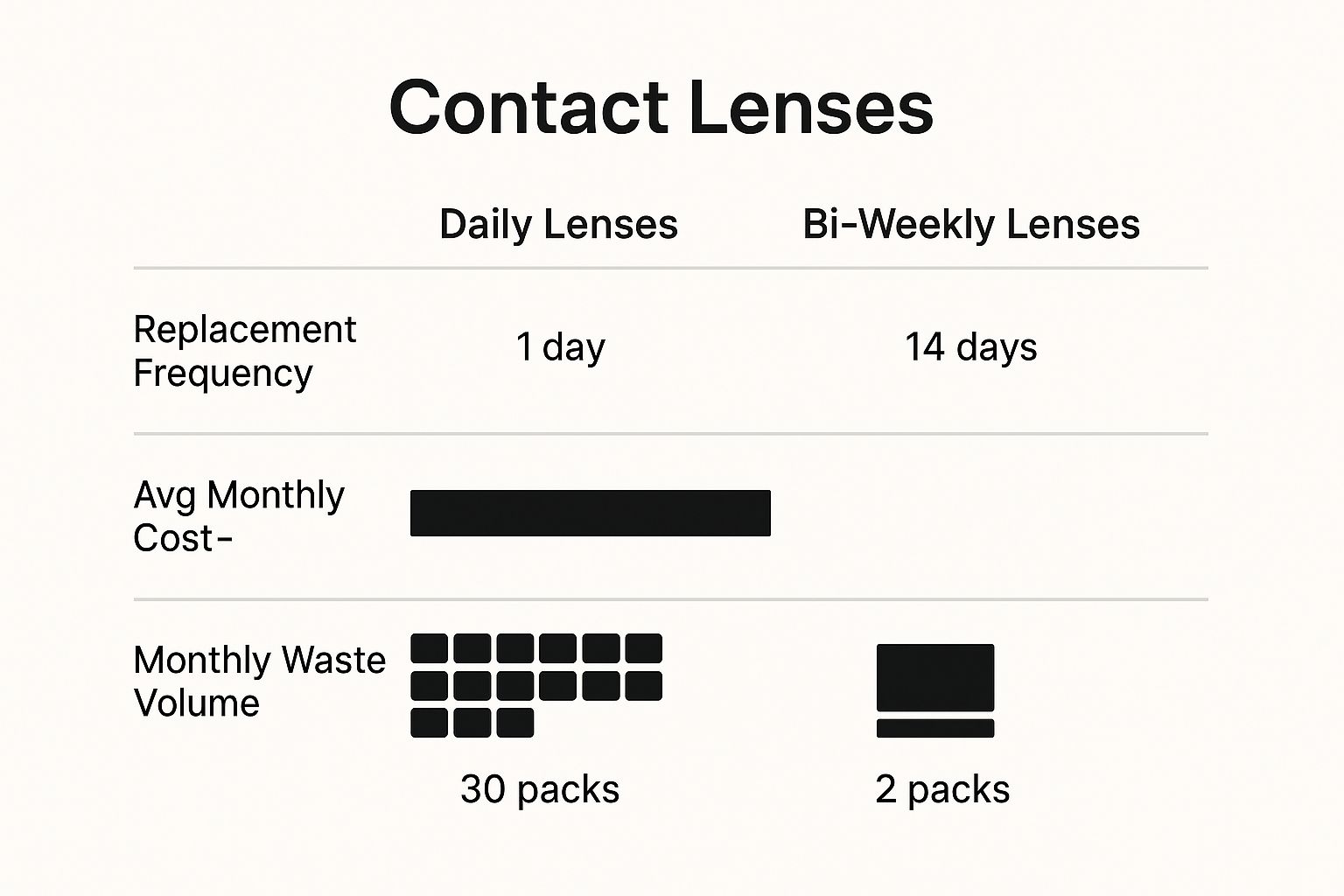
As you can see, daily disposables simplify your life by cutting out the entire cleaning process. That convenience not only saves time but also significantly reduces the risk of eye infections that can come from improper lens care.
The Market Shift Toward Daily Disposables
If you look back over the last 20 years, the world of vision correction has changed in a big way. The market used to be all about reusable lenses, but now we're seeing a massive and consistent move toward daily disposables. This isn't just a passing fad—it's a real shift in how eye care experts and patients think about contact lenses.
This evolution comes down to two things: a modern focus on convenience and a non-negotiable demand for better eye health. People lead busy lives and simply don't want to deal with the nightly routine of cleaning and storing bi-weekly or monthly lenses. The idea of starting with a fresh, sterile lens every morning is incredibly appealing, as it sidesteps the risks that come with poor cleaning habits or dirty lens cases.
The Declining Popularity of Reusable Lenses
The numbers don't lie. For a long time, bi-weekly lenses were the happy medium, balancing the convenience of disposables with the lower upfront cost of monthlies. But as daily lens technology got better and the prices became more accessible, that middle ground started to disappear.
Global fitting trends tell the whole story. Back in 2000, daily disposables were just a small slice of the pie, making up only 17.1% of soft lens fittings worldwide. Jump to 2023, and that figure has skyrocketed to 46.7%. This massive growth has squeezed out reusable options, especially bi-weeklies, which are now a much smaller part of the market. You can dive deeper into these statistics in this detailed analysis of contact lens usage.
Recent data from 2019 to 2023 shows that among new soft lens fittings, daily disposables account for 47%, while bi-weekly lenses have fallen to just 9%. This highlights a clear and decisive move away from two-week replacement schedules.
This isn't just about what manufacturers are pushing; it’s about what people are choosing. Optometrists are increasingly recommending daily lenses as the healthiest way to go, and patients are loving the simplicity and comfort that comes with them.
Why Modern Lifestyles Demand Daily Disposables
The move toward dailies just makes sense for how we live today. When you think about it, there are plenty of everyday situations where daily disposables have a clear edge over bi-weeklies.
- The Occasional Wearer: If you only wear contacts for sports, going out, or on weekends, dailies are a no-brainer. You don't have to worry about cleaning lenses that you might not use again for several days.
- The Traveler: Packing becomes a breeze. Forget about lugging around bottles of solution and cases; you just count out the number of pairs you need for your trip and go.
- The Allergy Sufferer: Starting with a fresh lens each day means you avoid the buildup of pollen, dust, and other irritants that can cling to a reusable lens. For anyone with seasonal allergies, this can be a game-changer.
These real-world scenarios make a pretty strong argument. The daily contact lenses vs bi weekly decision often comes down to which option fits more seamlessly into your life. The market has answered that call, making daily disposables more advanced and affordable than ever and cementing their place as the top choice for more and more people around the world.
Comparing the True Cost of Ownership
When you're standing in front of the contact lens aisle, it's easy to let the price on the box make the decision for you. At a glance, bi-weeklies often look like the clear winner for your wallet. But the real story of what you'll spend over a year is a lot more nuanced. To figure out what you're really paying, you have to look past that initial sticker price and factor in everything else.
Daily disposables are refreshingly simple when it comes to budgeting. The price you see for an annual supply is pretty much your final number. There's no need to buy solutions or cases because you toss the lenses at the end of the day. It’s a clean, predictable expense.

On the flip side, bi-weekly lenses come with a few strings—and costs—attached. Since you're reusing them for up to 14 days, you have to commit to a strict cleaning routine. This means buying a whole kit of care products, and those ongoing purchases can really start to add up over a year.
The Hidden Costs of Bi-Weekly Lenses
That lower box price for bi-weeklies is just the starting point. To keep your eyes healthy and your lenses in good shape, you'll need to stock up on several must-have items. These aren't optional extras; they're essential for safe wear and can tack on an extra $150 to $250 to your annual budget.
Here's what you'll be buying on repeat:
- Multi-Purpose Solution: This is your biggest recurring expense. You’ll use it every single day for cleaning, rinsing, and disinfecting your lenses. A bottle might last you a month or two, so you'll be buying several throughout the year.
- Contact Lens Cases: To keep bacteria at bay, you need to replace your case every one to three months. It’s a small cost, but it's another thing to remember and another few dollars spent.
- Unexpected Replacements: Let's be honest, life happens. You might tear a lens while cleaning it, or watch in horror as one falls down the sink drain. These little accidents mean you'll have to break into your supply early, which could mean buying another box before you'd planned.
The global contact lens market, valued at around $7.9 billion in 2024, reflects a growing preference for the sheer convenience of daily disposables. People are increasingly choosing to sidestep the hassle and recurring costs of care products, which themselves make up a huge chunk of the market for reusable lenses.
To give you a clearer picture, let's break down how these costs might look over a full year.
Estimated Annual Cost Breakdown: Daily vs. Bi-Weekly Lenses
| Cost Component | Daily Lenses (Annual Estimate) | Bi-Weekly Lenses (Annual Estimate) |
|---|---|---|
| Contact Lenses | $600 – $900 | $300 – $500 |
| Cleaning Solution | $0 | $120 – $200 |
| Lens Cases | $0 | $15 – $25 |
| Replacement Lenses | $0 | (Variable, not included) |
| Total Estimated Cost | $600 – $900 | $435 – $725 |
As you can see, once you add in the necessary care products, the financial gap between the two types of lenses starts to narrow significantly.
How Your Wear Schedule Changes Everything
The most important factor in this whole cost debate isn't the price on the box—it's you. How often you actually wear contacts can completely change the math, making one option a bargain and the other a waste of money.
Let’s look at two very different wearers to see how this plays out.
Scenario 1: The Part-Time Wearer
Think about someone who only wears contacts on weekends or for social events, maybe 8-10 times a month.
- With Dailies: You just grab a fresh pair when you need one. A 90-pack of lenses could easily last for several months, making it a very smart, economical choice. You're not paying for lenses you don't use.
- With Bi-Weeklies: Here's the catch. A bi-weekly lens is only good for 14 days after you open the blister pack, no matter how many times you put it in your eye. If you only wear that pair three times, you still have to toss it after two weeks. That's a lot of money and material literally going down the drain.
For anyone who doesn't wear contacts daily, daily disposables are almost always the cheaper and more practical choice. You pay for exactly what you use, period.
Scenario 2: The Everyday Wearer
Now, let's picture someone who relies on contacts from morning to night, every single day.
- With Dailies: You'll be using 365 pairs a year. The upfront cost for that year's supply will definitely be higher than the initial price for bi-weeklies.
- With Bi-Weeklies: You'll go through about 26 pairs over the year. Even when you factor in the cost of solution and cases, the total annual expense often comes out lower for a dedicated, full-time wearer. If you want to dive deeper, you can find more details in our guide to understanding bi-weekly contact lenses.
Ultimately, a little quick math can tell you what you need to know. Figure out how many days a week you plan to wear contacts, and you’ll quickly see which option makes the most sense for your lifestyle and your budget.
Eye Health and Safety: What's Really at Stake?
When you’re weighing daily vs. bi-weekly contacts, your eye health should be at the top of the list. Both are perfectly safe when you follow the rules, but how they’re designed creates a huge difference in your day-to-day risk. It all boils down to the routine—or lack thereof—and what that means for keeping harmful bacteria away from your eyes.
Daily disposables are, hands down, the top choice for maintaining healthy eyes. It's really that simple. You pop in a fresh, sterile pair straight from the packet every single morning. This one-and-done approach completely sidesteps the cleaning and storing process, which is where things often go wrong with reusable lenses.
The Pitfalls of Reusable Lenses
Bi-weekly lenses are safe, but they introduce more room for error. Their safety is entirely dependent on you sticking to a flawless cleaning routine every night, without fail. Any slip-up, no matter how small, can turn a safe lens into a risky one.
It's easy to get complacent, and that's where the danger lies. Common mistakes that can lead to serious trouble include:
- Skimping on Cleaning: Not properly "rubbing and rinsing" your lenses leaves a film of protein, lipids, and germs that have built up all day.
- A Dirty Lens Case: Your case can quickly become a petri dish for bacteria. You have to clean it, dry it, and replace it regularly—at least every three months.
- "Topping Off" Solution: Just adding a bit of new solution to the old stuff in your case is a terrible habit. It dilutes the disinfectant, letting bacteria grow unchecked.
These little lapses can lead to big problems, including painful and sight-threatening infections. One of the worst is microbial keratitis, a nasty corneal infection often tied to poor contact lens care. If not treated quickly, it can cause permanent scarring and vision loss.
The real health advantage of daily disposables is that they take human error out of the equation. By getting rid of the cleaning and storing steps, you close off the main pathways for bacteria to get into your eye.
What Do the Experts Say?
The move toward dailies isn’t just a trend; it's a recommendation backed by eye care professionals who put patient safety first. A fresh lens every day also means less buildup of allergens like pollen and dust, which is a huge relief for anyone with sensitive eyes. This blend of health and convenience is tough to beat.
In fact, the professional consensus is overwhelmingly on the side of dailies. A staggering 72% to 92% of eye care practitioners worldwide recommend silicone hydrogel daily disposables as the safest, healthiest option for their patients. They know that a single-use design avoids all the risks tied to lens solutions and cases. You can find more data on the disposable contact lens market on straitsresearch.com.
This strong professional endorsement is a major reason so many people are making the switch. If you're new to contacts or thinking about an upgrade, our guide on whether daily contacts are a better choice for your eyes can give you even more to think about.
How Lens Material and Oxygen Flow Fit In
Beyond just hygiene, the lens material itself is critical for keeping your eyes healthy. Most modern contacts, whether daily or bi-weekly, are now made from silicone hydrogel. This material is a game-changer because it lets a lot more oxygen reach your cornea than older hydrogel plastics did.
Why is oxygen so important?
- A Healthy Cornea: Your cornea doesn't have blood vessels; it gets its oxygen straight from the air. High oxygen flow keeps it healthy and clear.
- Less Irritation: Lenses that "breathe" better feel more comfortable, especially at the end of a long day, cutting down on dryness and red eyes.
- Lower Infection Risk: A cornea that gets plenty of oxygen is naturally more resistant to infection.
While you can find silicone hydrogel in both lens types, dailies really maximize the benefits. With a brand-new lens each morning, you guarantee that oxygen transmission is never blocked by the protein deposits that build up on reusable lenses, even with perfect cleaning. This consistent, high-level oxygen flow makes daily disposables a fantastic choice for long-term eye health and comfort.
How Your Lifestyle Determines the Right Lens for You

While we can crunch the numbers on cost and look at eye health statistics all day, the daily contact lenses vs bi weekly decision really boils down to one simple question: which one actually fits into your life? Your day-to-day routine, what you do for fun, and even your personality will have a massive say in whether dailies or bi-weeklies are the right fit.
The experience of wearing each type is worlds apart. Daily disposables give you what many of us call the "fresh lens feeling." Every single morning, you start with a perfectly clean, smooth, and comfortable lens, with zero leftover deposits or tiny scratches from the day before. This isn't just a small comfort—it’s a huge advantage for certain people and lifestyles.
The Clear Winner for Spontaneity and Sensitivity
If you struggle with allergies or dry eyes, daily lenses can be a total game-changer. Reusable lenses are magnets for allergens like pollen and dust, not to mention the protein deposits that naturally build up from your own tears. Even if you're a cleaning expert, some residue is bound to stick around, and that irritation can get worse over the 14-day wear cycle. Dailies just toss that problem in the trash every night.
This "toss-it" convenience is a lifesaver for anyone who needs flexibility. Just think about these situations:
- The Traveler: Packing is a breeze. Forget about lugging around bulky solution bottles and cases—just grab the number of pairs you need for your trip. You'll never worry about a solution spill in your suitcase or leaving your case behind.
- The Athlete: After a tough workout or a dip in the pool, fiddling with a lens that needs to be cleaned and stored is the last thing you want to do. With dailies, you can just take them out and put in a fresh pair (or switch to your glasses) without a second thought.
- The Occasional Wearer: Do you only wear contacts for nights out, sports, or on the weekends? Daily disposables are easily the smartest and most cost-effective choice. A bi-weekly lens has to be thrown out 14 days after you open the pack, no matter how many times you’ve actually worn it. Dailies let you pay only for what you use.
The bottom line is that daily disposables are built for a "grab-and-go" lifestyle. They take the mental work out of a nightly cleaning routine, which is perfect for busy professionals, students, or anyone whose schedule is all over the place.
The Discipline and Routine of Bi-Weekly Lenses
On the flip side, bi-weekly lenses are a better match for a different type of person—someone who thrives on routine and consistency. For those who wear contacts all day, every day, the nightly ritual of cleaning and storing their lenses can become second nature, just like brushing their teeth.
Wearing bi-weeklies successfully takes a bit of discipline. You really have to commit to the cleaning process every single night, without fail. This structured habit works great for people with a predictable schedule who don’t mind spending a few extra minutes on upkeep. For them, the significant cost savings make the routine more than worth it.
But you have to be honest with yourself here. If you’re the type to occasionally fall asleep with your makeup on, or if your evenings are often a chaotic rush, the health risks of cutting corners with bi-weekly lens care could easily cancel out the financial perks.
In the end, the best way to choose is to picture how each lens would fit into your typical day. Do you want the effortless simplicity of a fresh start every morning, or are you comfortable with a consistent maintenance routine that saves you money in the long run? Your answer will point you straight to the perfect lens for your life.
Finding Your Fit: Which Contact Lens Is Right for You?
Picking between daily and bi-weekly contact lenses isn't a simple features comparison. It's really about finding a lens that fits your actual life. What works perfectly for a busy professional might be a hassle for a student on a tight budget. Let's break down who these lenses work best for in the real world.
The Busy Professional
When your schedule is packed, convenience is everything. Early mornings and late nights don't leave much time or energy for extra chores, which is why the grab-and-go nature of daily disposables is a game-changer.
You never have to think about cleaning routines or remember to pack solutions for a last-minute business trip. Just wear them and toss them. This keeps your focus where it needs to be—on your work, not your lens care. For many, the higher cost is a small price to pay for the time and mental space it frees up.
The Occasional Wearer
Do you mostly wear glasses but like contacts for sports, weekends, or special occasions? If so, daily disposables are easily the most practical and cost-effective option.
A pack of bi-weekly lenses expires 14 days after you open it, no matter how many times you've actually put them in your eyes. If you only wear contacts a couple of times a week, you'll end up throwing away lenses you've barely used. With dailies, a 90-day supply can easily last you half a year, meaning you're only paying for the days you wear them.
For anyone who splits their time between glasses and contacts, daily disposables offer unbeatable flexibility and value. They completely eliminate the waste of discarding a bi-weekly lens that’s only been worn a few times.
This makes dailies the obvious choice for part-time wear. You always have a fresh, sterile pair ready to go without being locked into a two-week schedule.
The Budget-Conscious Student
For students or anyone keeping a close eye on their budget, bi-weekly lenses often win out financially if you wear contacts every single day. The lower upfront price for the lenses themselves can make a real difference.
Of course, you have to account for the ongoing cost of cleaning solutions and cases. Even so, the total annual expense for a full-time wearer can still be less than a year's supply of dailies. The trade-off here is discipline. You have to be diligent about the nightly cleaning routine to keep your eyes healthy and avoid infection.
The Athlete
Athletes need vision correction that delivers on performance, comfort, and safety. For anyone living an active lifestyle, daily disposables are the clear winner for a few important reasons.
- Hygiene: Tossing your lenses after a sweaty workout or a dip in the pool is a huge advantage. It dramatically reduces the risk of trapping bacteria or irritants against your eye.
- Convenience: No more fumbling with a lens case and solution in your gym bag. Just throw a spare pair in and you're set for after your game or workout.
- Comfort: A brand-new lens offers the best possible comfort and oxygen permeability. That’s a big deal during intense activity when your eyes are more likely to get dry or irritated.
Ultimately, these profiles are just starting points. Your final decision is a personal one, balancing your lifestyle, budget, and what you prioritize for your eye health. The most important step is to talk it all over with your eye doctor. They can give you a professional recommendation based on a close look at your eyes and a real understanding of your daily needs.
Common Questions About Contact Lenses
Diving into the world of contact lenses often brings up a few key questions, especially when you're trying to figure out if dailies or bi-weeklies are the right fit for you. Let's clear up some of the most common uncertainties people have.
Can You Sleep in Bi-Weekly or Daily Lenses?
The short answer is no. You should never sleep in standard daily or bi-weekly lenses unless your eye doctor has specifically prescribed an "extended wear" lens and given you the green light. Sleeping in regular lenses is a serious gamble with your eye health.
When your eyes are closed, the lens drastically cuts down the oxygen supply to your cornea. This can lead to some nasty problems, like painful infections, corneal ulcers, and in the worst cases, permanent vision damage. Always make it a habit to take your lenses out before you go to sleep.
What Happens If You Wear Bi-Weekly Lenses for Longer Than Two Weeks?
It's tempting to try and stretch that 14-day lifespan, but it's a really bad idea. The material in a bi-weekly lens is engineered to resist protein and lipid buildup for exactly two weeks. Once you go past that mark, the lens surface starts to degrade, making it a perfect home for bacteria to grow.
Pushing your lenses beyond their intended use can cause:
- Noticeable discomfort and that gritty, irritated feeling.
- Cloudy or blurry vision as deposits build up on the lens.
- A much higher risk of serious eye infections, such as keratitis.
Treat that replacement schedule as a hard deadline for your safety. It's there for a reason, and following it is one of the most important things you can do to protect your eyes.
The two-week replacement schedule isn't just a suggestion—it's a medical guideline based on the material's ability to remain safe and comfortable. Pushing beyond this limit compromises the integrity of the lens and puts your eye health at risk.
Can I Switch Between Daily and Bi-Weekly Lenses?
You absolutely can, but not without a visit to your optometrist. You can't just swap them out, even if your prescription power is the same. Daily and bi-weekly lenses are made from different materials, have different curvatures, and sit on your eye in unique ways.
Your eye doctor needs to perform a new fitting to make sure the new lens type moves correctly and allows enough oxygen to reach your cornea. Never just order a different kind of lens online using your old prescription—you need a new, specific prescription for that exact lens.
Are Daily Lenses Thinner or More Fragile?
Yes, generally they are. Daily disposables are typically made to be thinner and often have a lower water content than their bi-weekly counterparts. This isn't a flaw; it's by design. They're built for incredible comfort and breathability over a single day, so they don't need the same robust structure as a lens that has to withstand cleaning and handling for two weeks.
Because they're more delicate, you have to be a bit more careful not to rip them. But this thinner design is exactly why so many people find dailies to be exceptionally comfortable, almost like you're wearing nothing at all. The daily contact lenses vs bi weekly comfort debate often boils down to this fundamental difference and the unbeatable feeling of a fresh pair every single morning.
At Contact Lens HQ, we believe an informed choice is the best one you can make for your eyes. Check out our library of doctor-reviewed guides to find the perfect vision solution for your life. Start learning more at https://contactlenshq.com.


