
If you have astigmatism but crave the freedom of waking up with clear vision, extended-wear toric contact lenses might be exactly what you're looking for. These aren't your standard contacts; they're specialized toric lenses built from highly breathable materials that allow for continuous wear, even overnight, for up to a week.
They tackle the blurry vision caused by an irregularly shaped cornea while giving you the incredible convenience of not having to remove them every single night.
A Clearer Look at Continuous Vision Correction
To really get what makes these lenses special, it helps to understand the two powerful concepts working in tandem: correcting astigmatism and enabling extended wear. Each one solves a specific problem, and putting them together creates a game-changing solution for many people.
Understanding Astigmatism with a Simple Analogy
Think of a perfectly healthy eye as a basketball—completely round. When light passes through it, it focuses on one single, sharp point on your retina. The result? Crystal-clear vision.
Now, imagine an eye with astigmatism. It's shaped more like a football, with a more pronounced curve in one direction. This uneven shape scatters light, causing it to focus on multiple points instead of just one. This is what leads to that frustratingly blurry or distorted vision, whether you're looking near or far. It’s an incredibly common issue, but it requires a very specific type of lens to fix.
Introducing the Toric Lens Design
This is where toric contact lenses step in. Unlike regular spherical contacts that have the same prescription power all the way around, toric lenses are engineered with different powers in different areas of the lens. It's a custom-fit approach designed to perfectly counteract the football-like shape of the eye.
To keep the lens from spinning out of place—which would throw your vision right back into a blur—toric lenses have a built-in stability feature. This is often just a tiny weight at the bottom that uses gravity to keep the lens oriented correctly, ensuring your vision stays consistently sharp.
The Freedom of Extended Wear
So, what about the "extended wear" part? This all comes down to the material. These lenses are made from advanced silicone hydrogel, a material that's exceptionally porous. Think of it like a high-tech sponge that allows a ton of oxygen to flow directly through the lens to your cornea.
This high oxygen flow is absolutely essential for keeping your eyes healthy, especially when wearing contacts for days at a time, including while you sleep. For a deeper dive into how this works for all types of overnight lenses, you can check out our guide on general contact lenses for extended wear.
It's no surprise that demand for these lenses is skyrocketing. The global market for astigmatism contacts was valued at $3.5 billion in 2024 and is expected to climb to $5.9 billion by 2033, fueled by just how common this condition is. You can see the full breakdown of this growth in this detailed industry report.
How Toric Extended Wear Lenses Actually Work
The secret behind toric lenses is a brilliant mix of smart physics and cutting-edge material science. A standard contact lens is spherical, like a slice of a basketball. But a toric lens is different; it has multiple corrective powers built right into its surface to counteract the irregular, football-like shape of a cornea with astigmatism.
Because of this unique design, the lens has to sit on your eye in a very specific way. If it spins even a little, your vision goes from crisp and clear back to blurry in an instant. The real genius is in how these lenses manage to stay perfectly put.
The Secret to Stable, All-Day Vision
Ever played with a roly-poly toy that pops right back up no matter how you push it? Toric lenses use a similar concept to stay correctly oriented on your eye. They rely on clever design tricks that work with gravity and the natural pressure from your eyelids every time you blink.
These built-in stabilization features are what keep the lens locked in place, giving you the consistently clear vision you need. The two most common methods are:
- Prism Ballasting: This design makes the lens just a tiny bit thicker and heavier at the bottom. Gravity takes care of the rest, gently pulling the weighted edge down to keep the lens from rotating.
- Thin Zones: Other lenses are designed with super-thin zones at the top and bottom. When you blink, your eyelids squeeze these thin areas, nudging the lens back into the perfect position.
This stability is absolutely essential. A slight rotation can completely throw off your vision, so getting the orientation right is everything. Your eye doctor figures out the exact powers and alignment you need during a fitting, and you can learn how to decipher these details yourself by reading our guide to understanding contact lens prescriptions.
The Material That Makes Overnight Wear Possible
So, what about the "extended wear" part? That all comes down to the material the lens is made from: silicone hydrogel. This isn't your old-school plastic; it's an advanced polymer that lets a huge amount of oxygen pass right through it.
We often call this "breathability," and it’s the single most important safety feature for any lens you sleep in. It allows your cornea to get almost as much oxygen overnight as it would without a lens on at all, which is crucial for keeping your eyes healthy.
This innovation is a huge reason the toric soft contact lens market is booming, valued at $4.48 billion in 2024. It’s projected to hit $6.83 billion by 2032, with North America leading the charge with a 38.6% market share. When you combine the stable toric design with this highly breathable material, you get a powerful solution for clear, uninterrupted vision, day and night.
The Convenience and Cautions of Overnight Wear
The biggest draw for extended-wear toric lenses is, without a doubt, the incredible convenience. Imagine waking up in the middle of the night or rolling out of bed in the morning and seeing everything in crisp, clear focus. It's that simple. For many people, this freedom is a total game-changer.
This isn't just a small luxury, either. For first responders, on-call doctors, or military personnel, being able to see clearly the second you wake up is absolutely essential. It also gives a huge amount of freedom to frequent travelers, campers, or anyone whose schedule is a bit unpredictable, as you can skip the whole daily ritual of taking lenses out, cleaning them, and putting them back in.
But, and this is a big but, that convenience has to be balanced against some real risks.
Understanding the Risks of Sleeping in Lenses
Even though modern silicone hydrogel lenses are designed to let a lot of oxygen through, sleeping in them still cuts down on how much oxygen and natural tear flow reaches your cornea. When you close your eyes, you’re basically creating a warm, stagnant environment behind the lens.
This environment can be a breeding ground for nasty infections. The most serious concern is microbial keratitis, an infection of the cornea that can lead to pain, permanent scarring, and in the worst-case scenarios, vision loss. Research is clear on this: the risk of this infection is significantly higher for people who sleep in their contacts compared to those who stick to daily wear.
Other potential problems include corneal inflammation and a condition called giant papillary conjunctivitis (GPC), which causes uncomfortable bumps to form on the underside of your eyelid.
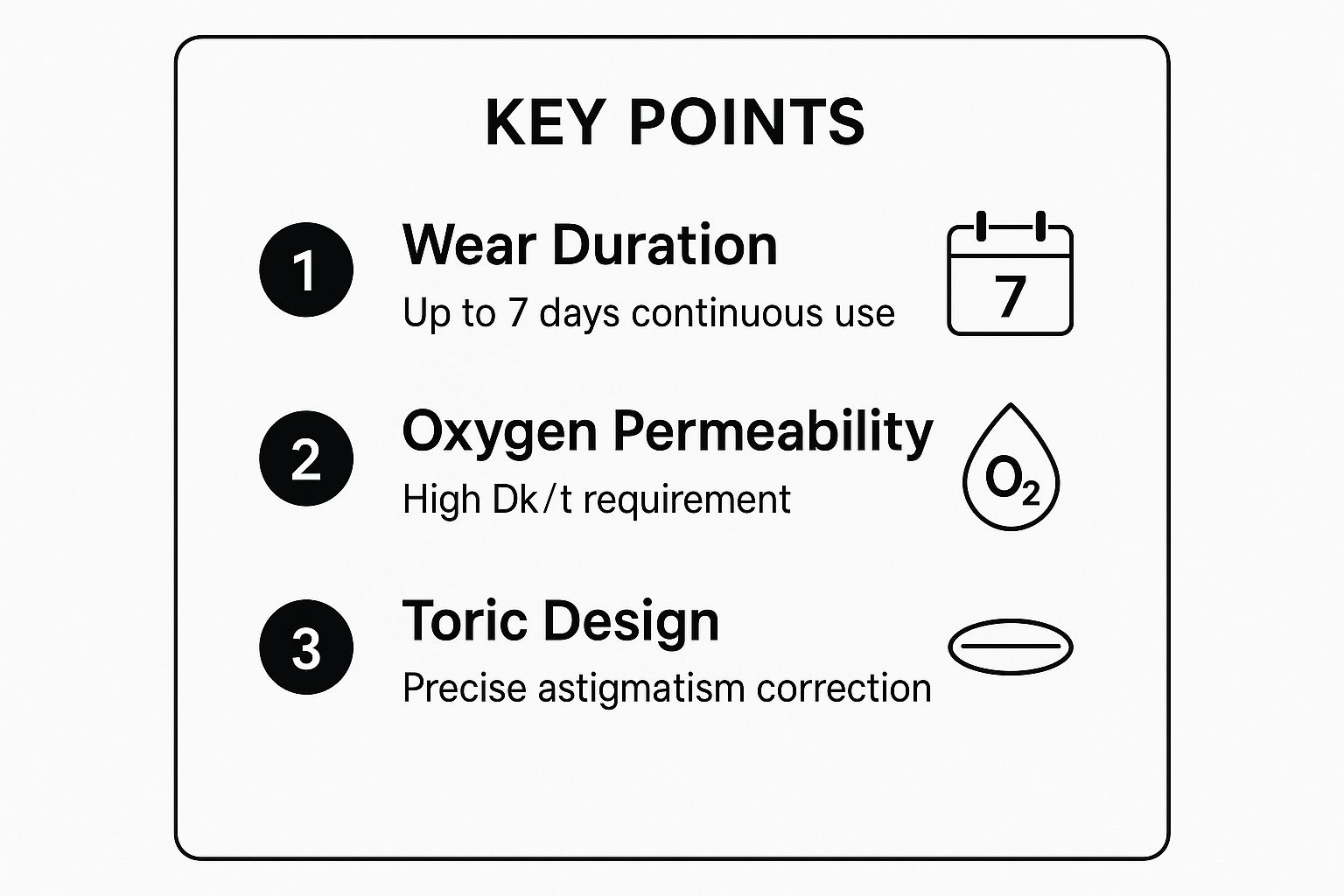
As you can see, these lenses are a careful balancing act—wear time, oxygen flow, and a precise fit are all crucial for keeping your eyes healthy and your vision sharp.
Why Professional Guidance is Non-Negotiable
With these risks in mind, it’s critical to remember that extended-wear lenses are not a "set it and forget it" product. They're medical devices, and using them safely means following your eye doctor's instructions to the letter.
Think of your eye doctor as your co-pilot for safe lens wear. They're the ones who will determine if your eyes are healthy enough, prescribe the right lens for your astigmatism, and give you a wearing schedule that fits your eyes and lifestyle.
Trying to sleep in regular daily-wear lenses or pushing the approved wear time for your extended-wear pair is a dangerous gamble with your eyesight. To understand the specifics, our guide on the topic explains why it is bad to sleep with contacts in if they haven't been FDA-approved for it.
Here’s a quick summary of the trade-offs you and your doctor will consider.
Extended Wear Lenses At a Glance
| Key Benefits | Potential Risks |
|---|---|
| Wake up with clear vision—no fumbling for glasses. | Higher risk of serious eye infections like microbial keratitis. |
| Ideal for professions requiring 24/7 readiness (e.g., firefighters, doctors). | Reduced oxygen supply to the cornea during sleep. |
| Great for active lifestyles, camping, and unpredictable schedules. | Increased chance of inflammation or giant papillary conjunctivitis (GPC). |
| Eliminates the daily hassle of lens insertion, removal, and cleaning. | Can lead to dryness, irritation, and protein deposit buildup. |
| Continuous vision correction for up to 7 days (or 30 days for some brands). | Requires strict adherence to hygiene and replacement schedules to minimize harm. |
Ultimately, safe overnight wear is only possible with the right kind of lens, a meticulous care routine, and professional oversight. The decision to use extended-wear contact lenses for astigmatism boils down to an important conversation between you and your optometrist, where you'll weigh the undeniable lifestyle perks against a clear-eyed understanding of the potential health risks.
So, Are They Right for You?
Figuring out if you’re a good match for extended-wear toric lenses is a conversation you absolutely need to have with your eye doctor. While the idea of waking up with clear vision is fantastic, these aren't a simple, off-the-shelf solution for everyone. Think of your optometrist as your personal guide—they'll take a close look at your eyes, your health, and even your daily routine to see if you can wear these lenses safely.
While only your doctor can give you the final green light, it helps to know what they're looking for. This way, you can go into your appointment with a better understanding of whether these lenses might be in your future.
The Profile of a Perfect Candidate
First and foremost, the ideal candidate starts with healthy eyes. That means no recurring issues, no chronic dryness, and a healthy tear film that can keep the lenses moist and comfortable, especially while you sleep.
Your lifestyle is another huge piece of the puzzle. We often see these lenses work wonders for:
- Frequent Travelers: People who are always on the move and can’t be bothered with the daily grind of cleaning and storing lenses.
- First Responders and On-Call Pros: When you have to be ready in seconds, you can't be fumbling for glasses. These lenses offer instant, reliable vision around the clock.
- People with Hectic Schedules: If your days are unpredictable, sticking to a strict lens care routine can be a real challenge. Extended wear offers that much-needed flexibility.
If this sounds like you, and your eyes get a clean bill of health, you could be a great fit for extended wear torics.
But here’s the most important thing: a great candidate is someone who follows the rules. You have to be committed to swapping out your lenses exactly when your doctor tells you to and practicing perfect hygiene, no exceptions.
Who Should Probably Steer Clear
On the flip side, some things just don't mix well with wearing contact lenses overnight. Your doctor will likely pump the brakes on extended wear if you have a history of certain eye problems.
These are some of the most common deal-breakers:
- Chronic Dry Eye: If your eyes don't produce enough quality tears, the lenses can feel dry and gritty, stick to your cornea, and seriously ramp up your risk of infection.
- Eyelid Issues: Conditions like blepharitis (an inflammation of the eyelids) create a poor environment for any kind of contact lens, let alone one you sleep in.
- Bad Allergies: Lenses can act like tiny sponges for allergens, leading to constant irritation that just won't quit.
- A History of Eye Infections: If you've had infections before, it might mean your eyes are more vulnerable, making overnight wear a risk not worth taking.
Your habits and environment matter, too. For instance, we know that smoking significantly increases the risk of complications with contact lenses. Working in a very dusty or dirty place can also make it nearly impossible to keep lenses clean enough for continuous wear. In those cases, a daily disposable lens is often a much safer bet.
Essential Rules for Safe Lens Wear and Care
When it comes to extended wear contact lenses for astigmatism, everything starts with a professional fitting. This isn't just about getting the right prescription numbers. Your eye doctor needs to see exactly how the lens sits on your eye, how it moves, and how it stays stable on your cornea's unique shape. Think of it as the bedrock for clear, comfortable, and healthy vision.
Once you walk out with those perfectly fitted lenses, the ball is in your court. Maintaining a strict hygiene routine isn't just a friendly suggestion—it’s your best defense against some pretty nasty eye infections. It’s a simple daily pact you make with your eyes, and the payoff is huge.
If you remember just one thing, make it this: your contact lenses should only ever touch two things—fresh, sterile cleaning solution and your clean fingertips. Sticking to this simple rule will help you sidestep the vast majority of lens-related problems.
The Core Habits of Healthy Lens Care
Your daily care routine is simple, but you have to be consistent. The most important step happens before you even think about touching your lenses: wash your hands thoroughly with soap and water and dry them on a lint-free towel. This tiny act stops you from transferring a world of germs directly onto your eye.
When you take your lenses out, the "rub and rinse" method is non-negotiable. You might remember some solutions being marketed as "no-rub" in the past, but we now know that's a dangerous myth.
- Rub Them Clean: Put the lens in your palm with a few drops of fresh solution and gently rub it for 10-20 seconds. This is what actually breaks up stubborn protein deposits and gunk that a simple rinse will miss.
- Rinse Thoroughly: After rubbing, give the lens a good rinse with more fresh solution before popping it into a clean case.
- Fresh Solution, Every Single Time: Never, ever just top off the old solution in your case. Dump out the used liquid, rinse the case with fresh solution (never tap water!), and fill it with brand new solution.
This cleaning process is what makes your extended wear contact lenses for astigmatism safe to wear for days at a time, keeping them comfortable and letting your eyes breathe.
Don't Cheat the Replacement Schedule
Pushing your lenses past their expiration date is one of the biggest gambles you can take with your eyesight. Every lens is FDA-approved for a specific wear schedule, whether that's seven days or thirty. Trying to stretch it is asking for trouble.
As a lens gets older, the material starts to break down. It lets less oxygen through and becomes a magnet for deposits. This creates a perfect little home for harmful bacteria, which dramatically spikes your risk of a corneal ulcer—an incredibly painful infection that can threaten your vision. So, mark your calendar and swap your lenses out on time, every time.
The demand for these specialized lenses is booming, thanks to some incredible new technology. In fact, the global market for astigmatism contact lenses is expected to hit $8.733 billion by 2025, with big brands pouring money into research to make lenses even safer and more comfortable. As more of us opt for the convenience of extended wear, knowing how to care for them properly is more crucial than ever. You can learn more about the growth of the astigmatism contact lens market.
Frequently Asked Questions

It’s completely normal to have questions when you’re looking into something as specific as contacts for astigmatism that you can wear overnight. Let's tackle some of the most common ones I hear from patients to help clear things up.
Think of this as a starting point. While the answers here are solid, they’re meant to help you have a more productive conversation with your own eye care professional, not replace it.
Can I Swim or Shower While Wearing These Lenses?
That’s a hard no. Water and contact lenses should never mix—period. This goes for pools, oceans, hot tubs, lakes, and even the water from your shower.
Water is teeming with microscopic organisms, and one of the most dangerous is an amoeba called Acanthamoeba. If it gets trapped between your lens and your eye, it can cause a devastating infection that is notoriously difficult to treat and can threaten your sight. It's simple: always take your lenses out before you get in the water.
What Should I Do if My Eye Becomes Red or Irritated?
Take the lens out. Immediately. Don't wait, don't try to power through it, and definitely don't put it back in.
If your eye feels better right away, that’s a good sign, but you should still give it a rest. If the redness, pain, light sensitivity, or blurry vision sticks around after the lens is out, call your eye doctor without delay. These are your eye's alarm bells, warning you of a potential infection or even a corneal ulcer. Prompt attention is key to keeping your vision safe.
Your body gives you clear signals when something is wrong. Redness and pain are your eyes' way of telling you to take the lens out and seek professional advice. Ignoring these warnings is never a good idea.
Are Extended Wear Contacts for Astigmatism More Expensive?
Yes, they typically are. You can expect to pay a premium for these lenses, and for good reason—you’re essentially getting two pieces of advanced technology in one tiny package.
First, you have the toric design, which is a complex feature engineered to correct the irregular shape of an astigmatic eye. Second, you have the highly breathable silicone hydrogel material that allows enough oxygen to pass through for safe overnight wear. Combining these two specialized features costs more to produce, which is reflected in the final price.
What Happens if I Wear My Lenses Longer Than Recommended?
Stretching your lenses past their approved wear time is playing with fire. It's just not worth the risk. Over time, the lens material naturally breaks down, and protein deposits from your tears start to build up on the surface.
This buildup does two very bad things:
- It blocks oxygen from reaching your cornea, which is a living tissue that needs to breathe.
- It creates a perfect breeding ground for bacteria to cling to and multiply.
This dangerous combo significantly raises your risk of getting a painful corneal ulcer or another serious infection that could lead to permanent vision damage. The replacement schedule your doctor gives you is there for one reason: to protect your eyes. Stick to it.
At Contact Lens HQ, our mission is to give you doctor-vetted, reliable information so you can see clearly and keep your eyes healthy. To continue making smart decisions about your vision, explore more of our expert guides at https://contactlenshq.com.


