
Bi-weekly contact lenses are your happy medium between daily disposables and monthly lenses. You get a fresh pair every 14 days, which is a fantastic sweet spot for many people. It’s all about striking that perfect balance between convenience, eye health, and your budget.
This schedule gives you that fresh-lens feeling more often than monthlies, but without the higher price tag that comes with daily disposables.
Finding the Sweet Spot with Two-Week Lenses
Choosing the right contacts can feel a bit like a maze. On one end, you have the grab-and-go ease of dailies, and on the other, the cost-effectiveness of monthlies. So, where do bi-weeklies fit into the picture? They carve out a unique space right in the middle, offering a blend of benefits from both sides.
Think of it like this: wearing a new pair of socks every single day is a luxury, but wearing the same pair for a whole month just isn't an option. Changing them every couple of weeks, though? That feels fresh, clean, and practical. That's the logic behind two-week lenses.
For a quick rundown, here’s what you need to know about bi-weekly contacts.
Bi-Weekly Contact Lenses At a Glance
| Feature | Description |
|---|---|
| Replacement Cycle | Every 14 days |
| Hygiene Level | High; less time for deposit buildup compared to monthlies |
| Convenience | Requires nightly cleaning and storage, but simple routine |
| Cost | More affordable than daily disposables, slightly more than monthlies |
| Best For | Sensitive eyes, budget-conscious users, and those new to contacts |
This table shows how bi-weeklies really do combine the best features of other lens types into one practical package.
Who Benefits Most From a 14-Day Schedule?
This two-week cycle is a game-changer for people with specific needs and lifestyles. It’s a top-notch choice if you:
- Have Sensitive Eyes: If your eyes get easily irritated or you struggle with allergies, a more frequent replacement schedule is your best friend. A 14-day lens collects far fewer protein and lipid deposits than a 30-day one, which can dramatically cut down on discomfort.
- Are Budget-Conscious but Prioritize Hygiene: While daily disposables are the gold standard for cleanliness, the cost can be a hurdle. Bi-weeklies offer a much cleaner experience than monthlies without breaking the bank.
- Are a Busy Student or Professional: Life gets hectic, and a complicated routine is the last thing you need. With bi-weeklies, a quick nightly clean is all it takes to keep your eyes healthy and your vision sharp.
A Growing Market Preference
It’s no surprise that more and more people are choosing this balanced option. The global contact lens market, valued at around USD 14.78 billion in 2024, is booming. Within that market, bi-weekly lenses are a strong and growing segment because they offer a practical solution. People want something that’s not as pricey as dailies but cleaner than monthlies. You can dig into more statistics about contact lens market growth on expertmarketresearch.com.
Key Takeaway: The biggest win for bi-weekly contacts is how they minimize deposit buildup. In just two weeks, there’s less time for irritants to accumulate, keeping the lenses cleaner and more comfortable than monthlies. This makes them a reliable and healthy choice for everyday wear.
The Benefits of a Two-Week Replacement Schedule
Choosing a two-week replacement cycle for your contacts isn't just about picking a date on the calendar. It’s a smart decision that balances your eye health, daily comfort, and your wallet. Contact lenses bi-weekly manage to strike a brilliant balance, taking the best features from both daily and monthly lenses while avoiding their biggest downsides.
Think of it like this: a monthly lens is a bit like a kitchen sponge. It's fantastic for the first week or two, but even with daily cleaning, it eventually starts to feel a little worn out. By swapping your lenses out every 14 days, you’re getting a fresh start before they ever reach that point of declining comfort.
Enhanced Hygiene and Eye Health
The biggest win with a 14-day schedule is easily the boost in hygiene. Every day you wear your contacts, your tears naturally leave behind a thin film of proteins and lipids. Daily cleaning is crucial, but over a full month, some of this buildup is simply inevitable.
This film can do more than just cloud your vision—it can become a welcoming place for bacteria and other microorganisms. By starting with a fresh pair every two weeks, you seriously limit the time these deposits have to accumulate. This simple habit drastically lowers your risk of eye irritation, allergic reactions, and even more serious infections.
At the end of the day, a cleaner lens is a healthier lens. It's a straightforward way to protect your eyes.
Consistent Comfort and Performance
Ever notice how your monthly contacts feel amazing at the beginning of the month but start to feel a bit dry or gritty by week three or four? That’s not just you. That feeling is the lens itself breaking down and collecting those deposits we just talked about.
Contact lenses bi-weekly offer a much more stable and comfortable experience from day 1 all the way to day 14. This consistency makes a huge difference in how your eyes feel.
- Better Oxygen Flow: A clean lens lets more oxygen pass through to your cornea, which is vital for keeping your eyes looking and feeling healthy. Buildup can act like a barrier, effectively suffocating your eye.
- Improved Moisture Retention: A fresher lens surface holds onto moisture much better. This helps fight the annoying dryness that so many of us deal with, especially toward the end of the day.
- Clearer Vision: By tossing out your lenses before that hazy film has a chance to form, you ensure your vision stays sharp and clear throughout the entire two-week period.
This means you’re far less likely to find yourself reaching for rewetting drops just to make it through the afternoon.
A two-week replacement schedule hits the reset button before performance and comfort can decline, giving your eyes a consistently fresh and comfortable experience that monthly lenses often struggle to match.
The Financial Sweet Spot
Finally, let’s talk about cost. Daily disposables are the gold standard for convenience and hygiene, but that level of convenience comes with a premium price tag that isn't feasible for everyone. On the other hand, monthly lenses are the most economical choice but often require a trade-off in comfort and cleanliness.
Bi-weekly lenses land right in that perfect middle ground.
They give you that "new lens feeling" twice a month without the high cost of daily disposables. You get a major upgrade in hygiene and comfort compared to monthlies, for just a small step up in price. For a lot of people, this balance represents the absolute best value, blending great performance with sensible spending.
How Bi-Weeklies Compare to Dailies and Monthlies
When you're looking at contact lenses, you'll generally find three main options: dailies, monthlies, and the one that often gets overlooked, bi-weekly contact lenses. Think of it like this: dailies are the single-serving snack pack, monthlies are the bulk family-size bag, and bi-weeklies are that perfect in-between size. Each one has its own set of trade-offs when it comes to cost, convenience, and care, and understanding these is the key to finding what works for you.
There's no single "best" type of lens for everyone—the right choice is completely personal. It’s all about matching the lens's wear schedule to your lifestyle, your budget, and what your eyes need to stay healthy and comfortable. Let’s break down how these three contenders really stack up.
The Convenience Factor
For most people, convenience is king. How easily do your contacts fit into your daily life without becoming another chore on your to-do list?
Daily disposable lenses win this category, hands down. There's no cleaning, no solution, no cases. You pop in a fresh pair in the morning and toss them at night. This "wear and toss" approach is a game-changer for people with busy schedules, frequent travelers, or anyone who just wants zero fuss.
On the other end of the spectrum are monthly lenses. They demand a strict nightly cleaning and storage routine. It becomes a habit, sure, but it's a step you absolutely cannot skip. Forgetting to clean them just once can throw a wrench in your plans.
This is where bi-weekly lenses strike a fantastic balance. They require the same nightly cleaning as monthlies, but you only wear them for 14 days. Because you're swapping them out more often, it’s easier to keep track, and the whole routine feels less like a long-term commitment.
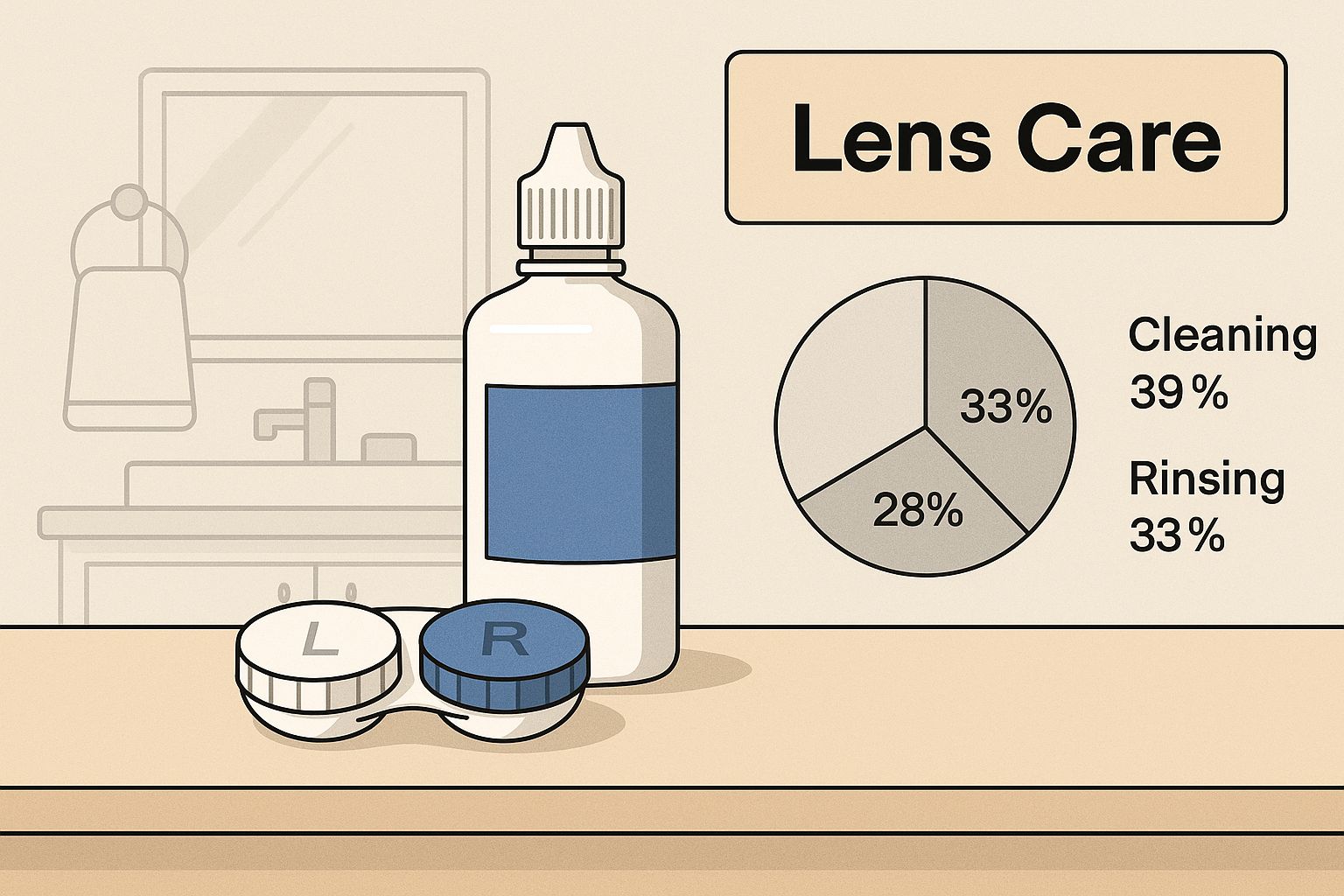
This image is a great reminder that for any lens you wear more than once, that cleaning routine is non-negotiable for keeping your eyes safe.
Hygiene and Overall Comfort
Nothing is more important than the health of your eyes. A cleaner lens isn't just more comfortable—it's significantly safer.
When it comes to hygiene, daily lenses are the gold standard. You're starting with a sterile, perfectly clean pair every single day. This means there’s virtually no chance for nasty protein deposits, lipids, or allergens to build up, making them a fantastic choice for people with sensitive eyes or allergies.
Monthly lenses, just by their nature, have 30 days to accumulate buildup. Even if you're a cleaning champion, that lens on day 28 is never going to feel as fresh as it did on day one. This can sometimes lead to irritation or discomfort as you near the end of the month.
Bi-weeklies, once again, find that sweet spot. Disposing of the lenses after just 14 days means you get rid of them long before significant gunk has a chance to accumulate. This frequent refresh is a huge win for comfort and eye health, giving you a cleaner experience than you'd get from stretching a lens out for a full month.
The Cost Showdown
Let's talk money. The cost of lenses and supplies adds up, and there’s a real difference between the three types.
- Daily Lenses: These carry the highest price tag. You're paying a premium for that ultimate convenience and hygiene. Annually, the cost can easily be 2-3 times higher than other options.
- Monthly Lenses: On the flip side, monthlies are the most budget-friendly. You only need 24 lenses for the entire year, which keeps the initial cost way down. Just don't forget to budget for cleaning solutions and cases.
- Bi-Weekly Lenses: These often hit the financial sweet spot. They are much more affordable than dailies but offer a clear step up in hygiene and comfort from monthlies. It's a great value proposition.
To help you see it all at a glance, we've put together a simple comparison table.
Lens Showdown: Daily vs. Bi-Weekly vs. Monthly
This table breaks down the key differences between the three main types of disposable lenses, so you can quickly see how they compare.
| Feature | Daily Lenses | Bi-Weekly Lenses | Monthly Lenses |
|---|---|---|---|
| Replacement Schedule | Every day | Every 14 days | Every 30 days |
| Convenience | Highest (no cleaning) | Moderate (daily cleaning) | Lowest (daily cleaning) |
| Hygiene | Highest (fresh pair daily) | High (replaced often) | Good (requires diligent cleaning) |
| Upfront Cost | Highest | Moderate | Lowest |
| Long-Term Value | Good, for health/convenience | Excellent, a balanced choice | Excellent, for budget-conscious |
| Best For | Busy lifestyles, sensitive eyes | Balanced needs, first-time wearers | Budget-focused, routine-oriented |
Ultimately, this side-by-side view makes it clear there's no single "winner"—just the right lens for a particular person's priorities.
For a deeper dive into the numbers and lifestyle factors, check out our in-depth guide on daily contact lenses vs. monthly options. It'll help you weigh the long-term costs against the daily benefits.
In the end, choosing your lens type comes down to what you value most. Whether it’s the effortless ease of dailies, the unbeatable price of monthlies, or the balanced performance of bi-weekly contact lenses, there’s a perfect fit for your eyes and your life.
Your Guide to Proper Bi-Weekly Lens Care
Think of your bi-weekly contacts as high-performance gear for your eyes. Like any top-tier equipment, they need consistent care to keep working safely and comfortably. Skipping your daily cleaning routine is a huge no-go; it's the most important habit you can form to protect your vision and keep your lenses feeling great for their full 14-day lifespan.
This routine isn't complicated, but you can't cut corners. It’s a pretty simple trade-off, really: a few minutes of care each night for two weeks of clear, comfortable vision and healthy eyes. Let's walk through the essential playbook for keeping your two-week lenses in prime condition.
The Rub and Rinse Method Is a Must
The foundation of any good lens care routine is the "rub and rinse" method. Just soaking your lenses in solution overnight won't cut it. That won't remove the invisible buildup of proteins, lipids, and other gunk from your tears that collects on the lens all day.
Imagine trying to wash a greasy pan by just letting it sit in soapy water—it doesn't really work, right? You need a little friction to lift the grime away. The same idea applies here.
- Wash Your Hands: First things first, always wash your hands thoroughly with soap and water before touching your lenses or your eyes. Dry them with a lint-free towel.
- Rub the Lens: Place one lens in your clean, dry palm. Add a few drops of fresh multi-purpose solution and gently rub both sides of the lens with your fingertip for about 20 seconds.
- Rinse It Off: After rubbing, hold the lens under a steady stream of the same solution for another 5-10 seconds to wash away all the debris you just loosened.
This simple scrubbing action is proven to remove up to 90% of surface bacteria and buildup. For a more detailed guide, check out our article on how to clean contact lenses properly.
Fresh Solution, Every Single Time
After cleaning, the next crucial step is storing your lenses. This means filling your clean lens case with fresh multi-purpose solution every single night. Whatever you do, don't just "top off" the old solution from the night before.
Reusing or topping off solution is like bathing in yesterday's dirty water. The old solution is already full of the grime and germs you just cleaned off your lenses. Adding new solution to it just dilutes the disinfectant, making it weaker and creating a perfect breeding ground for bacteria.
This bad habit is one of the main reasons contact lens wearers get eye infections. Always dump the old solution, rinse your case with fresh solution, let it air dry, and fill it back up before storing your lenses for the night.
Stick to the 14-Day Schedule
The final—and simplest—rule of bi-weekly lens care is to replace them every 14 days. Trying to stretch them an extra week to save a few bucks is a dangerous gamble with your eyesight. Overwearing lenses dramatically increases your risk of serious problems like corneal ulcers, which can cause permanent vision damage.
The easiest way to stay on track is to set a recurring reminder on your phone or just mark your calendar. A simple alert is all it takes to keep you on a safe schedule. This commitment to a regular replacement cycle is a big reason disposable lenses have become so popular.
In fact, the global market for disposable contact lenses was valued at around USD 18.09 billion in 2024, partly because people understand the health benefits of starting fresh. As screen time increases, more of us are focused on eye health, pushing a shift toward safer options like bi-weeklies. You can find more insights on the disposable lens market at straitsresearch.com. Following the 14-day rule ensures you get the clear vision and healthy eyes your lenses were designed for.
Common Mistakes to Avoid With Two Week Lenses
While bi-weekly contact lenses offer a great middle ground of comfort and value, you only get those benefits by playing by the rules. It's surprisingly easy to slip into bad habits that seem harmless but can put your eye health in real jeopardy. Getting these basics right is the secret to a comfortable, safe lens-wearing experience.
The most common—and most dangerous—mistake is trying to stretch the 14-day schedule. I get it. Trying to get an extra week out of a pair to save a few dollars seems like a smart move. In reality, it’s a gamble you don't want to take. A two-week lens is made from materials specifically engineered to last for that exact amount of time, and not a day longer.
After those two weeks are up, the lens material starts to degrade. Tiny, invisible deposits of proteins and lipids from your own tears build up on the surface. This creates a rough patch that not only irritates your eye and blurs your vision but also becomes a breeding ground for bacteria, seriously ramping up your risk of infection.
Overwearing Is Just the Beginning
Stretching the replacement schedule is a big one, but it's not the only misstep that can cause problems. Several other common habits can turn your helpful lenses into a health hazard, undermining the very safety and comfort they’re designed for.
Here are the most critical mistakes to watch out for:
- Sleeping in Your Lenses: Unless your eye doctor has specifically fitted you with lenses approved for overnight wear, you absolutely have to take them out before going to sleep. When you sleep in regular contacts, you cut off the oxygen supply to your cornea, which can cause swelling, pain, and nasty infections.
- Reusing Cleaning Solution: Never, ever just "top off" the solution in your lens case. Think about it—that old solution is full of all the germs and gunk you cleaned off your lenses the day before. Always dump the old stuff and use fresh solution every single night.
- Handling Lenses with Dirty Hands: Your hands touch everything, picking up all sorts of germs. Make it a non-negotiable habit to wash your hands thoroughly with soap and water and dry them with a lint-free towel before you ever touch your lenses. It’s your best defense against eye infections.
It’s not just about comfort; it's about safety. An estimated one in every 500 contact lens wearers develops a serious eye infection each year that can lead to blindness, and poor hygiene is a leading cause.
The Consequences of Cutting Corners
Ignoring these best practices simply isn't worth it. The results can range from mild irritation to severe, vision-threatening conditions. If your eyes are red, itchy, or your vision seems a bit blurry, those are the first warning signs that something's off.
Keep up the bad habits, and you could be looking at much bigger problems. We’re talking about issues like conjunctivitis (pink eye), corneal abrasions (scratches on your eye), or even a corneal ulcer—an open sore on your eye’s surface that can cause permanent scarring and vision loss.
At the end of the day, your two-week lenses are a medical device. Treat them with the respect they—and your eyes—deserve. By sidestepping these common mistakes, you'll ensure your bi-weekly contact lenses provide the clear vision and comfort they're meant to, keeping your eyes healthy for years to come.
The Technology That Makes Bi-Weekly Lenses Work
Ever wonder what makes a pair of contact lenses bi weekly feel so comfortable you forget they’re even there? It’s not magic—it's some seriously impressive material science working behind the scenes. The secret is in the advanced materials designed to keep your eyes healthy, hydrated, and happy for the full two weeks.
The two main players in the world of soft contacts are hydrogel and silicone hydrogel. Both are amazing feats of engineering, but they take slightly different approaches to getting oxygen to your cornea, which is non-negotiable for good eye health.
The Hydrogel Sponge Analogy
Picture a traditional hydrogel lens as a tiny, high-tech sponge. Its main job is to hold water. This water creates little pathways for oxygen to travel through the lens and reach your eye. It’s a simple but effective concept: the more water, the more oxygen.
This design has been the gold standard for years, and for good reason—it’s comfortable for a ton of people. In fact, hydrogel lenses are still incredibly popular, expected to make up about 43.6% of the global soft contact lens market in 2025, primarily because all that water just feels good. You can find more details in the soft contact lens market report on coherentmarketinsights.com.
But there’s a natural limit to how much oxygen can pass through a water-based system. That’s where the next generation of materials really shines.
Silicone Hydrogel: The Oxygen Superhighway
Silicone hydrogel is the newer kid on the block. Instead of relying solely on water, it adds silicone to the mix—a material that's naturally fantastic at letting oxygen pass through. Think of the silicone as creating invisible tunnels or "superhighways" that deliver oxygen directly through the lens.
This structure is a total game-changer. It allows up to five times more oxygen to reach the cornea compared to older hydrogel lenses, which makes a huge difference for your overall eye health and comfort.
This incredible breathability makes silicone hydrogel lenses a top pick for anyone prone to dryness or those who wear their contacts for long hours. More oxygen means your eyes stay looking whiter and feeling fresher, from your morning coffee to late-night TV. For a more detailed breakdown, check out our full comparison of silicone hydrogel vs. hydrogel contact lenses.
Advanced Surface Treatments for All-Day Comfort
It’s not just about the base material, though. The real magic in modern contact lenses bi weekly often comes from sophisticated surface treatments that elevate comfort from "good" to "great." These coatings are engineered to fight the two biggest enemies of happy lens wear: dryness and deposits.
- Moisture-Retaining Agents: Many lenses now have wetting agents built right into the material. These tiny molecules grab onto water and hold it on the lens surface, creating a silky moisture cushion that helps prevent that gritty, end-of-the-day feeling.
- Deposit-Resistant Surfaces: At a microscopic level, the surface of these lenses is incredibly smooth. This slickness makes it much harder for proteins and lipids from your tears to build up, keeping the lenses cleaner and your vision sharper for the entire two weeks.
When you put it all together, these technologies create a lens that does more than just correct your vision—it works in harmony with your eye's natural environment. The end result is a wearing experience so consistently comfortable and healthy that the two-week schedule feels both effortless and effective.
Common Questions About Bi-Weekly Lenses
Even after digging into the details, you probably still have a few practical questions. That’s completely normal when you're thinking about switching up your contact lens routine. Let's tackle some of the most common questions people ask about bi-weekly contacts so you can feel totally comfortable with your decision.
Can You Sleep in Bi-Weekly Contacts?
This is a huge question, and the answer is almost always a firm no. You need to take them out every single night before bed.
The only exception is if your eye doctor has specifically fitted you for a type of bi-weekly lens that is FDA-approved for "extended wear" or overnight use. Sleeping in regular lenses starves your cornea of the oxygen it needs to stay healthy, which can cause some pretty serious problems down the road.
What if I Wear Them for Longer Than 14 Days?
It's tempting to try and squeeze a few extra days out of a pair to save a little money, but it's a gamble you don't want to take. After 14 days, the lens material starts to degrade. It just can't fight off protein buildup or let enough oxygen through anymore.
Pushing your lenses past their two-week limit is asking for trouble. It dramatically increases your risk of everything from annoying irritation and foggy vision to nasty eye infections that could cause lasting damage.
How Do I Remember to Change Them on Time?
Forgetting to swap out your lenses is super common, but it's a habit you need to break. Luckily, keeping track is easy if you find a system that works for you.
- Set a Calendar Reminder: This is the simplest trick in the book. Just set a recurring alert on your phone's calendar to go off every 14 days.
- Mark Your Calendar (or the Box!): The moment you pop open a fresh pair, grab a permanent marker and write the "toss" date right on the box.
- Use a Lens Tracking App: There are plenty of free apps out there designed for this exact purpose. They'll send you a notification when it's time for a new pair.
Sticking to these simple rules is the best way to make sure your experience with bi-weekly contact lenses is safe, comfortable, and crystal clear.
For more expert-driven guides and unbiased reviews on all types of contact lenses, explore the resources at Contact Lens HQ. Visit us at https://contactlenshq.com to make informed decisions about your eye health.


