
Let's cut right to the chase: using a solution designed for soft contacts on your gas permeable (GP) lenses is a recipe for disaster. Finding the right contact lens solution for gas permeable lenses isn't just a friendly suggestion—it’s an absolute must for clear vision, comfort, and keeping your lenses in top shape. The unique material of GP lenses simply demands a specialized approach to care.
Why RGP Lenses Need a Specialized Solution
Unlike soft lenses, which are basically little absorbent sponges, your rigid gas permeable (RGP) lenses have a firm, non-porous surface. This fundamental difference means they attract a whole different kind of gunk—mostly proteins and lipids from your tears—that regular soft lens solutions just can't tackle. Think of it like trying to clean a greasy glass stovetop with a sponge meant for wiping up water spills; you need the right tool for the job.
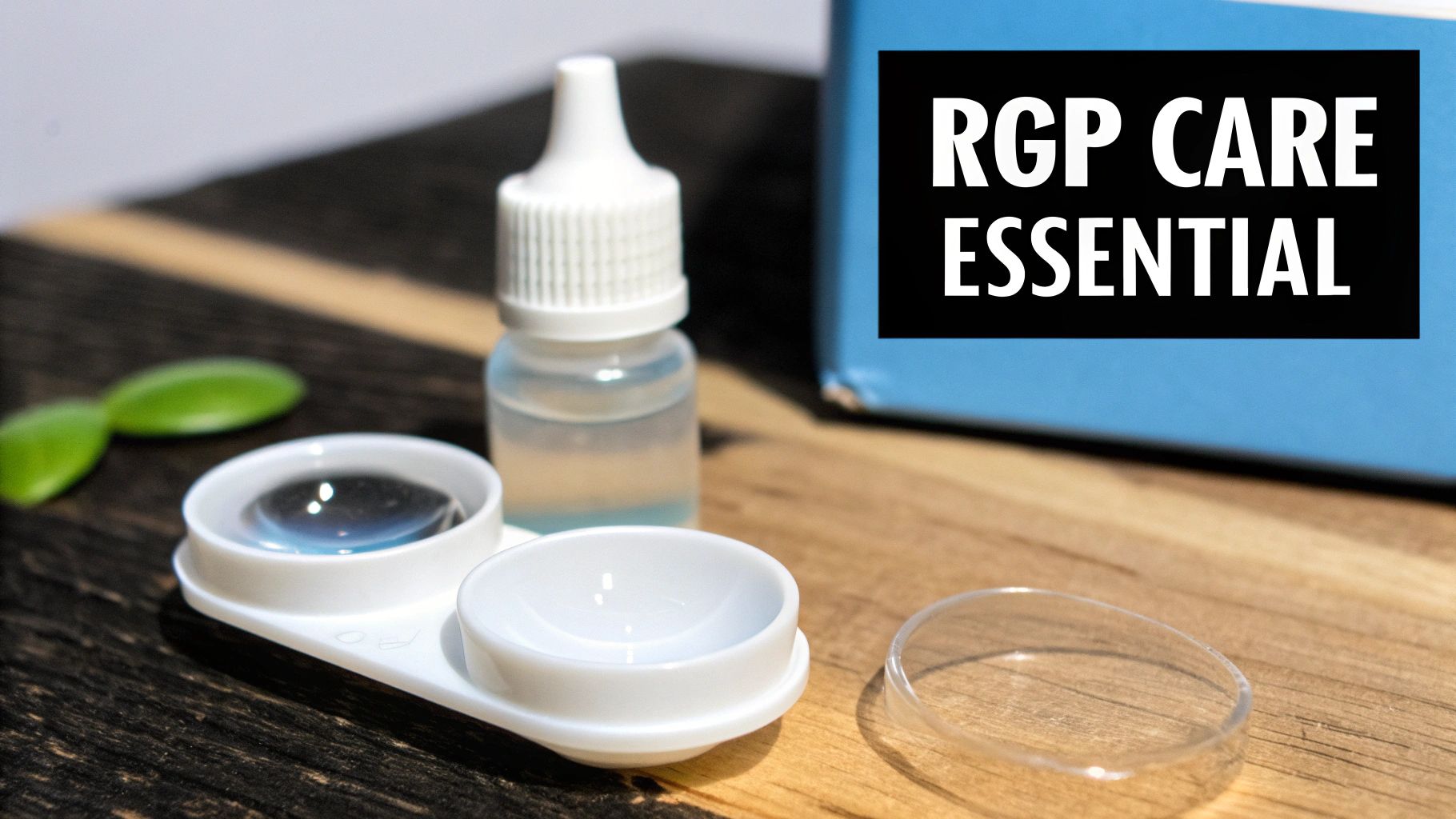
This distinction is critically important. Grabbing the wrong bottle off the shelf can lead to cloudy lenses, serious irritation, and can even ruin your expensive custom-fit lenses over time. A proper RGP solution is engineered to do three specific jobs that generic solutions just aren't built for.
The Three Essential Functions
A great RGP care system isn't just one bottle—it's a multi-step process designed to handle the unique challenges of these lenses. Each step plays a vital role in keeping your eyes healthy and your vision sharp.
- Deep Cleaning: This is all about physically removing the stubborn stuff. A dedicated surfactant cleaner gets in there and scrubs away the protein and lipid deposits that cling to the lens surface. Without this, a film builds up, making your vision hazy and uncomfortable.
- Powerful Disinfecting: Once the debris is gone, your lenses need a good soak in a disinfecting solution to eliminate any harmful bacteria or microorganisms that could cause an infection. Grasping the crucial difference between sterile and disinfected helps explain why this step is so important for eye health—it's about making the lenses safe, not factory-sealed sterile.
- Comfort Conditioning: Right before you put your lenses in, a conditioning or wetting agent adds a silky moisture cushion to the surface. This little buffer helps the lens float comfortably on your cornea, making all-day wear possible.
With the GP lens market growing, proper care is more important than ever. The global market was valued at around USD 1.5 billion in 2023 and is expected to hit USD 2.6 billion by 2032. This boom means millions of new wearers need to get their care routine right from day one.
The Three Pillars of RGP Lens Care
Caring for rigid gas permeable (RGP) lenses is a different world compared to soft lenses. Forget the single, do-it-all bottle. RGP care is a multi-step system, but don't let that intimidate you. It’s actually a simple, logical process built on three core functions.
Think of it like washing a car. You wouldn't just give it a quick rinse and expect it to sparkle. You need soap to scrub off the grime, a thorough rinse, and maybe a wax to protect the finish. RGP lens care follows that same kind of step-by-step logic.
Each part of the routine has a very specific job. If you skip one, you're setting yourself up for foggy vision, discomfort, and even potential eye health problems. Let's break down this essential routine into its three main components so you can handle your RGP care like a pro.
Pillar 1: The Daily Cleaner for a Power Scrub
First up is the daily cleaner. This is your hands-on "power scrub." It’s a dedicated, surfactant-based solution made to physically break down and remove the stubborn gunk that builds up on your lenses all day. Your tears are full of proteins and lipids which, while perfectly natural, love to stick to the firm surface of an RGP lens.
Imagine trying to look through a window smeared with oily fingerprints. That's essentially what happens to your lenses without a good cleaning. The cleaner acts like a detergent, loosening that film so you can rub it off and rinse it away. This manual rubbing step is absolutely critical—it’s what guarantees the lens surface is truly clean before it goes into its overnight soak.
Key Takeaway: The daily cleaner's main job is mechanical removal. It's designed to break up and lift away surface gunk like proteins and lipids, which is the crucial first step for clear vision and effective disinfection.
Without this initial scrub, the disinfecting solution can't get to the entire lens surface, which could leave nasty bacteria behind.
Pillar 2: The Soaking Solution for Overnight Disinfection
Once the physical scrubbing is done, the second pillar takes over: the disinfecting and soaking solution. This is your "overnight guard" that gets to work while you sleep. After cleaning your lenses, you place them in their case and fill it up with this solution, making sure they're completely submerged.
This solution is packed with antimicrobial agents that kill harmful bacteria, fungi, and other microorganisms that could lead to a serious eye infection. Its purpose isn't to clean, but to disinfect. It's a sobering fact that a huge percentage of lens-related infections happen because of improper disinfection, making this step non-negotiable for your safety.
The overnight soak does more than just kill germs, too. It keeps your lenses hydrated, maintaining their precise shape and making sure they're comfortable and ready for you in the morning. And please, never reuse the solution from the night before. Your lenses need a fresh bath every single night for the disinfection to work properly.
Pillar 3: The Conditioning Solution for All-Day Comfort
The final pillar is the wetting and conditioning solution, which I like to call the "comfort layer." You'll use this right before you put your lenses in each morning. Just a few drops create an ultra-thin, silky moisture cushion on the lens surface.
This cushion does two important things:
- Initial Comfort: It helps the rigid lens float gently on your eye's tear film, getting rid of that initial "lens awareness" feeling.
- Sustained Hydration: It helps your own tears spread more evenly across the lens throughout the day, which is a huge help in fighting end-of-day dryness.
Think of it like applying primer before painting a wall. The conditioning solution preps the lens surface, making the interaction between the lens and your eye as smooth and comfortable as possible. While some care systems combine the disinfecting and conditioning agents into one bottle, their functions are still very distinct.
To help you keep it all straight, here's a quick guide to the different components of your contact lens solution for gas permeable lenses.
A Quick Guide to RGP Solution Types
The table below breaks down the different solutions you'll encounter in a typical RGP care routine. Understanding what each one does—and when to use it—is key to keeping your lenses in top shape.
| Solution Type | Primary Function | When to Use | Common Active Ingredients |
|---|---|---|---|
| Daily Cleaner | Physically removes protein and lipid deposits from the lens surface. | Immediately after removing lenses from your eyes, before soaking. | Surfactants (like isopropyl alcohol) and mild abrasives. |
| Soaking & Disinfecting | Kills harmful microorganisms to prevent eye infections and hydrates lenses. | For overnight storage after lenses have been cleaned and rinsed. | Disinfectants (like chlorhexidine gluconate or polyaminopropyl biguanide). |
| Wetting & Conditioning | Creates a moisture cushion on the lens for comfort upon insertion. | Just before inserting lenses into your eyes in the morning. | Lubricating polymers (like hydroxypropyl methylcellulose). |
Once you get the hang of these three pillars, RGP care stops feeling like a chore and becomes a simple, logical routine. Each step builds on the last, ensuring your lenses are clean, safe, and comfortable enough for long, clear days of wear.
Your Step-by-Step Daily Care Routine
When it comes to RGP lenses, consistency is everything. Think of it less as a chore and more as a daily ritual that protects your investment and, more importantly, your eye health.
Creating this habit ensures your lenses deliver that crisp, comfortable vision you rely on, day in and day out. Let's walk through the simple but essential steps for both evening and morning.
Your Evening Removal and Cleaning Routine
The best time to clean your lenses is the second you take them out. Why? Because the gunk and buildup from the day—things like proteins, oils, and makeup—are still soft and easy to remove. Waiting until morning means you're dealing with hardened deposits that are much tougher to get off.
Wash Your Hands Thoroughly: This is the non-negotiable first step. Use a mild, non-oily soap and warm water, then dry your hands completely with a lint-free towel. Any oils or lint left on your fingers will end up right on your lens.
Remove One Lens: Gently take out the first lens and place it in the palm of your clean, dry hand.
Apply the Daily Cleaner: Squeeze two or three drops of your RGP daily cleaner onto the lens. Remember, the cleaner is different from your soaking or conditioning solution—it’s designed with specific surfactants to break down deposits, so don't mix them up.
Rub and Rinse: Using your fingertip, gently rub the lens back and forth or in a circular motion for about 20 seconds. This physical rubbing action is what really dislodges those stubborn films. Once you're done, give the lens a thorough rinse with sterile saline or a multipurpose solution to wash away all the cleaner and debris.
Crucial Safety Tip: Never, ever use tap water to rinse your lenses or your case. Tap water is not sterile and can contain nasty microorganisms like Acanthamoeba, which can lead to a severe, sight-threatening eye infection. Stick to sterile solutions only.
- Soak Overnight: Place the cleaned lens into the proper well of your lens case (usually marked "L" or "R"). Fill the case with fresh disinfecting and soaking solution, making sure the lens is totally submerged. Now, repeat the whole process for your other eye.
This simple flow—clean, disinfect, condition—is the core of proper RGP care.
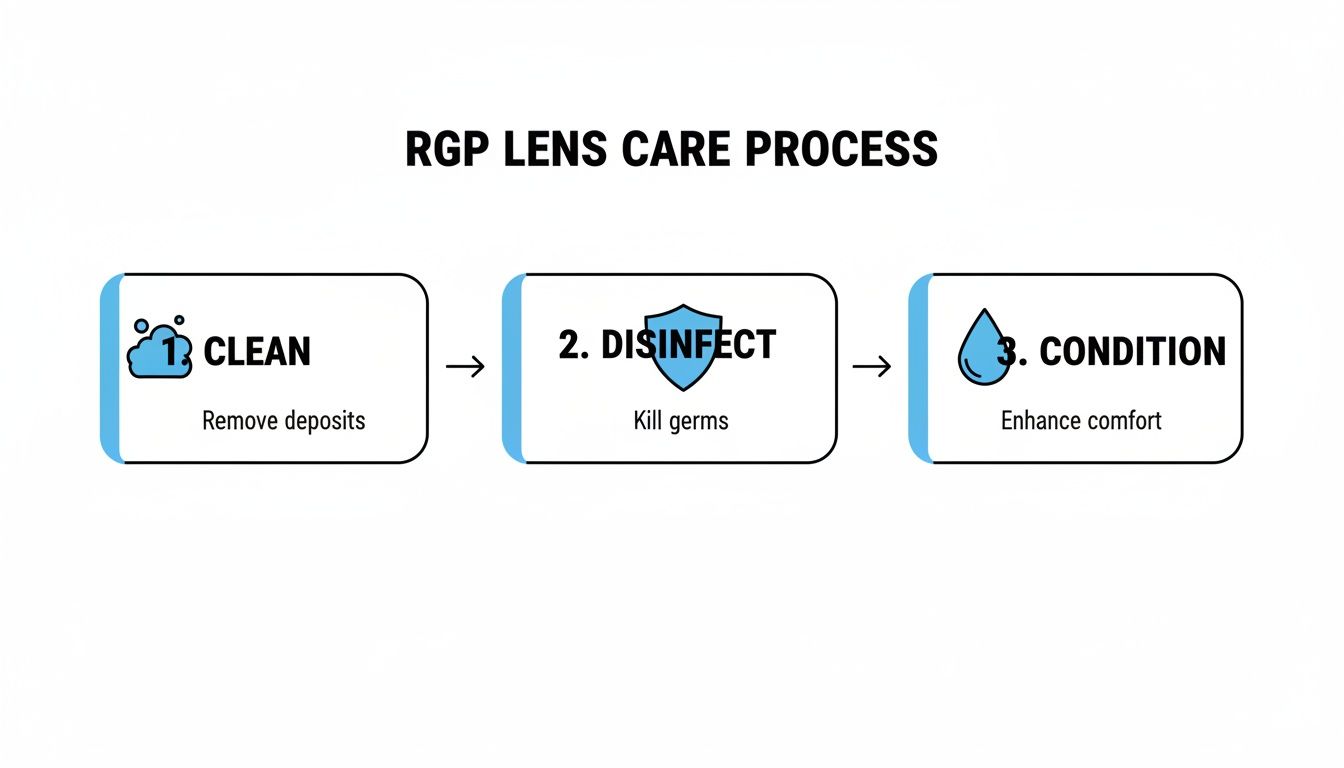
Each step builds on the last to keep your lenses safe and feeling great. For a deeper dive into cleaning techniques, check out our guide on how to clean contact lenses properly.
Your Morning Insertion Routine
The morning is all about prepping your lenses for a comfortable day of wear. A few quick steps here can make a huge difference in how your eyes feel by dinnertime.
- Start with Clean Hands: Just like at night, always begin by washing and drying your hands thoroughly.
- Prepare the Lens: Take one lens out of the case. While some conditioning solutions are good to go, you can give it a final quick rinse with sterile saline if you prefer.
- Apply Conditioning Drops: Place the lens on your fingertip and add a drop or two of a dedicated RGP wetting or conditioning solution. This creates a soft, moist cushion between the lens and your cornea for fantastic initial comfort.
- Insert and Check Vision: Pop the lens in. Blink a few times to help it settle, and make sure your vision is clear and the lens feels good. Then, do the same for the other eye.
Finally, dump out the old solution from your lens case, rinse the case with fresh solution (never water!), and leave it open to air dry on a clean surface. This simple step prevents biofilm—a slimy layer of bacteria—from growing in your case and contaminating your lenses.
What's in Your RGP Solution—And What to Keep Out
Looking at the ingredient list on a bottle of contact lens solution for gas permeable lenses can feel a bit like reading a foreign language. But you don't need a chemistry degree to understand the basics, and knowing what you're putting on your lenses is key to keeping them—and your eyes—healthy and comfortable.
Think of these solutions as more than just sterile saltwater. They’re high-tech fluids, and most are built around three core types of ingredients. You'll usually find wetting agents, which create a smooth, moisture-rich cushion on the lens surface that makes them comfortable to wear all day. Then you have disinfectants, the real workhorses that kill nasty microorganisms. A disinfectant like hydrogen peroxide is a great example of a powerful agent used in specific cleaning systems.
Finally, you’ll find preservatives in most multi-use bottles. Their job is simple but critical: to keep the solution itself sterile after you've opened it.
Preservatives: Friend or Foe?
Preservatives are the unsung heroes of lens care. They stop your bottle of solution from turning into a petri dish for bacteria. But for a small number of RGP wearers, these very chemicals can be the source of irritation, causing redness, itching, or dryness.
If you’re doing everything right with your cleaning routine but still feel that familiar irritation creep in after a few hours, your eyes might just be sensitive to the preservatives.
Expert Insight: For anyone with sensitive eyes, preservative-free systems can be a game-changer. Hydrogen peroxide-based cleaners, for example, offer a deep clean without the risk of chemical irritation. Just remember: you must follow the neutralization steps perfectly, or you're in for a very painful chemical burn.
This is definitely a conversation to have with your eye doctor. They can help you figure out if preservative sensitivity is the real issue and point you toward a better alternative.
The "Never, Ever Use" List
Knowing what not to use on your RGP lenses is just as important as knowing what to use. The wrong liquid can lead to anything from cloudy vision to permanently ruined lenses.
Here’s what to steer clear of, no exceptions:
- Solutions for Soft Contact Lenses: This is the number one rule. Soft lens solutions are formulated differently and their ingredients can literally bond to the surface of an RGP lens, leaving a hazy film that's almost impossible to get off. Worse, they can even warp the lens material over time.
- Tap Water or Homemade Saline: Never, ever let tap water touch your lenses or your case. It’s teeming with microorganisms like Acanthamoeba, which can cause a serious, sight-threatening infection. Homemade saline is just as dangerous—it isn’t sterile and has zero disinfecting power.
- Expired Solutions: That date on the bottle isn't a suggestion. Once a solution is expired, you can no longer trust that it will disinfect properly. It's not worth the risk.
There's a reason the market for specialized RGP care products is booming. This niche is one of the fastest-growing in eye care, with the rigid lens market projected to follow a 13% CAGR trajectory from US$1,381 million in 2024 to US$2,875 million by 2030. These advanced solutions are engineered with components like enzymatic cleaners that are specifically designed to break down the stubborn protein and lipid deposits that build up on rigid lens materials. To get a better sense of what makes up these complex formulas, you might be interested in our guide on what contact solution is made of.
How to Choose the Right RGP Care System
Finding the best contact lens solution for gas permeable lenses isn’t about grabbing the first bottle you see. It's about picking the right system for your specific eyes, lifestyle, and even the material your lenses are made from. Not all RGP solutions are created equal—some are built for convenience, while others offer the deepest clean possible, which is a lifesaver for people with sensitive eyes.
Think of it like washing your car. You could go through a quick, automated drive-through when you're short on time, or you could opt for a meticulous hand-detailing for a showroom shine. Both get the car clean, but the process, effort, and results are different. RGP care systems work the same way, offering different paths to the same goals: clean, disinfected, and comfortable lenses.
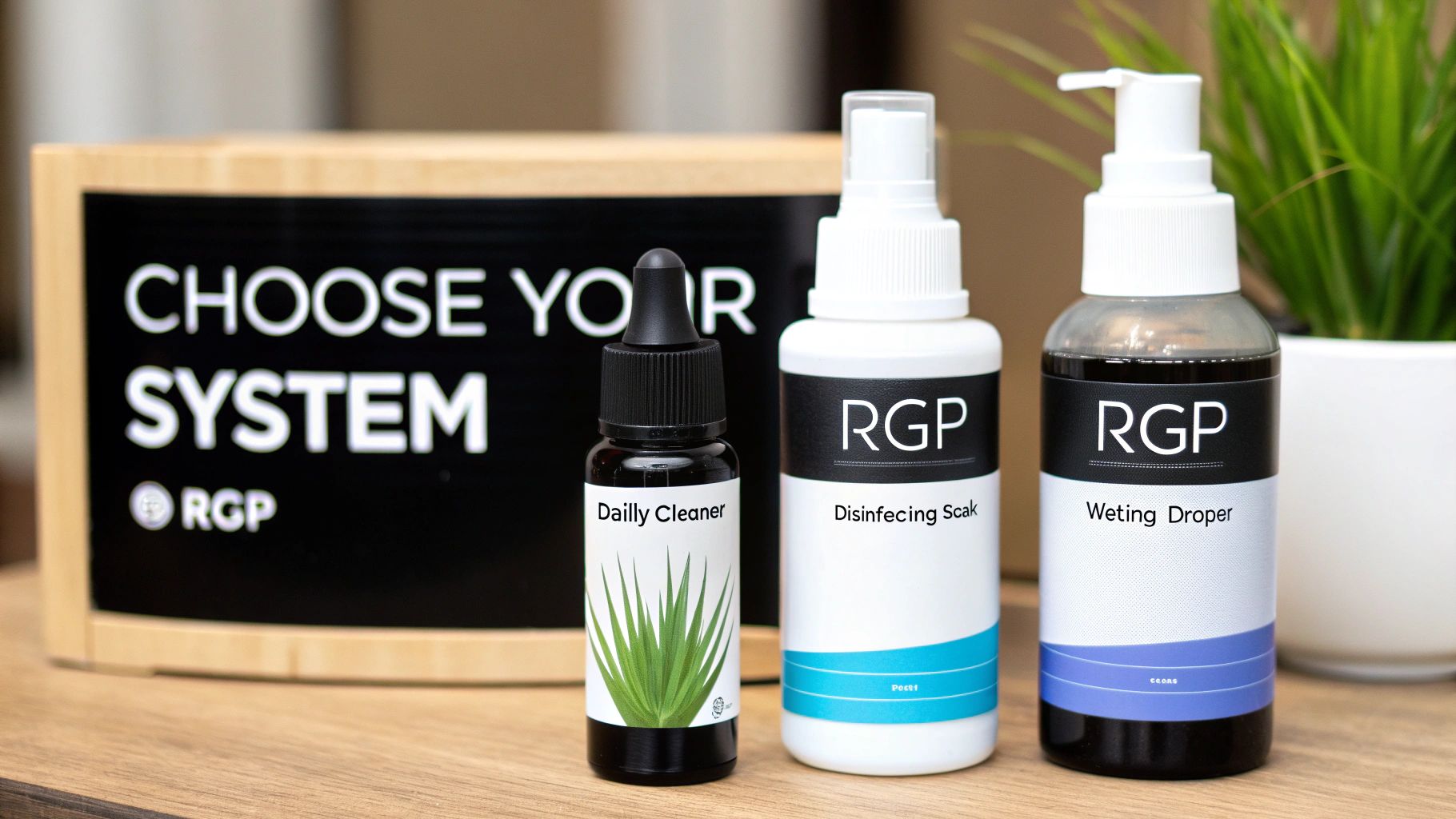
Once you understand the pros and cons of each approach, you can have a much more productive chat with your eye doctor to nail down the perfect routine for you.
Comparing Two-Step vs. Multipurpose Solutions
The biggest choice you'll likely face is between a classic two-step system and a modern, all-in-one multipurpose solution.
A two-step system is the old-school, tried-and-true method. It involves two different bottles for two distinct jobs:
- A dedicated daily cleaner: This is a soapy, surfactant-based solution you use to physically rub and scrub your lenses the moment you take them out.
- A disinfecting and soaking solution: This is what you fill your lens case with to store them overnight. It kills germs and keeps the lenses hydrated.
On the other hand, a multipurpose solution (MPS) is all about simplicity. One bottle is formulated to handle everything—cleaning, rinsing, disinfecting, and conditioning. While that convenience is a huge plus, you can't get lazy. That manual rubbing step is just as critical with an MPS to get rid of the stubborn protein and lipid gunk that builds up on RGP lenses.
Why the Rub is Non-Negotiable: Study after study has confirmed that a "rub and rinse" routine is far superior at removing microbes and debris compared to just rinsing alone, no matter how advanced the solution is. For RGP lenses, which are notorious for collecting deposits, skipping the rub is simply not an option.
Hydrogen Peroxide Systems for a Deep Clean
For those with very sensitive eyes, allergies, or a history of deposit-related problems, a hydrogen peroxide-based system is often the gold standard. These systems deliver an incredibly powerful clean without any of the preservatives found in other solutions.
Here’s the breakdown of how it works:
- You pop your lenses into a special basket case that contains a built-in neutralizing disc.
- You fill the case up to the line with the 3% hydrogen peroxide solution.
- The magic starts instantly. The disc fizzes, creating tiny bubbles that actively scrub the lens surface while the peroxide gets to work disinfecting.
- Over a minimum of six hours, that same disc completely neutralizes the peroxide, turning it into simple, gentle saline.
The main advantage here is an exceptionally deep clean with zero preservatives that could irritate your eyes. But, and this is a big but, you have to respect the process. Putting unneutralized peroxide straight into your eye is a surefire way to cause a painful chemical burn.
The rise of these advanced systems went hand-in-hand with lens material innovation. Back in the 1980s, when high-oxygen materials like silicone acrylate came on the scene, they were a game-changer for RGP wearers. But these materials, which still account for over 50% of rigid GP materials today, were also more prone to deposits, demanding better care. Peroxide systems, which have seen a 6.33% CAGR, were the perfect answer, helping many users extend their comfortable wear time by 8-12 hours. You can see more data on these market trends at cognitivemarketresearch.com.
Which System is Right for You?
Ultimately, picking a care system is a personal decision that you should always make with your eye doctor. To help you prepare for that conversation, here’s a quick comparison of the options.
Comparing RGP Lens Care Systems
This table breaks down the most common RGP solution systems, giving you a clearer picture of what might work best for your daily routine and eye health needs.
| System Type | Best For | Pros | Cons and Key Considerations |
|---|---|---|---|
| Two-Step System | Users prone to heavy protein and lipid buildup. | Highly effective cleaning and disinfection with dedicated formulas for each step. | Requires more steps and multiple bottles, increasing the potential for user error. |
| Multipurpose Solution | Users seeking convenience and a simplified routine. | Easy to use, travel-friendly, and cost-effective with just one bottle. | May not be as effective for heavy deposit buildup; manual rubbing is still essential. |
| Hydrogen Peroxide | Users with sensitive eyes, allergies, or preservative intolerance. | Preservative-free, provides a deep and thorough clean, excellent for removing stubborn deposits. | CRITICAL: Requires a strict minimum 6-hour neutralization time and the correct case. User error can lead to painful eye injury. |
At the end of the day, the best contact lens solution for gas permeable lenses is the one you will actually use correctly and consistently, every single day. Be open with your optometrist about your habits, any sensitivities you have, and your comfort levels. That's the key to finding a system that keeps your vision sharp and your eyes happy for years to come.
Your Top RGP Lens Solution Questions, Answered
Let's face it, even when you have a good routine down, real-world questions about taking care of RGP lenses always seem to pop up. We’ve gathered some of the most common things RGP wearers ask, with straightforward, doctor-approved answers to help you handle your lenses with confidence and sidestep those common mistakes.
Think of this as your go-to guide for all those "what if" moments. Getting the small details right is the secret to keeping your eyes healthy and enjoying that incredibly crisp vision your RGP lenses are known for.
Can I Use Soft Contact Solution in an Emergency?
This question comes up all the time, and the answer is a simple, emphatic no. You should never, ever use a solution made for soft contacts on your RGP lenses, not even for one night.
The two products are built for completely different jobs. Soft lens solutions don't have the right ingredients to cut through the tough protein and lipid deposits that build up on a rigid lens surface. It’s like trying to wash a greasy pan with plain water—it’s just not going to get the job done.
Worse yet, the conditioning agents in soft lens solutions can actually stick to your RGP lenses, creating a cloudy, uncomfortable film that’s a nightmare to get off. Honestly, you'd be far better off storing your lenses dry for one night than soaking them in the wrong stuff.
How Often Should I Replace My Lens Case?
Your lens case is just as crucial as your solutions, and it needs to be replaced much more often than you might think. The rule of thumb from eye doctors is to toss your old case and start fresh at least every three months.
Why so often? Bacteria love to build a slimy, invisible shield inside your case called a biofilm. This gunk is incredibly resistant to cleaning and disinfection, turning your case into a breeding ground for germs that can hop onto your lenses every night.
A Simple Habit for Better Health: Get into the habit of throwing out your old lens case every time you open a new bottle of disinfecting solution. This easy trick massively cuts down your risk of a painful, serious eye infection.
It’s a tiny step, but it's one of the most powerful things you can do to protect your eyes.
What if My Lenses Feel Dry Late in the Day?
That gritty, end-of-day feeling is a common complaint, but your care routine can make a huge difference. If your lenses start feeling less than comfortable as the day goes on, your solutions are the first thing to check.
First, make sure you're consistently using a dedicated RGP conditioning or wetting solution right before you put your lenses in each morning. That step creates a vital moisture cushion that’s key for both initial and lasting comfort.
If the dryness just won't quit, it’s time to chat with your eye doctor. They might suggest a few tweaks:
- Better Lubricants: Switching to a conditioning solution with more advanced lubricating agents can often help your tears stick to the lens better.
- Rewetting Drops: Using preservative-free rewetting drops made specifically for RGP lenses can give you a quick refresh during the day.
- A Deeper Clean: Sometimes, what feels like dryness is actually a subtle protein buildup that your daily cleaner can't handle. Your doctor might add a weekly enzymatic cleaner to your routine to dissolve it.
Often, a small adjustment to your contact lens solution for gas permeable lenses is all it takes to get you back to comfortable, all-day wear.
Are Hydrogen Peroxide Systems Safe for RGP Lenses?
Yes, absolutely. Hydrogen peroxide systems are not just safe; they’re an excellent choice for RGP lenses. They deliver an incredibly deep clean and are fantastic for anyone with sensitive eyes because the solution your lenses soak in is completely preservative-free by morning.
However, their safety is 100% dependent on following the directions to the letter. You must use the special case that comes in the box—it has a platinum disc that neutralizes the peroxide. The lenses have to soak for a bare minimum of six hours for this process to complete.
This neutralization step is non-negotiable. If you try to put a lens in your eye before that six-hour mark, the active peroxide will cause a serious, painful chemical burn. While these systems are phenomenal cleaners, they require your full attention. If you're ever stuck and need another option, you can learn more about what you can use instead of contact solution in our dedicated guide.
At Contact Lens HQ, we are committed to providing you with the most accurate and practical information for your vision needs. Explore our site for more doctor-vetted guides and resources to keep your eyes healthy and your vision sharp. Find out more at https://contactlenshq.com.


