
Ever thought about changing your eye color but didn't want to give up your glasses or clear contacts? That's where prescription colored contact lenses come in. They're medical devices designed to correct your vision—just like regular contacts—but with the added fun of changing or boosting your natural eye color.
These lenses offer the best of both worlds: flawless vision and personal style. They’ve become a go-to choice for people who want to switch up their look, whether it's for a special night out or just for a little everyday confidence boost.
Vision Correction Meets Personal Style
If you've ever wished you could fix your blurry vision and try out a new eye color at the same time, you're in luck. Colored contact lenses with a prescription make that possible. They aren't just a cosmetic frill; they are advanced medical devices that provide crisp, clear sight while also letting you express yourself.
It’s a bit like picking out a pair of prescription sunglasses. Sure, their main job is to help you see clearly and block UV rays, but you also choose a frame and lens tint that you love. Prescription colored contacts work on that same idea, blending a critical function with your personal aesthetic.
Understanding Their Dual Purpose
At their heart, these lenses are built to correct common vision problems just like your standard clear contacts. The real innovation is the thin layer of color that's safely embedded within the lens material. This clever design means you never have to sacrifice clear vision for the look you want.
Think of this guide as your complete walkthrough for everything related to prescription colored contacts. We’ll cover it all—from the tech behind them to the absolute necessity of getting a proper fitting from your eye doctor.
The most important thing to remember is that safety is non-negotiable. An eye exam and a valid prescription are the first steps to making sure your lenses fit perfectly and keep your eyes healthy.
What You Will Learn in This Guide
My goal here is to demystify the whole process and give you the confidence to make smart choices. We'll dive into how these lenses correct your vision while letting you either subtly enhance your natural color or go for a completely new, dramatic look.
Here's a quick look at what we'll cover:
- The Science Behind the Color: We'll explain how the color is applied to the lens so it never actually touches your eye.
- Finding Your Perfect Match: You’ll get practical tips for choosing a color that works with your skin tone, hair color, and style.
- Safety and Care Essentials: We'll go over the must-know rules for cleaning, storing, and handling your lenses to avoid any risk of infection.
- Purchasing with Confidence: I’ll show you how to spot a reputable seller and steer clear of dangerous, unregulated products.
By the time you're done reading, you'll understand that seeing clearly while playing with color is not only achievable but also completely safe when you follow the right steps. Let's get started.
How Prescription Colored Lenses Actually Work
Ever wondered how a tiny lens can change your eye color while still letting you see perfectly? It’s a clever piece of optical engineering that combines cosmetic flair with vision correction. The magic isn't really magic at all—it's just smart, safe design.
Think of the lens as a microscopic sandwich. A super-thin layer of color pigment is safely tucked between two layers of clear, breathable hydrogel material. This is a crucial safety feature, as it means the color never makes direct contact with the surface of your eye. Your cornea stays protected.
The part of the lens that sits right over your pupil is left completely clear. This is the "optical zone," and it's where your prescription does its job, letting light pass through so you can see without any interference. The color is only on the outer ring that covers your iris, creating the new look you're going for.
The Different Tints for Different Effects
Not all colored lenses are designed for a dramatic change. The effect you get—from a subtle boost to a total transformation—all comes down to the type of tint used. There are generally three kinds, and knowing the difference will help you pick the right ones for your style.
-
Enhancement Tints: These lenses use a translucent, solid color. The goal isn't to change your eye color, but to make your natural color pop. It's like turning up the saturation on a photo. Enhancement tints are perfect for people with lighter eyes, like blues and greens, who want to give them a more vibrant, striking look.
-
Opaque Tints: If you want a complete color swap, opaque tints are what you need. They have a solid, non-transparent color pattern that completely covers your natural eye color. This is how someone with dark brown eyes can get a realistic bright blue or a captivating hazel. These lenses often have tiny flecks and lines printed on them to mimic a natural iris pattern.
-
Visibility Tints: This is the most subtle tint of all. A very faint blue or green hue is added to the lens just so you can spot it more easily in your contact case or if you happen to drop it. Once the lens is in your eye, this tint is so light it has no effect on your eye color.
Key Takeaway: The design of colored prescription contacts is all about separating style from function. The pigment is safely sealed away from your eye, and the center is kept perfectly clear, so the color change never gets in the way of sharp, corrected vision.
A Growing Market Driven by Style and Need
This brilliant combination of a fashion accessory and a medical device has made these lenses incredibly popular. That dual appeal is what's fueling some serious market growth.
The global market for prescription colored contact lenses was recently valued at around USD 1.2 billion, and it's expected to keep climbing. The growth comes from two places: a rising number of people with vision problems like nearsightedness, and the simple fact that wearing colored lenses for fun is becoming more and more common.
Some forecasts even suggest the market could more than double by the early 2030s, possibly hitting over USD 2.5 billion. If you're interested, you can dig into more data about these market trends and see what's behind the numbers. It all points to a clear trend—people love products that blend health and personal expression.
Securing Your Perfect Fit and Prescription
Let's get one thing straight right away: the single most important step in your journey with prescription colored contacts is getting a professional fitting. It’s a common mistake to think your glasses prescription will do the trick, but that’s simply not how it works. A contact lens is a medical device that sits directly on your eye, and that requires a completely different and far more detailed set of measurements.
Think of it like this: your glasses are like a window you look through, sitting a small distance from your face. A contact lens, on the other hand, is like a second skin for your cornea. It has to match the unique curvature and size of your eye perfectly. Without that precise fit, you’re looking at anything from mild irritation to serious, lasting eye damage.
This infographic really drives home the difference between the two types of prescriptions.
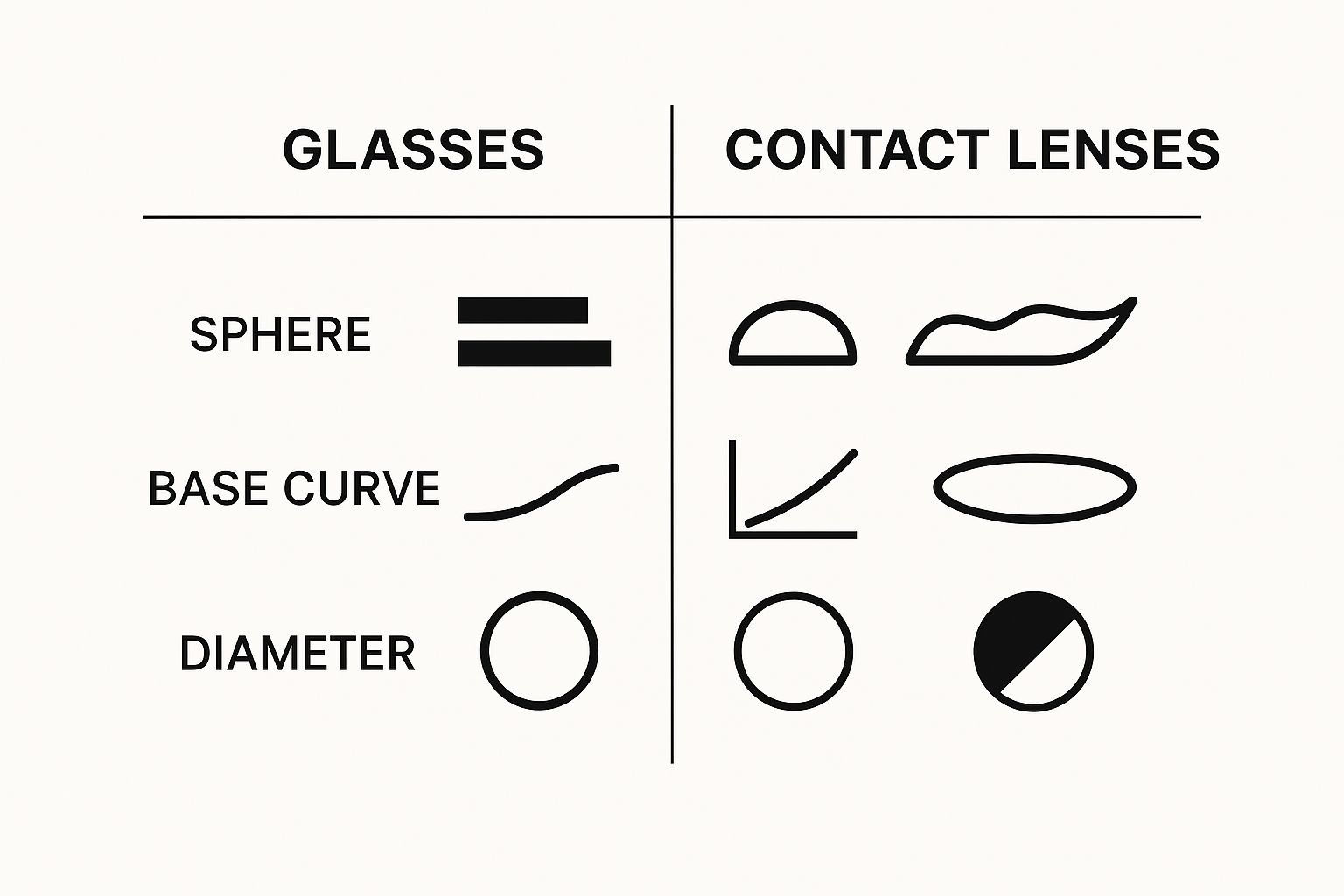
As you can see, the contact lens prescription has critical measurements for the lens curve and size—details that are completely missing from a glasses prescription. This is what makes a professional fitting so essential.
What Happens During a Contact Lens Fitting
A contact lens fitting isn’t just your standard eye exam. It's a specialized appointment where your optometrist or ophthalmologist figures out if you’re a good candidate for contacts in the first place, and then determines the exact specs you need for a safe, comfortable fit.
During the fitting, your eye doctor will take several key measurements. The two most important are the base curve (the curvature of your cornea) and the diameter (the overall width of your eye). These numbers are crucial for making sure the lens sits securely on your eye without being too tight or too loose.
If a lens is too tight, it can cut off oxygen flow to your cornea, leading to swelling and irritation. But if it’s too loose, it will slide around every time you blink, causing blurry vision and even scratching your eye. Your doctor will likely give you some trial lenses to wear for a bit to make sure everything feels right before finalizing the prescription.
The Dangers of Skipping a Professional Prescription
Buying colored contacts without a valid prescription isn’t just a bad idea—it’s incredibly dangerous. In the United States, it's actually illegal to sell any type of contact lens without verifying a prescription, because the FDA classifies all contacts as medical devices.
Any website or retailer offering "one-size-fits-all" or "no prescription needed" colored contacts is breaking the law and showing a total disregard for your eye health. These unregulated products can lead to severe, sight-threatening complications.
Lenses sold without a prescription often come from shady manufacturers and can cause a whole host of problems. Here are just a few of the risks:
- Corneal Abrasions: A poor-fitting lens can easily scratch the delicate surface of your cornea, leaving an open wound that’s ripe for infection.
- Serious Eye Infections: Bacteria can get trapped under an ill-fitting lens or come from a non-sterile factory, leading to painful infections like keratitis.
- Corneal Ulcers: These are open sores on the cornea that can develop from untreated scratches or infections. They can cause permanent scarring and vision loss.
- Vision Impairment: In the worst-case scenarios, people have needed corneal transplants or even suffered permanent blindness from unregulated lenses.
Your eyesight is irreplaceable, and no cosmetic look is worth that kind of gamble. If you want to dive deeper into the details, you can learn more about understanding contact lens prescriptions in our detailed guide. It will help you make sense of all the numbers and terms your doctor gives you.
Ultimately, getting a proper prescription is your first and most important line of defense. It ensures the prescription colored contact lenses you wear aren't just for looks, but are also perfectly matched to your unique eyes, keeping them healthy and comfortable for years to come.
Choosing the Best Lens Color for Your Look
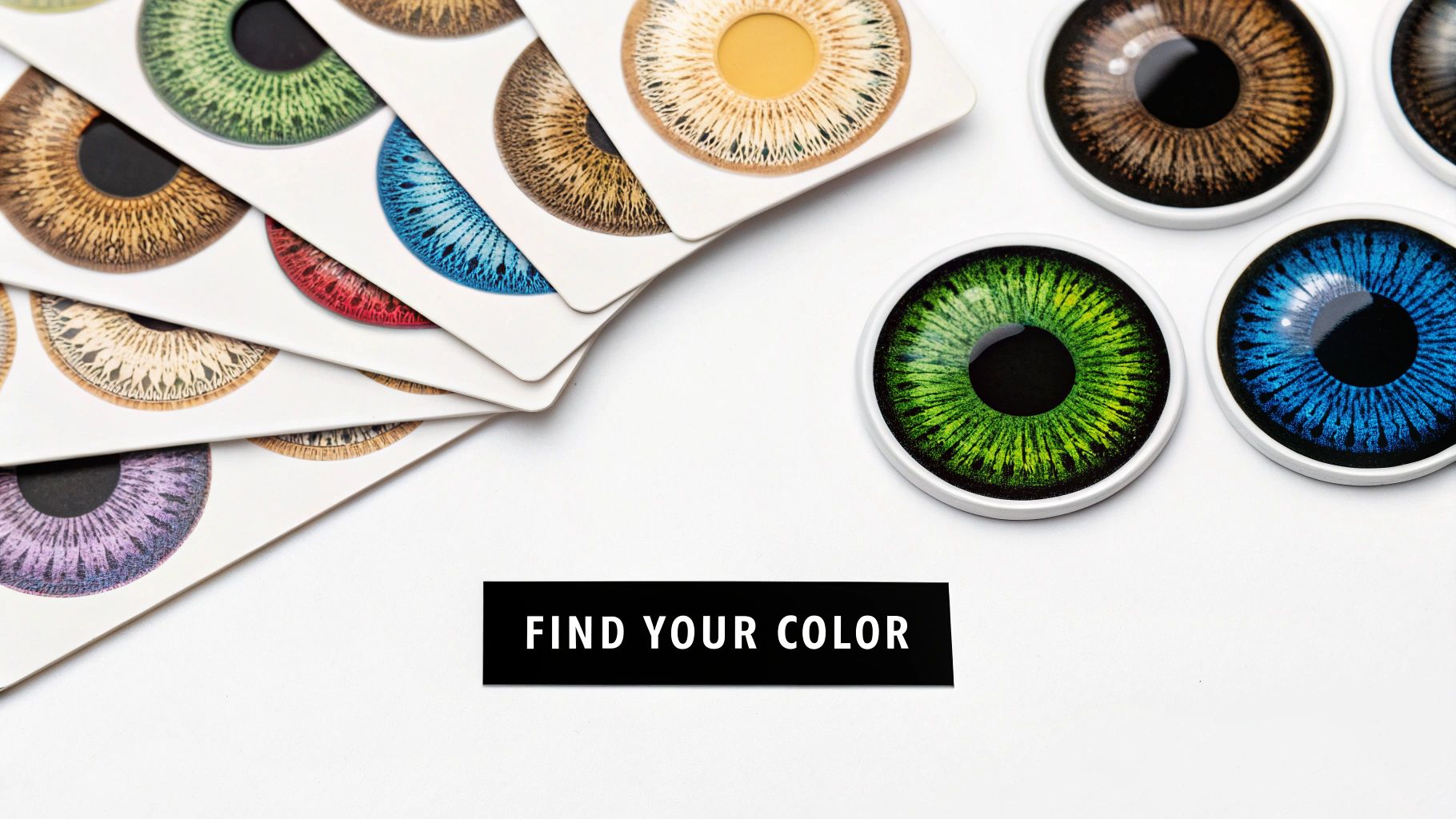
Alright, with the technical stuff out of the way, we get to the fun part: picking your new eye color. This is where you can truly express yourself, but the secret to a stunning result is finding a shade that works with your natural features, not against them.
Think about your skin tone, your hair color, and especially your original eye color. The best looks—whether you’re going for subtle or show-stopping—start by understanding what you're working with.
For Light Eyes: Enhancement Tints
If you have naturally light eyes like blue, green, or gray, you’re in a great spot. You don't need to completely cover your color; you just need to dial it up. This is where enhancement tints come in.
These lenses are semi-transparent, designed to punch up your natural shade. It's like adding a filter that boosts the saturation and depth. A soft blue can become a vibrant sapphire, and a muted green can transform into a brilliant emerald. They work by blending with your eye's natural patterns, so the result looks incredibly real, just… better.
For Dark Eyes: Opaque Tints
Changing dark brown or nearly black eyes requires a different approach. You can’t just add a layer of color on top—it would get lost. That's why we have opaque tints.
These lenses have a solid, non-transparent color pattern that completely masks your natural iris. This is the technology that lets you go from deep brown to a piercing icy blue or a striking amethyst. The best ones have complex patterns of dots and lines printed on them to mimic the texture of a real iris, making the transformation believable.
Aiming for a Natural Effect
If your goal is a subtle change that makes people wonder if you were born with it, harmony is key. You'll want to pick colors that blend beautifully with your existing features.
- If you have dark eyes: Stick to warmer tones like honey, amber, or a rich hazel. These shades will blend with the dark outer ring of your iris for a gentle, natural-looking lift.
- If you have light eyes: Try a color right next to yours on the spectrum. For blue eyes, a lens with flecks of green or gray can add stunning new dimension. For green eyes, hints of hazel or blue create captivating depth.
One of the biggest mistakes is picking a color that clashes with your skin's undertones. For warm skin tones, go for honey, hazel, and warm greens. If you have cool undertones, icy blues, grays, and jewel-toned violets will look fantastic.
Making a Bold, Dramatic Statement
Sometimes, subtle just isn't what you're going for. If you want your eyes to command attention, a high-contrast, dramatic color can be your ultimate accessory.
- Vibrant Blues and Greens: On dark eyes, a bright aqua or a vivid sea green creates an unforgettable look that really pops.
- Striking Grays and Violets: A sterling gray or a deep violet can give you an ethereal, almost otherworldly appearance, especially against medium to dark skin tones.
Color Matching Guide for Prescription Colored Contacts
To help you visualize the possibilities, we’ve put together this quick guide. Use it as a starting point to find shades that complement your unique features for either a natural or a bold new look.
| Natural Eye Color | Skin Tone | For a Natural Look | For a Dramatic Look |
|---|---|---|---|
| Light Blue/Gray | Fair/Cool | Deeper ocean blue, sea green | Sterling gray, amethyst |
| Green/Hazel | Medium/Warm | Honey, light brown, amber | Emerald green, vibrant blue |
| Light Brown | All Tones | Hazel, honey, warm green | Icy blue, sterling gray |
| Dark Brown/Black | Deep/Warm | Rich honey, warm brown | Bright aqua, vivid green, violet |
Remember, these are just suggestions! The best way to find your perfect color is to experiment.
To see more examples and dive deeper into all the amazing shades out there, check out our guide to the most popular colored contact lenses colors. It’s a great resource for getting inspired for your next look.
Your Daily Care and Safety Checklist
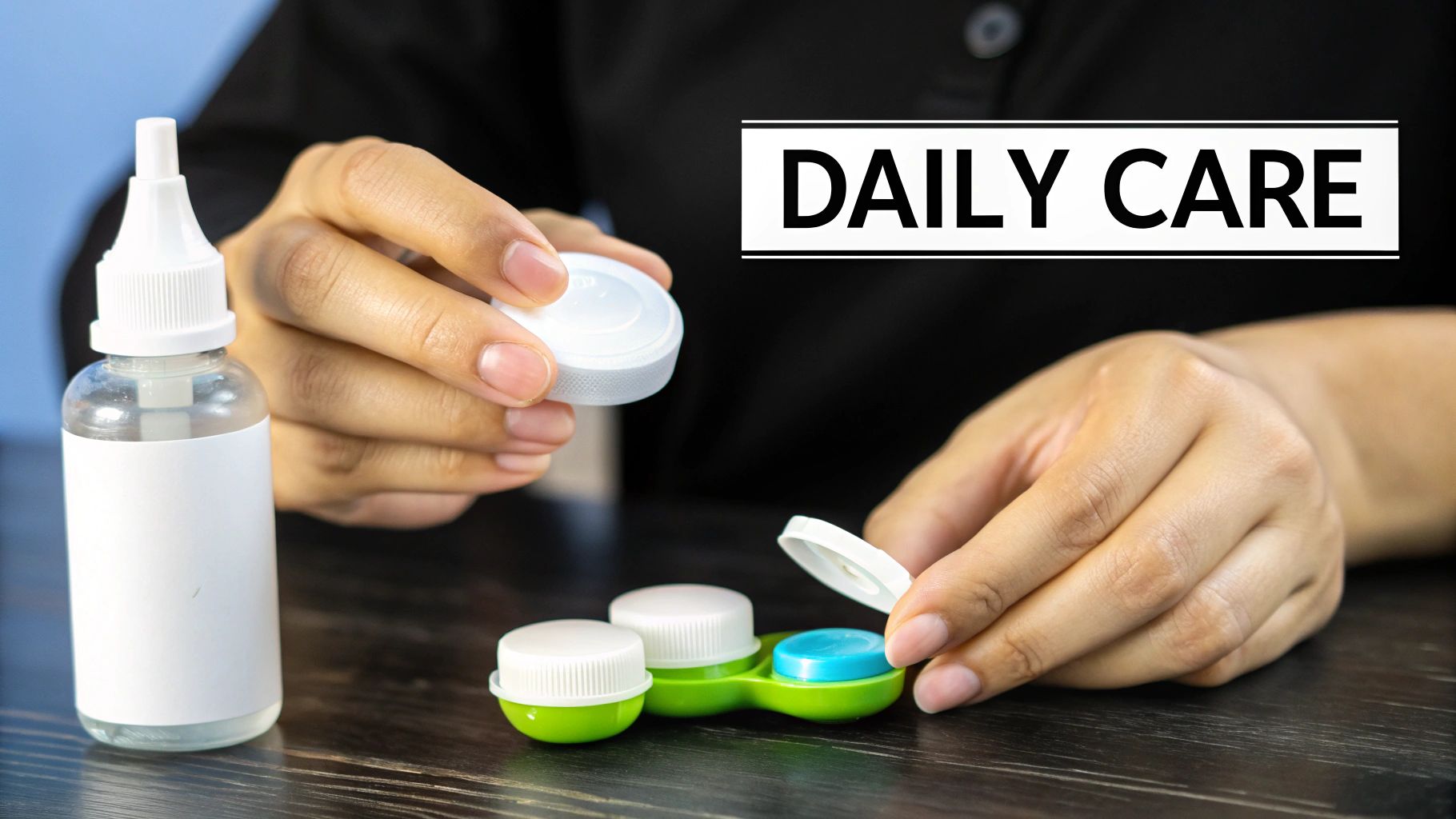
Treating your colored contact lenses with prescription with the right care is absolutely non-negotiable. Think of it as basic hygiene, but for your eyes—a few simple, consistent habits are all that stand between you and a nasty infection. This daily checklist will walk you through the essential dos and don'ts.
Get these steps right, and your lenses will be a safe, fun way to change up your look. But if you start cutting corners, you risk turning a cool accessory into a serious health problem.
The Golden Rules of Lens Handling
Before a lens even gets near your eye, your hands need to be spotless. This is your first and most important defense against bacteria.
Always wash your hands thoroughly with a simple, non-oily soap and water. Then, dry them with a lint-free towel. You don't want any tiny fibers or fuzz getting stuck to your lens and irritating your eye all day.
Here are the core habits you need to build:
- Fresh Solution, Every Single Time: Never, ever top off the old solution in your lens case. Dump it out completely and refill it with fresh, sterile contact lens solution each time you take your lenses out.
- The Rub and Rinse Method: Even if your solution says "no-rub," a quick, gentle rub is still the best way to get rid of protein deposits and debris. Just put the lens in your palm with a few drops of solution and gently rub it with your finger.
- Keep Your Case Clean: Your lens case needs cleaning, too. Give it a rinse with hot water every day, then let it air dry upside down with the caps off. To be safe, toss it and get a new one every three months.
Critical Mistakes to Avoid at All Costs
Knowing what not to do is just as important as knowing what to do. Some common shortcuts can expose your eyes to some really nasty microorganisms or even physically damage your cornea.
The single most dangerous thing you can do is use anything other than sterile contact lens solution on your lenses. Tap water, saliva, or saline solution are not disinfectants and can introduce bacteria and parasites that can cause sight-threatening infections.
Steer clear of these massive mistakes:
- Never Use Water: This is a big one. Tap water can contain a nasty microorganism called Acanthamoeba. It can cause a severe corneal infection that's incredibly difficult to treat and can even lead to blindness.
- Don't Share Lenses: Your lenses are prescribed just for you. Sharing them with a friend is like sharing a toothbrush—it’s a surefire way to pass around bacteria and risk a serious eye infection.
- Lenses First, Then Makeup: Always put your lenses in before applying any makeup. This simple step prevents powders, oils, and mascara from getting trapped under the lens. If your eyes are on the sensitive side, you might also want to look into the best natural makeup for sensitive skin to keep them happy and comfortable.
Daily Disposables Versus Monthly Lenses
The type of lens you wear will also shape your daily routine. Your lifestyle and how much effort you're willing to put into cleaning will help you and your eye doctor decide which is right for you.
Daily disposable lenses are the gold standard for convenience and hygiene. You wear them once and toss them at the end of the day. This practically eliminates any risk of infection from poor cleaning because you start with a fresh, sterile pair every morning.
Monthly or bi-weekly lenses, on the other hand, require that you clean and disinfect them every single day. They can be more budget-friendly, but they come with more responsibility. If you go this route, following the cleaning rules above isn't just a suggestion—it’s absolutely essential for your eye health.
How to Safely Purchase Colored Contacts
Knowing where to buy your colored contact lenses with a prescription is every bit as important as knowing how to care for them. Think of it this way: you wouldn't get a medical prescription filled at a back-alley shop, and your eyes deserve that same level of care. The source of your lenses has a direct, undeniable impact on your eye health.
The only way to guarantee you're getting safe, legitimate lenses is to buy from a source that absolutely requires a valid prescription. This means your optometrist's office, a licensed optical shop, or a certified online vendor. These sellers aren't just trying to make a sale; they are legally and ethically obligated to protect your vision.
Spotting a Trustworthy Retailer
When you're shopping around, especially online, you have to put on your detective hat. Unregulated sellers are everywhere, luring people in with flashy social media ads and prices that seem too good to be true. The catch? They completely skip the safety checks that keep your eyes safe.
Here's a quick mental checklist to run through when you're vetting a retailer:
- They MUST ask for a prescription. A reputable seller will always ask for a copy of your prescription or have a system to verify it with your eye doctor. This isn't optional; it's the law and the number one sign you're in the right place.
- Look for FDA approval. Legitimate vendors sell lenses that are FDA-approved. They'll usually mention this on their site because it’s a stamp of quality and safety.
- Recognizable brand names. You should see names you know and trust. If the packaging looks generic or the brand is some no-name you've never heard of, that’s a massive red flag.
- Real contact information. A real business has a physical address, a customer service number you can actually call, and a straightforward return policy.
If a website lets you add contact lenses to your cart and check out without ever asking for your prescription information, click away immediately. They are operating illegally and are willing to risk your eyesight for a quick profit.
Why Brand and Source Matter
Established contact lens brands pour millions of dollars into research and development. They use high-tech, medical-grade materials to make sure their lenses are breathable, comfortable, and, most importantly, safe. When you're ready to buy, it pays to research reputable colored lens distributors to be certain you're getting an authentic, high-quality product.
On the flip side, illegitimate sellers often get their products from unregulated factories that use cheap, unsafe plastics and even toxic dyes. These materials can cause everything from painful infections to permanent eye damage.
The demand for colored contacts is exploding. The global market was valued at around USD 5.93 billion and is expected to climb to USD 9.11 billion by 2035. This incredible growth attracts plenty of good, honest businesses, but it also opens the door for a flood of dangerous counterfeiters.
Choosing a trusted source ensures the lenses you put in your eyes are the real deal—sterile, safe, and made just for you. For a deeper dive, our guide on how to buy contact lenses online has more tips to keep you safe. Ultimately, sticking with approved vendors is the smartest thing you can do for the long-term health of your eyes, letting you enjoy your new look with total peace of mind.
Your Top Questions Answered
Alright, even after covering the basics, a few questions probably still come to mind when you're thinking about trying prescription colored contacts. Let's clear up some of the most common ones so you can feel completely confident in your decision.
The biggest question is usually about safety. Are they okay for everyday wear? Absolutely. As long as they're prescribed and fitted by your eye doctor and you follow the care instructions, they are just as safe as any regular contact lens. Your optometrist will work with you to find the perfect wearing schedule to keep your eyes happy and healthy.
But what if your vision needs are a little more complicated?
Do They Make Colored Lenses for My Eyes?
It’s a fair question, especially for those with conditions like astigmatism or presbyopia. The good news is, yes, but your options might be a bit more specific.
- For Astigmatism: You'll need what are called toric lenses. Several major brands make colored toric contacts, but getting the fit just right is crucial. An expert fitting ensures the lens stays put on your eye, giving you that crisp, stable vision you need.
- For Presbyopia: If you need help seeing both up close and far away, multifocal colored contacts are an option. The color palette might not be as extensive, but they get the job done.
It all comes back to a comprehensive eye exam. That’s where your doctor can pinpoint the exact lens that balances your vision correction with the color you’re after.
A quick heads-up about vision in low light: it can sometimes be affected. Your pupils naturally get bigger in the dark to let more light in. If your pupil expands past the clear opening in the center of the colored lens, you might notice your vision isn't quite as sharp, almost like a subtle "tunnel vision" effect.
How People Shop for Colored Lenses
It's also interesting to see when people buy these lenses. Search data shows a pretty clear pattern. Regular contacts see a steady hum of interest year-round, with a little bump during back-to-school.
Colored contacts, on the other hand, are a different story. They experience massive, sharp spikes in popularity around specific events like Halloween or big summer festivals, then demand drops off just as fast. This really shows how many people see them as the perfect accessory for special occasions. You can dive deeper into these fascinating consumer trends if you're curious.
Knowing these little details helps you know exactly what to expect when you start wearing colored contacts.
Ready to explore the world of vision correction with a splash of color? Contact Lens HQ is your go-to resource for doctor-reviewed guides, unbiased reviews, and everything you need to know about keeping your eyes healthy and stylish. Start your journey with confidence at https://contactlenshq.com.


