
If you're looking for the best monthly contact lenses, you've probably realized they're often the most cost-effective and environmentally friendly choice. They're a fantastic option for seasoned contact lens wearers who are already comfortable with a daily cleaning routine and prefer having a single pair last a full 30 days.
Why Choose Monthly Contact Lenses?
Picking the right contact lens really boils down to your lifestyle, budget, and what you personally find most comfortable. Monthly disposables have some unique advantages that make them a go-to for millions of people. Unlike dailies that you toss out every night, monthlies are built to be durable and reusable, offering their own brand of convenience.
This wearing schedule is a particularly good fit for people who wear their contacts every single day. If you've got a solid daily routine and are diligent about proper lens care, the upsides of monthlies usually make the small amount of cleaning effort totally worth it.
The Balance of Cost and Convenience
One of the biggest draws of monthly lenses is the long-term value. When you break it down, they are significantly cheaper per wear than daily disposables. A single box can cover one eye for six months, which means fewer trips to the store and a lower overall annual cost for your vision correction.
Of course, this financial benefit comes with the responsibility of cleaning them every night. This routine is absolutely essential for keeping your eyes healthy and ensuring the lenses stay comfortable for the entire 30-day cycle.
Here’s a quick look at who might prefer monthly vs. daily lenses:
| Feature | Monthly Lenses | Daily Lenses |
|---|---|---|
| Ideal User | Consistent, everyday wearers | Occasional or allergy-prone wearers |
| Cost | Lower annual cost | Higher annual cost |
| Maintenance | Daily cleaning required | No cleaning required |
| Environmental Impact | Less packaging and plastic waste | More packaging and plastic waste |
Who Benefits Most From a Monthly Schedule?
Some lifestyles just click perfectly with the structure of monthly contacts. Thinking through these scenarios can help you figure out if they’re the right choice before you dive into comparing the top brands on the market.
- The Budget-Conscious Wearer: If your main goal is to keep vision expenses down without compromising on quality, monthlies are the undisputed champion. The savings can easily add up to hundreds of dollars a year.
- The Routine-Oriented Professional: For anyone with a predictable day-to-day schedule, adding a quick two-minute cleaning ritual before bed is a simple, manageable habit to form.
- The Environmentally Aware Consumer: With only 24 lenses used per eye annually versus 730 for dailies, monthlies create far less plastic and packaging waste.
The key trade-off is simple: monthly lenses exchange a lower price point and less waste for a daily commitment to hygiene. For the right person, this is an easy and worthwhile decision.
Ultimately, choosing monthly lenses comes down to your willingness to stick to a consistent cleaning habit. If you appreciate long-term savings and your daily life is fairly predictable, they offer an excellent combination of performance, value, and practicality. But for those who value grab-and-go ease above all else, daily disposables might be a better fit.
Understanding What Makes a Good Contact Lens

Before we start comparing brands, let's talk about the science that separates a great contact lens from a merely adequate one. The specs on a lens box might seem like technical jargon, but they directly impact how your eyes feel after a long day. Knowing what they mean helps you and your eye doctor pinpoint the perfect lens for your needs.
Think of it like buying a high-performance running shoe. You wouldn't just pick one based on color; you’d look at the cushioning, the material's breathability, and the overall support. Contacts are the same—the technology inside dictates how they perform for your specific eyes and lifestyle.
Material and Breathability: The Core of Comfort
The single biggest factor in modern contact lens comfort is the material. For years, soft lenses were made from a simple, water-based plastic called hydrogel. While they felt okay at first, the only way they could get oxygen to your eye was through the water they held. More water meant more oxygen, but it also meant the lens could dry out as the day wore on.
Then, everything changed with silicone hydrogel. This advanced material has a built-in structure that lets oxygen flow directly through the lens to your cornea, completely separate from its water content. For anyone wearing monthly lenses, this was a massive leap forward in both health and comfort.
Why does this matter so much? Your cornea doesn’t have blood vessels; it gets its oxygen straight from the air. A lens that blocks oxygen is like putting a plastic bag over your eye—it can lead to red, tired eyes and, over time, more serious health problems. For a deeper dive, our guide on the differences between silicone hydrogel and hydrogel contact lenses explains it all.
Key Takeaway: For healthy, comfortable, long-term wear, high oxygen permeability is essential. Silicone hydrogel is the gold standard for monthly contacts today because it delivers the breathability your eyes need to stay healthy and feel good all day long.
Decoding the Specs on the Box
When you're discussing options with your optometrist, you'll hear a few key terms. Understanding them puts you in the driver's seat.
1. Oxygen Permeability (Dk/t)
This number tells you how much oxygen can pass through the contact lens. "Dk" is the material’s natural permeability, and "t" is its thickness. Simply put, a higher Dk/t value is always better. It means a more breathable lens and healthier eyes.
- Low Dk/t: Can lead to redness and that scratchy, dry feeling, especially at the end of the day.
- High Dk/t: Keeps eyes looking whiter and feeling more comfortable, which is a must for anyone wearing lenses for extended periods.
2. Water Content
This is simply the percentage of the lens made of water. With old-school hydrogel lenses, more water meant more oxygen, but it also created a paradox: the lens could actually pull moisture from your eye's tear film to stay hydrated, making your eyes feel drier.
Silicone hydrogel lenses flipped this script. They can have much lower water content (some AIR OPTIX lenses are only 33% water) yet deliver far more oxygen because the silicone does all the heavy lifting.
3. Base Curve (BC) and Diameter (DIA)
These two measurements are all about the fit.
- Base Curve (BC): This is the curvature of the lens's back surface. It has to line up with the unique curve of your cornea for a stable, comfortable fit. The wrong BC can make the lens feel too tight or, worse, slide around every time you blink.
- Diameter (DIA): This is the total width of the lens, ensuring it's large enough to sit correctly over your cornea without shifting.
These numbers are exactly why you need a professional fitting. Your optometrist takes precise measurements to find the BC and DIA that will feel like they were made just for you. With this background, you're now ready to see how the top brands stack up.
Comparing the Best Monthly Contact Lenses
Picking the right monthly contact lens isn't about finding one single "best" brand. It's about matching a specific lens to your eyes, your lifestyle, and even your environment. A lens that feels fantastic for someone living in a humid climate might feel like a desert for a person stuck in an air-conditioned office all day. That's why we need to dig deeper than a simple feature list.
We’re going to look at how leading brands like Acuvue Vita, Air Optix, and Biofinity actually perform in the real world. Understanding what makes each one tick will help you have a much better conversation with your eye doctor about what’s right for you. The demand for these lenses is huge—the global market hit around USD 5 billion in 2023 and is expected to grow by about 6% annually through 2033. This boom is all thanks to innovations in silicone hydrogel materials that let your eyes breathe. You can learn more about the expanding monthly contact lens market.
The Dry Environment Specialist: Acuvue Vita
If you spend your days staring at a computer screen or working in a dry, climate-controlled space, you know the struggle. That feeling when your lenses just give up by 3 p.m.? Acuvue Vita was built to solve that exact problem.
Its secret weapon is HydraMax Technology. Instead of just a surface coating that can wear off, Acuvue Vita has hydrating agents integrated throughout the entire lens material. This design helps it maintain moisture consistently all month long, resisting deposit buildup and keeping your eyes comfortable from day one straight through to day thirty.
- Best For: Office workers, students, or anyone who constantly battles end-of-day dryness with their current lenses.
- Key Advantage: Unbeatable moisture retention over the full 30-day wear cycle.
This consistent performance makes it a go-to for people who feel their lenses start strong in week one but fade by week four. It also boasts the highest level of UV protection you can get in a monthly lens, which is a nice added bonus.
The Breathability Champion: Air Optix plus HydraGlyde
For wearers who put long-term eye health and breathability at the top of their list, the Air Optix line has always been a solid choice. The Air Optix plus HydraGlyde model, in particular, is a powerhouse, combining two of the brand's best technologies.
First up is SmartShield Technology, which creates an incredibly thin protective layer over the lens. Think of it as a force field against irritating gunk like proteins and lipids that can build up and cause discomfort. This is a game-changer for anyone prone to allergies.
Then you have the HydraGlyde Moisture Matrix. This tech envelops the lens in long-lasting moisture, giving you that great, hydrated feeling right when you put them in and keeping it going all day.
With a water content of just 33% but very high oxygen permeability, Air Optix plus HydraGlyde is a perfect example of how modern silicone hydrogel lenses deliver incredible comfort without needing to be super water-logged.
It’s often recommended for new contact lens wearers because it's easy to handle and provides a reliable, healthy experience day in and day out.
This chart helps visualize how price and oxygen permeability stack up for some popular monthly brands.
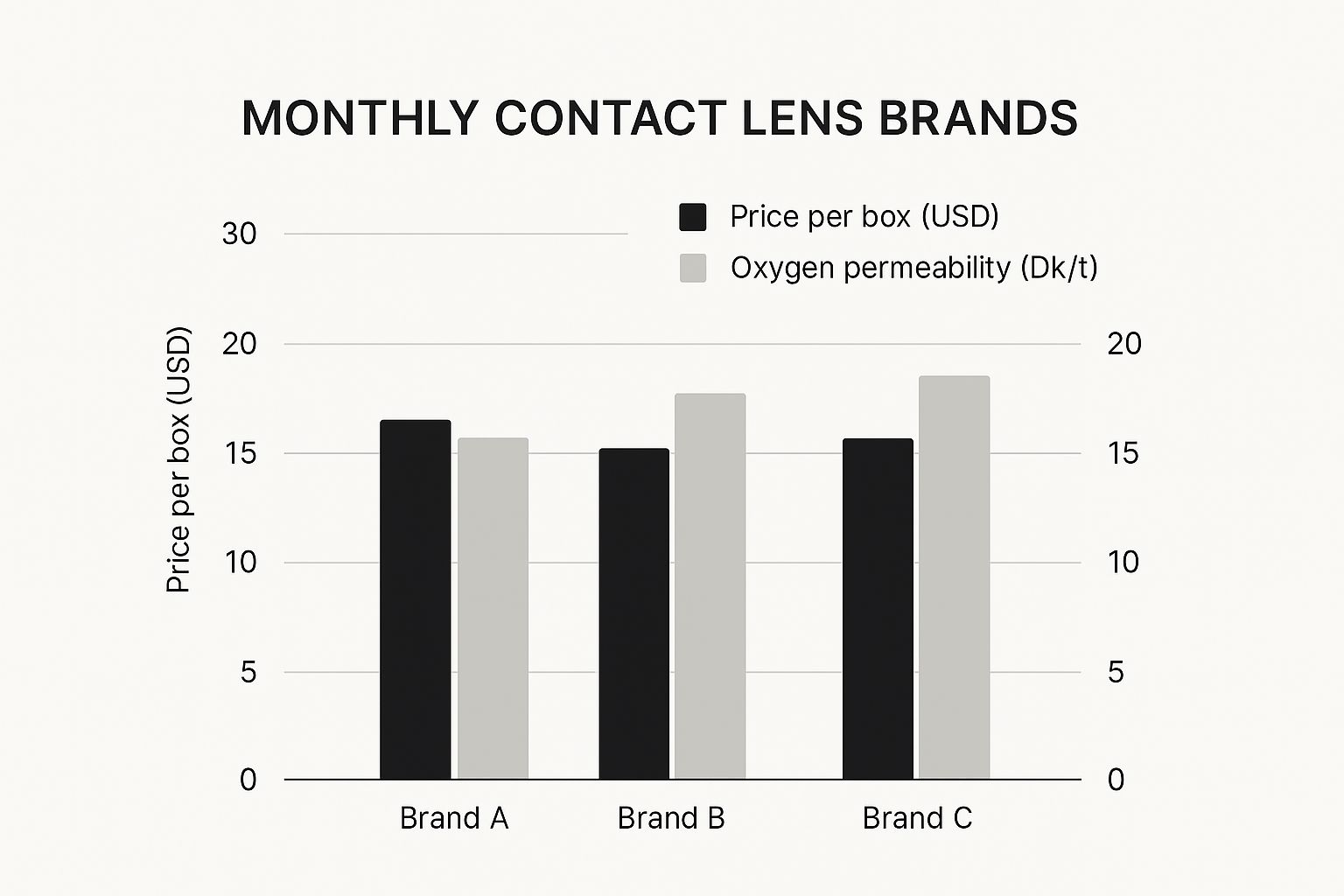
As you can see, even at similar price points, the breathability (Dk/t)—a critical factor for eye health—can vary significantly.
The Flexible Wear Leader: Biofinity
CooperVision's Biofinity lenses have a reputation for being exceptionally comfortable and versatile. They’re made with Aquaform Technology, which makes the lens material naturally wettable. This is a big deal because it means they don't need special surface treatments or wetting agents that can lose effectiveness over the month.
The technology results in a soft, highly breathable lens that locks water in to minimize dehydration. It’s the kind of comfort that lasts, even after a really long day. But Biofinity's key differentiator is that it’s FDA-approved for up to six nights and seven days of continuous wear.
Heads up: Sleeping in your contacts isn't for everyone. You absolutely must get the green light from your optometrist first, as continuous wear increases the risk of eye infections.
- Best For: Anyone looking for a soft, flexible lens with the option for occasional overnight wear (once cleared by a doctor).
- Key Advantage: Natural, built-in wettability and high breathability that provide comfort without additives.
This unique mix of comfort, breathability, and flexible wear approval makes Biofinity one of the most prescribed monthly lenses out there.
Top Monthly Contact Lenses Feature Comparison
To make things even clearer, let's put these top-tier lenses side-by-side. This table breaks down the technical specs and unique comfort technologies so you can easily spot the differences.
| Brand/Model | Material | Water Content | Oxygen Permeability (Dk/t) | Best For | Special Features |
|---|---|---|---|---|---|
| Acuvue Vita | Senofilcon C | 41% | 147 | Preventing end-of-day dryness | HydraMax Technology, Class 1 UV Blocker |
| Air Optix plus HydraGlyde | Lotrafilcon B | 33% | 138 | Resisting deposits and all-day comfort | SmartShield & HydraGlyde Technology |
| Biofinity | Comfilcon A | 48% | 160 | Flexible wear and natural comfort | Aquaform Technology, approved for continuous wear |
| Bausch + Lomb ULTRA | Samfilcon A | 46% | 163 | Digital device users, long hours | MoistureSeal Technology, retains 95% moisture |
| Total30 | Lehfilcon A | 55% | 154 | Premium comfort, resisting bacteria | Water Gradient & CELLIGENT Technology |
This comparison highlights how different brands prioritize certain features, whether it's maxing out oxygen flow, maintaining moisture, or offering flexible wear schedules.
Other Monthly Lenses Worth Knowing
While Acuvue, Air Optix, and Biofinity dominate the market, a couple of other fantastic options cater to very specific needs.
Bausch + Lomb ULTRA was practically made for our screen-heavy world. Its MoistureSeal Technology is designed to maintain 95% of the lens’s moisture for a full 16 hours. This makes it an amazing choice for anyone dealing with eye strain and dryness from staring at screens all day.
Total30 is a newer, more premium lens that uses Water Gradient Technology. This creates a surface with nearly 100% water content, forming a gentle cushion of moisture against the eye. It also features CELLIGENT Technology, which helps mimic the eye's natural surface to better resist bacteria and deposits.
Ultimately, the best monthly lens for you is a decision you'll make with your eye care professional. This guide gives you the background knowledge to talk about your daily life and vision needs, ensuring you find a lens that keeps your world in focus and feels great all month long.
Lenses for Astigmatism and Presbyopia
While standard contacts do a great job correcting simple nearsightedness and farsightedness, many of us have more complex vision needs. Conditions like astigmatism and presbyopia require specialty lenses built with some seriously impressive technology. The good news is that finding the perfect monthly contact lens for these issues is more straightforward than ever before.
Astigmatism happens when the cornea isn't perfectly round, but shaped more like a football. This irregularity bends light in funny ways, causing blurry or distorted vision at any distance. Presbyopia, on the other hand, is the age-related change that makes focusing on things up close—like a phone screen or menu—a real struggle.
Toric Lenses for Astigmatism
If you have astigmatism, you’ll need a toric contact lens. Think of it this way: unlike a regular spherical lens, a toric lens has different corrective powers across its surface to match your eye's unique shape.
The real magic, though, is in keeping the lens perfectly still. If it rotates even a little, the different powers won't line up correctly, and your vision goes right back to being blurry. To combat this, manufacturers have developed some clever stabilization methods.
- Blink Stabilization: Lenses like Acuvue cleverly use the gentle pressure from your eyelids every time you blink to nudge the lens back into its correct position.
- Prism Ballasting: This classic approach makes the bottom edge of the lens a tiny bit thicker and heavier, using gravity to keep it oriented correctly throughout the day.
Top-tier monthly toric lenses like Biofinity Toric and Air Optix for Astigmatism are popular for a reason—they're known for providing crisp vision that stays put from morning to night.
The success of a toric lens boils down to fit and stability. A lens that rotates is a lens that doesn’t work. This is exactly why a professional fitting with your eye doctor is non-negotiable; they’ll find the brand and design that locks into place on your eye.
Multifocal Lenses for Presbyopia
For anyone who’s started holding their phone at arm's length to read a text, multifocal contacts are a game-changer. These advanced lenses are designed to correct presbyopia by giving you clear vision up close, far away, and everywhere in between, often letting you ditch the reading glasses for good.
Most soft multifocal lenses work on a principle called simultaneous vision. Your eye looks through multiple prescription zones at once, and your brain intuitively learns to focus on the information it needs for the task at hand. It’s a completely different experience from bifocal glasses, where you have to physically look down through a specific part of the lens. Our guide on managing presbyopia with contact lenses dives much deeper into how this amazing technology works.
Comparing Top Specialty Monthly Lenses
When you're choosing a specialty lens, the technology driving its comfort and stability is just as critical as the prescription itself. Brands have poured millions into designing lenses that solve the unique puzzles posed by astigmatism and presbyopia.
Here’s a look at how some of the leading monthly lenses tackle these conditions:
| Lens Category | Top Brand Examples | Key Technology & Benefit |
|---|---|---|
| Toric (Astigmatism) | Biofinity Toric | Optimized Toric Lens Geometry™: This is a multifaceted design that delivers a stable, comfortable fit for consistently sharp vision. |
| Toric (Astigmatism) | Bausch + Lomb ULTRA for Astigmatism | OpticAlign™ Design: Specifically engineered to stay put and reduce the halos and glare that can be a nuisance in low-light situations. |
| Multifocal (Presbyopia) | Air Optix Aqua Multifocal | Precision Profile® Design: Creates a smooth, seamless range of vision, letting you shift focus from near to far without any jarring transitions. |
| Multifocal (Presbyopia) | Biofinity Multifocal | Balanced Progressive® Technology: Uses multiple correction zones across the lens to ensure you get clear, reliable vision at any distance. |
Ultimately, picking the right specialty lens is a team effort between you and your eye care professional. They have the expertise to evaluate your prescription, eye shape, and daily life to recommend a monthly lens that provides not just perfect vision, but lasting comfort and health for your eyes.
Colored Lenses: Where Vision Meets Style
Colored contact lenses aren't just for vision correction; they're a way to express yourself. Think of them as both a medical device and a fashion accessory, giving you the power to subtly enhance your natural eye color or go for a complete, head-turning transformation.
Forget the flat, artificial-looking lenses from years ago. Today's technology uses incredibly detailed printing to mimic the natural patterns of the human iris. By blending different tones and flecks, modern colored contacts deliver a look that's both realistic and vibrant. This opens up a world of possibilities, from lenses that add a little depth to light eyes to vivid colors that can completely cover even the darkest brown.
Finding Your Perfect Shade
The first step is deciding what you want to achieve. Are you aiming for a slight tweak or a total reinvention? Your natural eye color and skin tone will be your best guides for figuring out what looks best.
- For a subtle shift: If you have blue eyes, a lens with touches of green or gray can add a beautiful new dimension. For brown eyes, a hazel or honey-toned lens can bring a gorgeous warmth.
- For a bold statement: If you really want to change things up, especially if you have dark eyes, you'll need a lens with a more opaque tint. Colors like sterling gray, brilliant blue, or even a striking amethyst can create an entirely new look.
It's a lot like choosing a new hair color. Some shades will naturally complement your features, while others are all about making a high-impact, stylistic statement.
One thing you absolutely can't forget: all contact lenses, even non-prescription colored ones, are medical devices. Always get a valid prescription from your eye doctor and only buy FDA-approved brands from a legitimate source. This is non-negotiable for keeping your eyes safe and avoiding nasty infections.
The demand for these lenses is huge. The global market for monthly colored contacts is valued at around USD 6 billion a year and continues to climb. This growth is largely fueled by younger adults who want their vision correction to double as a cosmetic enhancement. You can learn more about the growth of the colored contact lens market.
Don't Sacrifice Health for Style
While the aesthetics are what draw most people in, eye health has to remain the top priority. The best colored monthly lenses are made from the same breathable silicone hydrogel materials as their clear counterparts. This is essential for letting enough oxygen reach your cornea to keep your eyes comfortable and healthy all day long.
Brands like Air Optix Colors and Acuvue 2 Colors are popular for a reason—they build their beautiful, realistic color options on top of proven, reliable lens platforms. You get the same comfort and crisp vision you'd expect from a standard monthly lens, but with the added fun of enhancing your look. When you talk to your optometrist, make sure to bring up your interest in colored lenses so they can find the perfect fit that is both safe and stylish for you.
Proper Care for Healthy Monthly Lens Wear
If you want to get the most out of your monthly contacts, there's one thing you absolutely can't skip: a solid daily cleaning routine. Unlike dailies that you just toss at the end of the day, monthlies stick around and need consistent care. Without it, you get a nasty buildup of proteins, lipids, and other gunk that can cause everything from minor irritation to serious eye infections.
Think of it this way: your goal is to make your lenses feel as clean and comfortable on day 30 as they did on day one. A few minutes each night is all it takes to keep your lenses in top shape and your eyes healthy.
The Essential Cleaning Steps
Getting the cleaning process right is actually pretty simple once you make it a habit. The "rub and rinse" method is still the best way to get rid of all the debris that accumulates on your lenses throughout the day. Skipping this crucial step is a surefire way to run into problems with deposits and discomfort.
Here’s a nightly routine that works every time:
- Wash Your Hands: First things first, wash your hands with soap and water. Dry them with a lint-free towel to avoid transferring any fuzz or germs to your lenses.
- Rub and Rinse: Pop a lens into the palm of your hand and add a few drops of fresh multi-purpose solution. Gently rub both sides of the lens with your fingertip for about 20 seconds. This is the most important part—it physically loosens all the stubborn buildup.
- Final Rinse: Give the lens a good rinse with more fresh solution to wash away all the gunk you just dislodged.
- Soak Overnight: Place the clean lens in your case, fill it with fresh disinfecting solution, and make sure it’s completely covered.
If you'd like a more in-depth look, our guide on how to clean contact lenses properly breaks it down even further with extra tips.
Crucial safety tip: Never, ever use tap water, saliva, or anything other than sterile contact lens solution on your lenses. Water and saliva are teeming with microorganisms that can cause vision-threatening infections.
Common Mistakes to Avoid
It’s easy to get lazy with your routine, even for long-time lens wearers. To keep your eyes safe and your lenses comfortable, make sure you're not making these common mistakes.
- "Topping Off" Your Solution: Don't just add a splash of new solution to the old stuff in your case. Always dump the used liquid and refill the case with completely fresh solution every single night.
- Stretching the Wear Schedule: Monthly lenses are designed for 30 days of wear, and that’s it. Pushing them longer is a bad idea. The material starts to degrade, making it less breathable and a magnet for deposits.
- Forgetting Your Case: Your lens case can get just as dirty as your lenses. Rinse it every day with fresh solution (not water!) and let it air dry, upside down with the caps off. To be safe, toss it and get a new one every three months.
Got Questions About Monthly Lenses? We've Got Answers.
Even after you've picked a brand, a few practical questions always pop up. Let's tackle some of the most common things wearers ask about monthly contact lenses.
How Many Hours a Day Can I Realistically Wear Them?
Most modern silicone hydrogel lenses are built for the long haul, often approved for up to 16 hours of continuous wear. But that's a manufacturer's guideline, not a hard rule for everyone.
Your personal wear time really depends on your eye health, tear production, and your environment. Always stick to the schedule your eye doctor gives you—they know what your eyes can handle safely.
Are Monthly Lenses Actually Cheaper Than Dailies?
Yes, when you look at the total cost over a year, monthly lenses are almost always the more budget-friendly choice. A box of dailies might seem cheaper at the checkout, but you're buying a lot more of them. For anyone who wears contacts regularly, monthlies offer serious long-term savings.
This cost factor is a big deal in the contact lens industry. In 2025, the global market for all contact lenses reached a staggering USD 15.6 billion, and it's expected to climb to USD 27.8 billion by 2035. If you're interested in the numbers, you can dive into the global contact lens market trends.
A word of caution: If you ever tear a monthly lens, throw it out immediately. Don't even think about putting it in your eye. A ripped lens can easily scratch your cornea and cause a nasty infection. Keep a spare pair of lenses or your glasses handy for these little emergencies—it's never worth risking your vision.
At Contact Lens HQ, our doctor-led team is committed to giving you clear, trustworthy advice to help you see your best. For more in-depth guides and honest reviews, check us out at https://contactlenshq.com.


