
For a lot of teens, the best place to start is with daily disposables. They're just unbeatable when it comes to hygiene and convenience. Because you toss them out every night, there's no daily cleaning routine to forget, which drastically cuts down the risk of eye infections. This makes them a fantastic choice for busy teenagers who are always on the go.
Are Contact Lenses the Right Choice for Your Teen?
Thinking about switching from glasses to contacts is a big deal, and it's a decision that's far more about maturity than a specific age. While some kids get fitted for contacts as young as eight, the real question for a teenager is whether they can handle the responsibility. Is your teen truly ready for this new level of personal care?
Often, the push for contacts comes from a teen's desire for more freedom. Glasses can be a pain during sports, they fog up when you walk inside on a cold day, and sometimes they just feel like a barrier. Contact lenses solve a lot of these problems, giving them a full, unobstructed field of vision that's perfect for everything from the soccer field to the dance studio. This isn't just about performance; it often comes with a welcome boost in self-confidence, too.
Assessing Your Teen's Readiness
Before you even book an eye exam, take a look at your teen’s daily habits. A teenager who keeps up with their homework, remembers to do their chores, and generally practices good personal hygiene is probably a great candidate. These small, everyday behaviors are surprisingly good clues about their ability to stick to a strict lens care routine.
Here’s a quick rundown of what signals a teen is prepared for the responsibility:
- Demonstrated Responsibility: They handle their business—schoolwork, chores, maybe even caring for a pet—without you having to nag them constantly.
- Good Personal Hygiene: They wash their hands, brush their teeth, and manage their own grooming without being reminded.
- Motivation and Desire: The request for contacts is coming from them. This shows they're invested in making the change and will be more willing to learn how to do it right.
A teen’s motivation is a powerful driver for success with contact lenses. When they genuinely want them for sports or confidence, they are far more likely to adhere to the necessary safety and hygiene protocols.
To help you and your teen think through this, here's a simple checklist. Talk through these points together to get a clearer picture of their readiness.
Teen Readiness Checklist for Contact Lenses
| Readiness Factor | Signs of a Good Candidate | Points to Discuss with Your Eye Doctor |
|---|---|---|
| Responsibility | Consistently completes homework and chores without prompting. | "Does my teen's daily routine fit with the care schedule for different lens types?" |
| Hygiene Habits | Regularly washes hands, brushes teeth, and maintains personal cleanliness. | "What are the most common hygiene mistakes teens make, and how can we avoid them?" |
| Lifestyle & Activities | Active in sports, theater, or other activities where glasses are inconvenient. | "Which lens material (e.g., silicone hydrogel) is best for long days or sports?" |
| Motivation | Proactively asks for contact lenses and is curious about the process. | "Can we do a trial run to see if my teen can handle the insertion and removal process?" |
| Problem-Solving | Can follow multi-step instructions and knows when to ask for help. | "What are the key signs of a problem (like an infection) that we should watch for?" |
This checklist isn't a test, but a starting point for a good conversation—first at home, and then with your eye doctor.
Partnering with Your Eye Doctor
At the end of the day, contact lenses are medical devices, and they absolutely require a professional fitting and a valid prescription. The most important step in this whole process is the conversation you'll have with your eye doctor. They won't just check your teen's vision; they'll also examine the physical health of their eyes to make sure they're a good fit for wearing lenses.
That appointment is the perfect time to talk about everything—lifestyle, habits, and any worries you both might have. Your doctor can recommend the best contact lenses for your teenager based on their unique needs, whether it's for all-day wear, just for sports, or to manage something like astigmatism. You can also explore options and learn more about whether kids can wear contacts in our detailed guide. Working together like this ensures you make a smart choice that puts your teen's long-term eye health first and sets them up for success.
Decoding the Different Types of Teen Contact Lenses
Stepping into the world of contact lenses can feel like learning a new language. You'll hear terms like "disposables," "toric," and "soft lenses," and it’s easy to feel overwhelmed. But don't worry—understanding the basics is much simpler than it seems.
It's all about figuring out what each type of lens does and how it fits into a busy teen’s life.
Think of it like choosing between paper plates and ceramic dishes. Paper plates are incredibly convenient and hygienic for a single use. Ceramic dishes are reusable and cost-effective, but they demand consistent cleaning. Neither is inherently "better," but one is definitely a better fit for a specific lifestyle. That same logic is the best way to approach contact lenses.
Dailies: The Fresh-Pair-Every-Day Choice
Daily disposable lenses are exactly what they sound like—you wear them for one day and then toss them out. No cleaning, no solutions, no storage cases to keep track of.
This "fresh start" approach is why so many eye doctors consider them the gold standard, especially for teenage wearers. It's a huge win for teens juggling school, sports, and a social life, because it completely removes the chance of human error in a cleaning routine—a major source of eye infections. The sheer simplicity of opening a new, sterile pair each morning makes them one of the safest options out there.
The market is definitely shifting this way. Daily disposables are on track to capture 49.05% of global revenue by 2025. When you consider that teens average over 7 hours of screen time daily, these lenses can reduce infection risks by up to 5 times compared to reusables simply by taking cleaning solutions out of the equation.
Reusables: Lenses That Need a Routine
Reusable lenses, often called planned replacement lenses, are designed to be worn multiple times before being thrown away. They usually come in two schedules:
- Bi-weekly: Replaced every two weeks.
- Monthly: Replaced every 30 days.
While reusables are often easier on the wallet upfront, they come with a non-negotiable responsibility. Every single night, they have to be removed, cleaned with a special solution, and stored in a clean case. This routine is critical for getting rid of protein deposits, germs, and other gunk that builds up during the day. For a teen who can lock into a strict regimen, they're a perfectly safe and effective option. For more tips on care, check out our guide on different types of disposable contact lenses.
Soft vs. Rigid Lenses
The vast majority of teens today wear soft contact lenses. Made from flexible, water-loving plastics like hydrogel or silicone hydrogel, they’re known for being comfortable right out of the box. They drape over the eye easily, which makes the adjustment period a breeze.
On the other side of the coin are rigid gas permeable (RGP) lenses. These are smaller, firmer lenses that can provide incredibly sharp vision and are very durable. They do take longer to get used to and require a more precise fitting, but they also let more oxygen reach the eye. For some specific prescriptions or eye conditions, they can be a fantastic choice. Still, because of the immediate comfort and wide availability, soft lenses are almost always the starting point for most teens.
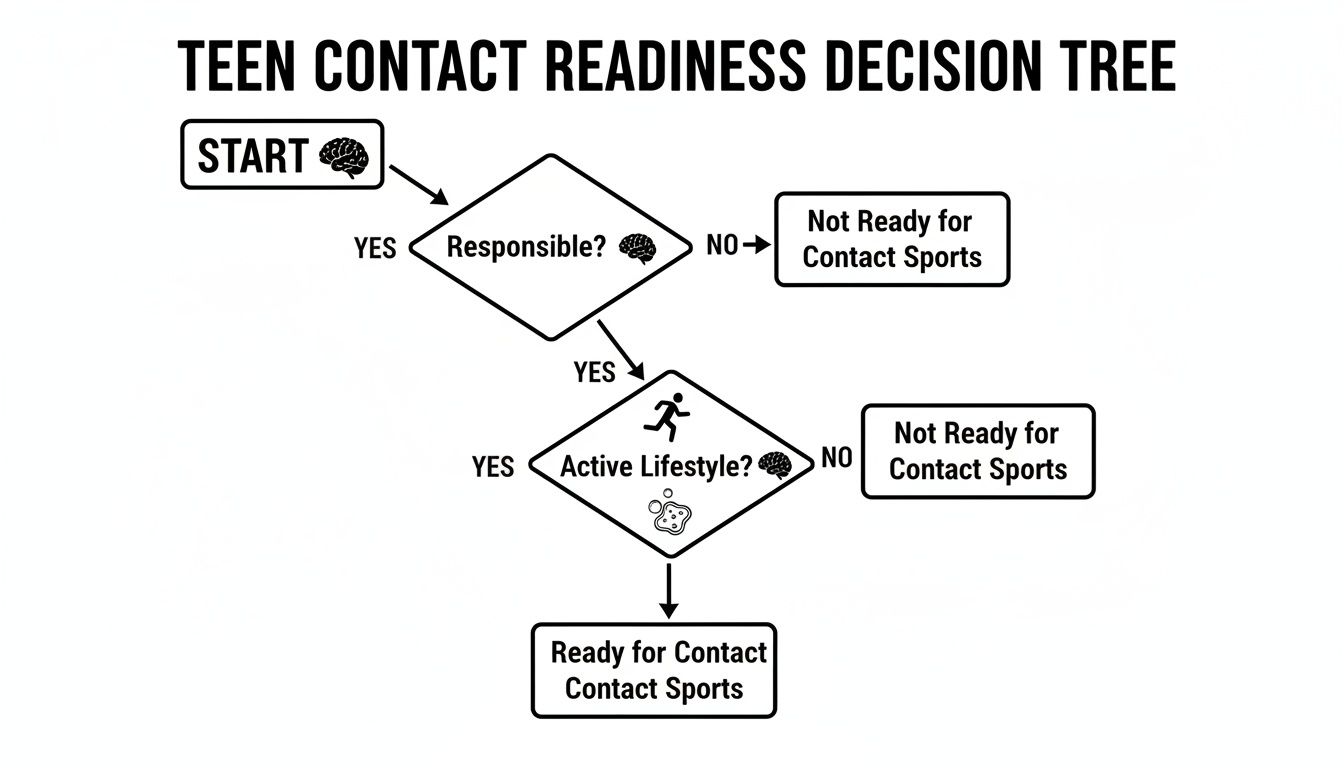
This decision tree breaks down the key factors—responsibility, lifestyle, and hygiene—that really help determine if a teen is ready for the commitment of contact lenses. It all comes down to a foundation of responsible habits and personal motivation.
Why Daily Disposables Are the Top Pick for Teens
If you ask an eye doctor what contact lenses they recommend most for teenagers, you'll hear one answer over and over again: daily disposables. There's a reason these lenses have become the go-to choice for young wearers. It's not just a trend; it's a recommendation built on safety, simplicity, and comfort that perfectly fits a teen's busy, and sometimes chaotic, life.
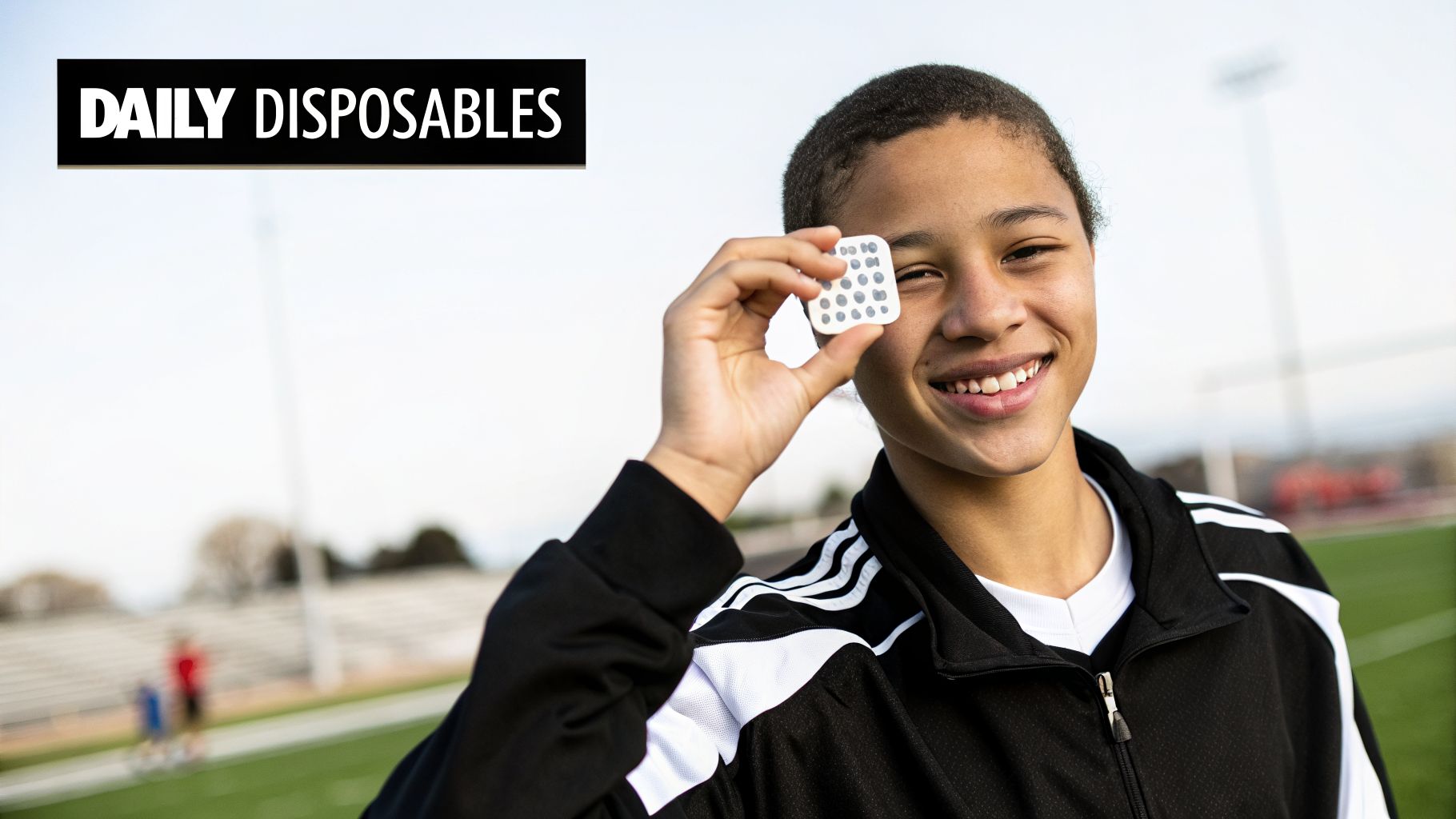
Think of dailies as the ultimate "set it and forget it" solution for clear vision. Starting with a fresh, sterile pair every single morning dramatically lowers the risk of developing a serious eye infection. That single benefit tackles the biggest worry for parents and eye care professionals.
The Hygiene Advantage: A Fresh Start Every Day
The most important rule for contact lens safety is hygiene. For reusable lenses, this involves a strict nightly routine of cleaning, rinsing, and storing them properly. For a teen juggling school, sports, and a social life, that routine can easily get rushed—or worse, skipped entirely.
This is where daily disposables are a game-changer. They completely sidestep the entire cleaning regimen.
- No Cleaning Solutions: Forget about bottles of solution and the risk of using them incorrectly.
- No Storage Cases: Lens cases can become a breeding ground for nasty bacteria if they aren't cleaned and replaced often. Dailies eliminate this risk.
- Less Contamination: Every day begins with a perfectly sterile lens, free from the previous day's dust, pollen, or protein buildup.
This built-in safety net is priceless. It removes the most common ways a lens care routine can go wrong, making daily disposables an overwhelmingly safer choice for new wearers.
Unmatched Convenience for a Hectic Lifestyle
Teenagers are always on the go. From early morning classes to after-school practice, sleepovers, and weekend trips, their schedules are packed. Daily disposables are practically designed for this lifestyle, offering a level of convenience that reusable lenses just can't touch.
Think about these classic teen moments:
- A Soccer Game: A lens gets knocked out or feels gritty from dust on the field. With dailies, they can just toss the dirty lens and pop in a fresh one.
- An Impromptu Sleepover: No need to panic about a forgotten lens case or solution. They can just throw the lenses away before bed and grab a new pair in the morning.
- Travel and Vacations: Packing couldn't be easier. Just count out the number of pairs needed—no bulky solution bottles to worry about.
The "grab-and-go" nature of daily disposables removes all the friction from a teen's routine. It simplifies their life while promoting healthier habits, ensuring they always have a safe, clean lens ready for whatever the day brings.
Superior Comfort That Lasts All Day
Comfort is everything when it comes to wearing contacts successfully. If a lens feels dry, scratchy, or just plain annoying, a teen simply won't wear it. Daily disposables are often thinner and have higher water content than many reusable lenses, making them feel more comfortable, especially at the end of a long day.
Because a brand-new lens is used each morning, the natural deposits from your tears (like proteins and lipids) don't have a chance to build up. This buildup is a primary cause of irritation and dryness with bi-weekly or monthly lenses. A perfectly smooth surface every single day means more consistent comfort from morning until night.
Daily Disposables vs Reusable Lenses for Teens
To see the differences clearly, it helps to put them side-by-side. This table breaks down the key factors that matter most for a teenage lens wearer.
| Feature | Daily Disposables | Reusable Lenses (Bi-Weekly/Monthly) |
|---|---|---|
| Hygiene | Excellent. A sterile, new lens every day minimizes infection risk. | Good, but requires diligence. Depends entirely on a consistent and proper cleaning routine. |
| Convenience | Highest. No cleaning, no cases. Perfect for travel, sports, and busy schedules. | Lower. Requires daily cleaning, storage, and carrying solution/cases. |
| Long-Term Cost | Higher upfront cost for lenses. However, no need to buy cleaning solutions or cases. | Lower upfront cost for lenses. Requires ongoing purchase of solutions and replacement cases. |
| Comfort | Often superior. No daily buildup of deposits; a fresh lens feels great all day. | Can decrease over time. Deposits can accumulate, causing dryness or irritation. |
| Best For | Teens who are new to contacts, have busy/active lifestyles, or suffer from allergies. | Budget-conscious and highly responsible teens who can commit to a strict care routine. |
While reusable lenses can be a good option for the right person, the built-in safety and convenience of dailies make them an ideal starting point for most teenagers.
For a deeper dive, you can learn more about the benefits of daily disposable contact lenses in our comprehensive guide.
Getting Specific: Lenses for Myopia and Astigmatism
Sometimes, a teen's vision needs are a bit more complex than just basic nearsightedness. Two very common conditions, myopia and astigmatism, often call for more specialized contact lenses. The great news is that lens technology has made huge strides, giving us options that don't just clear up blurry vision—they can play an active role in managing a teen's eye health for years to come.
Think of it this way: you wouldn't wear running shoes to go hiking. You need the right gear for the job. It's the same with contact lenses. While a standard soft lens works for many, conditions like astigmatism or rapidly worsening myopia need lenses specifically engineered for those challenges.
Taming Astigmatism with Toric Lenses
If your teen has astigmatism, it just means their eye isn't perfectly round. It’s shaped a little more like a football than a basketball. This subtle difference in curvature causes light to focus unevenly, which results in blurry or distorted vision whether they're looking at something near or far. It’s the reason a stop sign might look slightly stretched or headlights at night have a starburst effect.
To fix this, an eye doctor will prescribe toric contact lenses.
Unlike a regular, single-power lens, a toric lens has different corrective powers built into different parts of the lens. It's cleverly designed with a bit of weighting to ensure it sits on the eye in the exact right position and doesn't rotate. This stability is key. For a teen, it means consistently sharp vision for everything from reading a chemistry textbook to hitting a baseball.
A Proactive Approach: Myopia Control Lenses
For some kids, nearsightedness isn't stable—it gets progressively worse each year. This is often because their eyeball is slowly elongating as they grow. A standard contact lens does a great job of correcting their central vision, but it can actually, and unintentionally, encourage this stretching by the way it bends light in the peripheral (side) vision.
This is exactly where myopia control lenses come into play. They are often considered the best contact lenses for teenagers with worsening vision because they tackle two problems at once.
Myopia control lenses are more than just a tool for clear sight; they're a strategy for protecting a teen's future eye health. By slowing down how fast nearsightedness gets worse, they can help lower the risk of serious eye diseases down the road.
These innovative lenses have a unique design. The center zone provides crisp, clear distance vision, just like a regular contact. But the outer zones are engineered differently, changing how light focuses on the sides of the retina. This essentially sends a signal to the eye to slow down its growth. It's a proactive approach that provides clear vision today while helping to safeguard it for tomorrow.
This technology is a big deal, especially since myopia affects over 80% of teens in some East Asian countries. Major clinical studies have backed up their effectiveness. For example, research on CooperVision’s MiSight 1-day lenses found they slowed myopia progression by an average of 59% over three years compared to a standard daily lens. To learn more about this trend, you can find more insights about the contact lens market and its growth.
Why a Professional Fitting Is Non-Negotiable
Let’s get one thing straight right away: contact lenses are FDA-regulated medical devices. They aren't fashion accessories you can just grab off a shelf. This simple fact is why a professional eye exam and a separate, specific contact lens fitting are absolutely essential for your teen.
Think of it this way: you would never let your teen use someone else’s prescription medication. Trying to wear contacts that weren’t fitted by a doctor is the exact same risk—it's not designed for their eyes and can cause real harm. Your eye doctor’s expertise is the only way to ensure the lenses your teen wears are both effective and, most importantly, safe.
Glasses and Contacts Prescriptions Are Not the Same
It’s a common mix-up, but a glasses prescription won't work for contacts. They are two completely different things. A prescription for glasses is calculated for a lens that sits about 12 millimeters away from the eye. A contact lens, on the other hand, sits directly on the surface of the eye.
That small distance makes a huge difference. A proper contact lens fitting involves a series of detailed measurements you simply don't get in a standard eye exam.
During a fitting, the optometrist will:
- Measure the Eye's Curvature: Using a special instrument called a keratometer, the doctor maps the unique curve of your teen’s cornea. This is critical for finding a lens that fits perfectly—not too tight, not too loose.
- Determine the Right Diameter: The overall size (diameter) of the lens has to be just right for your teen’s eye to ensure it stays centered and moves correctly with each blink.
- Evaluate the Tear Film: The doctor will check to see if your teen's eyes produce enough quality tears to keep the lenses moist and comfortable all day. If their eyes are too dry, contacts might not be a good option.
A professional fitting is the essential bridge between wanting to wear contacts and actually wearing them safely. Without it, you're just guessing with your teen's vision, and an ill-fitting lens can cause everything from chronic irritation to corneal scratches and sight-threatening infections.
The Dangers of Unregulated Lenses
It can be tempting to buy cheap, colorful lenses from online sellers, especially for things like cosplay or Halloween. But the risks are massive. These vendors often bypass the law by selling lenses without requiring a valid prescription.
Lenses from unregulated sources may not be sterile or even FDA-approved. They can cause painful abrasions, allergic reactions, and severe infections that can damage your teen's vision permanently. It’s just not worth it.
The global contact lens market is massive and growing, expected to jump from USD 20.5 billion in 2025 to USD 28.9 billion in 2034. As more people wear contacts, safe practices become even more critical. Poor comfort from improperly fitted lenses is a major reason why nearly 20% of new wearers give up. You can learn more about this trend in this in-depth market analysis on futuremarketinsights.com.
The Trial and Training Process
The fitting appointment doesn't end with a few measurements. Your optometrist will give your teen a set of trial lenses to test drive. This lets everyone see how the lenses feel and perform in the real world before committing to a full supply.
Just as important is the hands-on training. The eye care team will patiently teach your teen exactly how to insert, remove, and care for their new lenses. They won't send you home until your teen can handle them confidently and safely. This guidance is priceless and sets them up for a lifetime of healthy, successful contact lens wear.
Essential Safety Rules Every Teen Must Follow
Contact lenses can be a game-changer for teens, but they’re a medical device, not a fashion accessory. That means they come with some hard-and-fast rules. Think of it like getting a driver's license—you have to learn the rules of the road to stay safe. Following these hygiene habits is the single most important thing a teen can do to avoid painful infections and protect their vision for years to come.
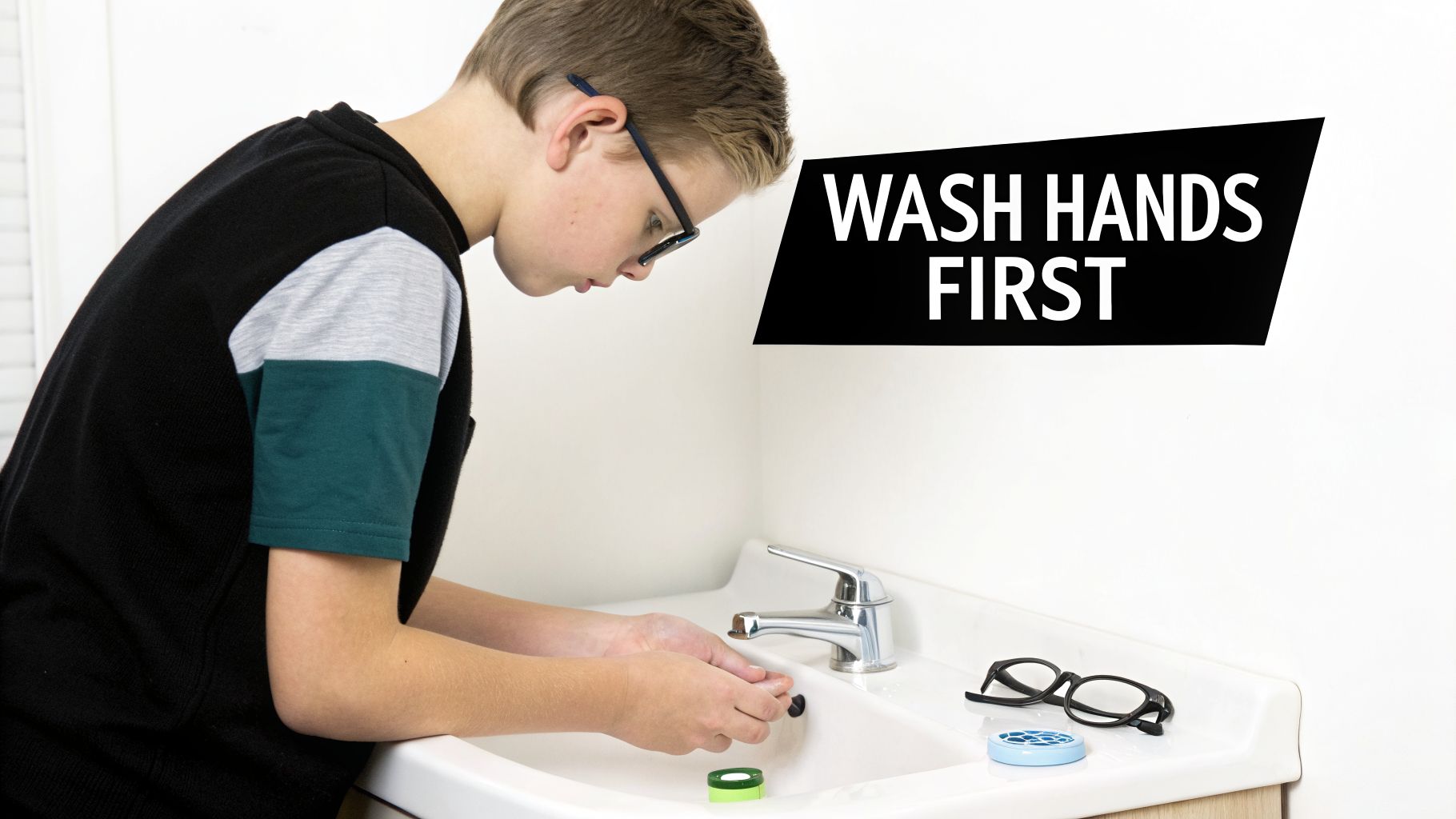
The golden rule is the first and most important: always wash your hands with soap and water before ever touching your contacts or your eyes. Afterwards, make sure to dry them completely with a clean, lint-free towel. This simple step is your best defense against transferring germs from fingers to lenses.
The Never-Ever List
Some rules are completely non-negotiable. These are the absolute "do nots" of wearing contact lenses, and they exist to prevent serious, sometimes sight-threatening, problems. Drill these into memory—they are the foundation of safe contact lens wear.
- Never Use Tap Water: Do not, under any circumstances, rinse your lenses or case with tap water. It contains a nasty microorganism called Acanthamoeba that can cause a severe infection and even vision loss. Only use the sterile solution your eye doctor recommended.
- Never Sleep in Your Lenses: Unless your doctor has specifically prescribed lenses approved for overnight wear, always take them out before bed. Sleeping with contacts in drastically reduces the oxygen that gets to your cornea, creating a perfect breeding ground for bacteria.
- Never Shower or Swim with Contacts In: Pools, lakes, oceans, hot tubs, and even your shower at home are teeming with bacteria and microbes that can get trapped behind a lens and cause a nasty infection.
"Your contact lens case is a potential petri dish for bacteria. It should be cleaned with fresh solution—not water—and left to air dry upside down every day. Replace it completely every three months, no exceptions."
Ignoring these rules isn't just a small mistake; it dramatically increases the risk of microbial keratitis. This is a serious infection of the cornea that can lead to permanent scarring and vision damage.
Handling Everyday Scenarios
Life with contacts isn't always perfect, and teens will inevitably run into a few tricky situations. Knowing what to do ahead of time makes all the difference, turning a potential panic into a simple fix.
What happens if a lens falls on the floor? If it's a daily disposable, the answer is easy: throw it away. It's not worth the risk. For a reusable lens, it needs to be meticulously cleaned and disinfected with fresh solution exactly as the instructions say before it even thinks about going back in an eye.
Here are a few more tips for common teen situations:
- Sports and Sweat: It's totally fine to wear contacts during sports, but be aware that sweat can get in the eyes and cause irritation. If a lens feels gritty or uncomfortable, it's best to take it out, rinse it with solution (if it's a reusable), and put it back in with clean hands.
- Always Have a Backup: Every contact lens wearer needs an up-to-date pair of glasses. If your teen's eyes ever feel red, scratchy, or just plain tired, the contacts need to come out immediately. Glasses are the necessary backup plan.
- "Top-Offs" Are a No-Go: Never add a little fresh solution to the old stuff already in the lens case. That's like washing your hands in a dirty sink. Always dump the old liquid, rinse the case with fresh solution, and fill it with new solution every single time.
These rules aren't meant to be a burden. They are simple, protective habits. Once they become an automatic part of a teen's daily routine, they can enjoy all the freedom of contact lenses without the risks.
Answering Your Top Questions About Teen Contact Lenses
Even after you've done your research, a few practical questions always seem to pop up before making the final decision. Let's tackle some of the most common concerns parents and teens have, so you can feel completely confident about moving forward.
What Is the Best Age for a Teen to Start Wearing Contacts?
Honestly, there's no magic number. Readiness for contacts is all about maturity and responsibility, not the age on their driver's permit. Eye doctors sometimes fit kids as young as eight for specific reasons, like myopia control, so age itself isn’t the limiting factor.
The real question is: Can your teen handle the crucial hygiene routine? A good way to gauge this is to look at their other habits. Do they manage their homework, remember their chores, and take care of their belongings without you having to constantly remind them? If so, they’re likely ready. The best first step is always a chat with your eye doctor, who can evaluate both your teen's eyes and their personal readiness for this new responsibility.
Are Colored or Costume Contact Lenses Safe for Teens?
Decorative lenses can be a fun way for teens to switch up their look for an event or cosplay, but they are only safe under one condition: they must be prescribed and fitted by an eye doctor. This is true even for teens with perfect 20/20 vision who don't need correction.
Any lenses you see sold over-the-counter in costume shops, at a flea market, or from a random online seller are not FDA-approved and can be incredibly dangerous. They can cause painful corneal scratches, nasty infections, and in the worst cases, permanent vision loss.
Never buy contact lenses from a vendor that doesn’t require a valid prescription. These are unregulated medical devices that can pose a significant danger to your teen's sight. If your teen is interested, schedule a proper fitting to get a prescription and purchase the lenses from a legitimate source.
A proper fitting ensures the lens is made of a safe, breathable material and, just as importantly, that it fits the unique curve of your teen’s eye. A poor fit is what often leads to injury.
How Much Do Contact Lenses for Teenagers Typically Cost?
The cost of contacts can swing quite a bit depending on the type of lens, the brand, and your teen's specific prescription needs. Having a general idea of the price ranges can help you plan your budget.
Here’s a typical breakdown of what you might expect:
- Daily Disposables: A full year's supply usually lands somewhere between $500 and $800. While the initial cost seems higher, you save money by not having to buy cases or cleaning solutions.
- Reusable Lenses (Monthly/Bi-Weekly): These are often more affordable upfront, typically costing $300 to $500 for a year's worth of lenses. Just remember to add the ongoing cost of cleaning and disinfecting solutions to your budget.
- Specialty Lenses: Expect to pay more for advanced lenses. Toric contacts for astigmatism or specialized myopia control lenses are more complex and therefore come with a higher price tag.
Before you buy anything, take a close look at your vision insurance plan. Many policies provide a yearly allowance specifically for contact lenses that can dramatically lower what you pay out-of-pocket.
At Contact Lens HQ, we believe informed decisions lead to healthy vision. Explore our doctor-reviewed guides and unbiased articles to find the perfect contact lens solution for your family. Learn more at https://contactlenshq.com.


