
If you’re on the hunt for the best contact lenses for sensitive eyes, you’re not alone. The great news is that you’re looking at the right time—modern lens technology has come a long way. For most people, the answer boils down to two key options: daily disposable lenses and advanced silicone hydrogel lenses.
These aren’t just buzzwords; they directly tackle the two biggest culprits behind eye irritation: deposit buildup and a lack of oxygen. Think of it as giving your eyes a fresh, clean, breathable environment every single day.
Your Quick Guide to Comfortable Contact Lenses
Finding the right contacts when your eyes are easily irritated can feel like a never-ending quest. But comfortable, all-day wear is genuinely achievable for almost everyone now. The secret is knowing what to look for, and it really comes down to two simple things: the lens material and how often you replace it.
It’s a bit like choosing the right fabric for sensitive skin. Some materials are just naturally softer, more breathable, and less likely to cause a problem. For sensitive eyes, our goal is to cut down on irritants while pumping up the moisture and oxygen. That’s where the right lens choice makes all the difference.
The Two Pillars of Comfort
The best strategies for keeping sensitive eyes happy are all about boosting hygiene and breathability. Luckily, two types of lenses have this completely covered.
- Daily Disposable Lenses: These are, hands down, the gold standard for hygiene. You start with a sterile, brand-new pair every single morning. This means you completely sidestep the irritation from microscopic protein deposits, dust, and allergens that inevitably build up on lenses you reuse.
- Silicone Hydrogel Lenses: This material was a true breakthrough for contact lens wearers. It allows up to five times more oxygen to reach your cornea compared to older hydrogel materials. That extra oxygen prevents that dry, suffocating feeling that often leads to red, tired eyes by the end of the day.
If there’s one single advancement that has changed the game for people with sensitive eyes, it’s silicone hydrogel. Its unique ability to let your eyes breathe while staying moist is what keeps discomfort at bay.
When you put these two features together—a daily disposable schedule and a silicone hydrogel material—you get the best of both worlds. You also get to skip the daily cleaning routine, which is a bonus since lens solutions themselves can sometimes be an irritant for sensitive eyes. It’s all about creating a healthy, happy environment for your eyes from morning to night.
Top Lens Features for Sensitive Eyes at a Glance
To make things even clearer, I’ve put together a quick comparison table. It highlights the most important features to look for in contacts if you have sensitive or dry eyes.
Think of this as your cheat sheet for your next conversation with your eye doctor. It breaks down what really matters and why, helping you zero in on the perfect lens.
| Feature | Why It Matters for Sensitive Eyes | Top Recommendation |
|---|---|---|
| Replacement Schedule | Prevents the buildup of proteins and allergens that are a primary source of irritation. | Daily Disposable |
| Material | Determines how much oxygen gets to your cornea, which is crucial for preventing dryness and redness. | Silicone Hydrogel |
| Moisture Technology | Keeps the lens surface hydrated all day long to fight that gritty, dry feeling. | Lenses with built-in wetting agents or water gradient technology. |
| UV Protection | Adds an extra layer of defense against harmful ultraviolet rays, which can be extra irritating for sensitive eyes. | Lenses with Class 1 or Class 2 UV-blocking filters. |
Ultimately, bringing up these key features with your optometrist will ensure you find a lens that’s not just tolerable, but truly comfortable for your specific needs.
Why Are My Eyes So Sensitive, Anyway?

Before we can find the right contacts, we need to get to the bottom of what’s making your eyes so reactive. A good way to think about it is to compare the cornea—that clear dome at the front of your eye—to your skin. Just like some people have skin that reacts to everything, some corneas are just more easily irritated. This can lead to that all-too-familiar redness, dryness, and general discomfort.
Pinpointing the root cause is the first real step toward finding relief. It’s rarely just one thing; more often, it’s a mix of factors that create that gritty, can’t-wait-to-take-my-lenses-out feeling. Once you understand your personal triggers, you can have a much more productive chat with your eye doctor.
This knowledge takes you beyond just picking a brand. It helps you zero in on the specific features—like better oxygen flow or moisture-retaining materials—that will actually make a difference in how your eyes feel day in and day out.
Common Triggers for Sensitive Eyes
Several culprits can turn a comfortable contact lens experience into a frustrating one. Let’s break down the usual suspects.
A big one is Dry Eye Syndrome. This is a condition where your eyes just don’t produce enough tears—or the right quality of tears—to keep things properly lubricated. For someone with dry eyes, putting in a contact lens can feel like placing a dry sponge on an already parched surface. If this sounds familiar, our guide on how to prevent dry eyes with contacts is packed with useful advice.
Seasonal allergies are another major trigger. When pollen, dust, and dander are in the air, your eyes can get itchy, watery, and inflamed. A contact lens can unfortunately act like a tiny net, trapping those allergens right against your eye and making your symptoms much worse.
Think of it this way: a contact lens on an allergic eye is like a tiny dome trapping pollen directly on the surface. No amount of blinking will clear it, which is why a fresh, clean lens each day can be a game-changer.
Finally, sometimes the problem is a reaction to the very things meant to help. Preservatives found in certain multi-purpose cleaning solutions can be irritating, and for some people, the lens material itself might be the issue.
Your Eyes Need to Breathe, Too
To really understand eye comfort, let’s use a simple analogy. Imagine wearing a plastic bag over your hand all day. It wouldn’t take long for it to get sweaty and uncomfortable because your skin can’t breathe. It’s the same with your cornea—it needs to pull oxygen directly from the air to stay healthy.
A contact lens sits right on top of your cornea, creating a potential barrier to that crucial oxygen supply. Older lens materials were pretty bad at letting oxygen through, which often led to the classic signs of sensitivity:
- Redness: The blood vessels in your eyes get wider as they work overtime to bring in more oxygen.
- Dryness: A lack of oxygen can mess with the stability of your natural tear film.
- End-of-day discomfort: The effects add up throughout the day, making your lenses feel unbearable by evening.
This is exactly why modern materials like silicone hydrogel have been such a breakthrough. These lenses are designed with microscopic channels that act like super-highways for oxygen, letting your eyes breathe much more naturally. For anyone with sensitive eyes, high oxygen flow is a non-negotiable feature. When your eyes can breathe, they stay whiter, healthier, and way more comfortable from morning to night.
Silicone Hydrogel vs Hydrogel: The Material That Matters Most
When you’re on the hunt for the best contacts for sensitive eyes, there’s one factor that stands above all others: the material. It’s the very foundation of comfort. For years, the go-to was traditional hydrogel, but a newer material, silicone hydrogel, has completely changed the game, especially for those of us prone to irritation and dryness.
Think of a classic hydrogel lens like a simple kitchen sponge. Its main job is to hold water, and it’s that water content that lets oxygen pass through to your eye. It works, but it has a big flaw. As the day wears on and that water evaporates, the lens gets drier and less comfortable. The sponge is essentially drying out right on your eye.
Now, imagine a silicone hydrogel lens as a piece of high-tech, breathable athletic fabric. Instead of just relying on water, it has silicone woven right into its structure. This silicone creates microscopic “super-highways” that let oxygen flow directly through the lens to your cornea, completely independent of how much water is in it. The result is a much healthier and more comfortable experience from morning to night.
Unlocking the Power of Oxygen
The real difference between these two materials boils down to a concept called oxygen transmissibility. It’s a technical term, but it simply measures how well a contact lens lets your eye breathe. In the eye care world, we measure this with a “Dk/t” value.
You don’t need to get bogged down in the science. Just remember this simple rule: a higher Dk/t number is your best friend. More oxygen means less stress on your cornea, which translates directly to:
- Whiter Eyes: It helps prevent the redness that pops up when blood vessels expand to search for more oxygen.
- Reduced Dryness: A well-oxygenated eye is better at maintaining its natural, protective tear film.
- All-Day Comfort: Your eyes won’t feel tired, scratchy, or strained by the end of the day.
Your average hydrogel lens might have a Dk/t value somewhere between 20-30. By contrast, modern silicone hydrogel lenses often boast values well over 100, letting up to five times more oxygen reach your eye. For anyone with sensitive eyes, this isn’t just a small upgrade—it’s a fundamental shift in comfort and health. If you want to get into the nitty-gritty, take a look at our complete guide comparing silicone hydrogel vs. hydrogel contact lenses.
This image really brings home the three core pillars that define the best lenses for sensitive eyes.
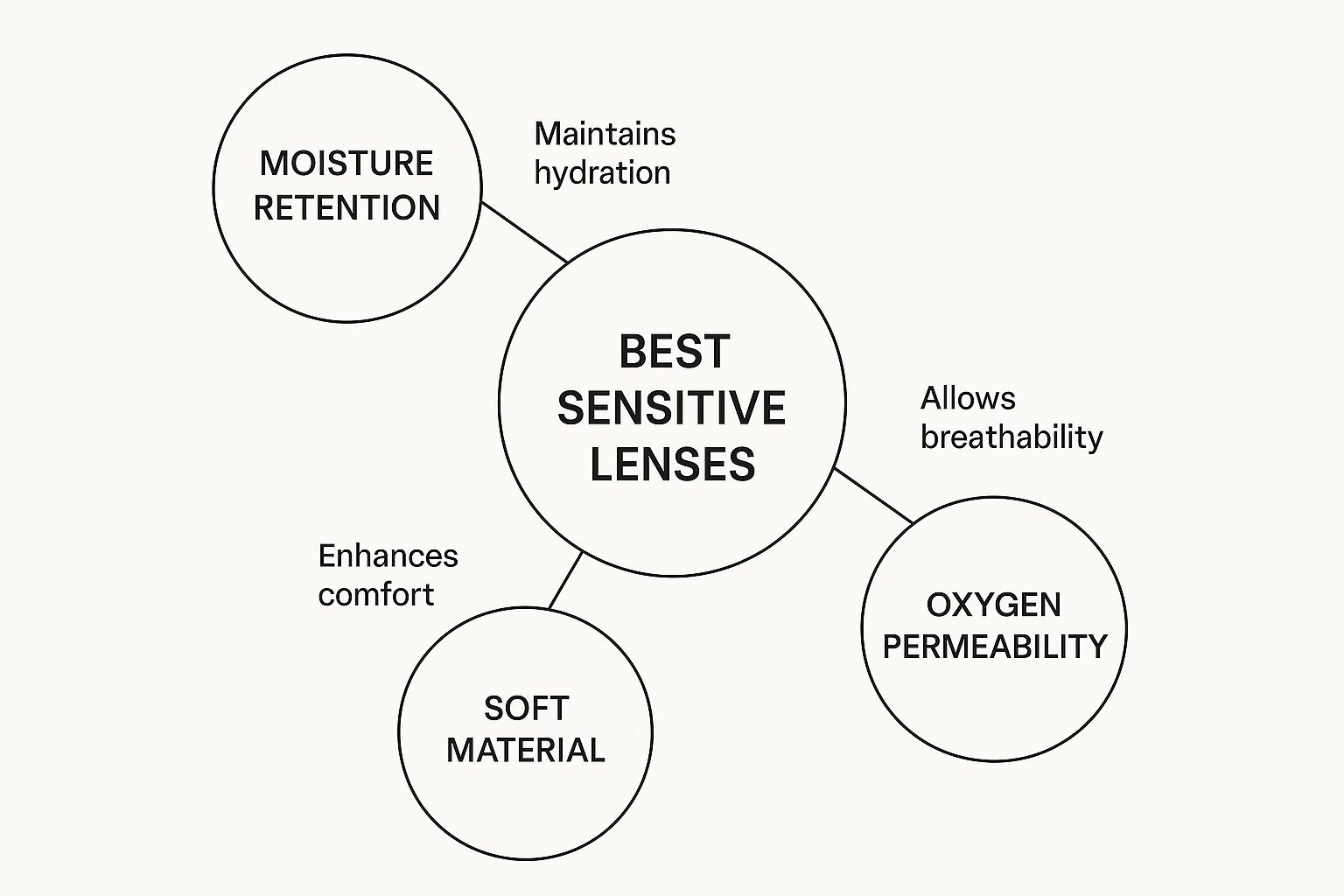
As you can see, superior oxygen flow, excellent moisture retention, and a soft, flexible feel are the interconnected elements that create the ideal environment for happy, comfortable eyes.
Why Silicone Hydrogel is the New Gold Standard
The advantages of silicone hydrogel go way beyond just oxygen. This material was literally engineered to solve the most common complaints from contact lens wearers, particularly those with sensitive eyes.
This innovation is a big reason why the silicone hydrogel market, valued at around USD 5.8 billion, has grown so much from USD 4.7 billion in 2021. Wearers and eye doctors alike prefer them for their amazing oxygen permeability and the fact that they don’t dry out as easily. This directly combats the discomfort caused by older hydrogel lenses, which lose their moisture much more quickly throughout the day.
The magic of silicone hydrogel is its ability to decouple oxygen from water. It doesn’t have to choose between staying wet and letting your eye breathe—it does both exceptionally well.
This dual-action performance makes it the undisputed champion for anyone struggling with dryness, allergies, or general sensitivity. By creating a healthier environment on the surface of your eye, silicone hydrogel lenses help stop the cycle of irritation before it even starts. When you talk to your eye doctor, telling them you’re interested in a silicone hydrogel lens is one of the most proactive steps you can take toward finding lasting comfort.
Daily Disposables vs. Monthly Lenses for Irritation-Free Wear
Beyond just the material of your contacts, how often you replace them plays a massive role in comfort. This brings us to a big decision for anyone with sensitive eyes: should you go with daily disposables or monthly lenses? While both get the job done visually, they are worlds apart when it comes to hygiene and how they feel on your eyes.
Think of it this way: dailies are like pulling on a brand-new, perfectly clean t-shirt every single morning. Monthlies are like wearing the same shirt for 30 days. You can wash it every night, of course, but it’s never quite the same as that first wear.
That’s the core difference. With a daily disposable, you get a sterile, pristine lens every single time. This completely sidesteps the slow, steady buildup of irritants that often causes that dreaded end-of-day discomfort.
The Problem with Deposit Buildup
Even if you have a rock-solid cleaning routine, monthly lenses will inevitably start to collect microscopic gunk from your tears. We’re talking about a film of proteins, lipids, and calcium that clings to the lens surface. It’s a bit like limescale in a kettle—you can clean it, but tiny traces always remain, building up over the weeks.
For many people, this isn’t a huge deal. But if your eyes are sensitive, it’s a recipe for redness, irritation, and that gritty feeling that drives you crazy. This gets even worse during allergy season, when pollen can get trapped on the lens, turning it into a tiny irritant that sits on your eye all day long.
Daily disposable lenses are your best defense against deposit-related irritation. By starting fresh every single day, you give proteins, allergens, and other gunk zero opportunity to accumulate and cause problems.
This simple “wear and toss” approach is a game-changer for sensitive eyes. You’re giving your eyes a clean slate every morning, avoiding one of the biggest culprits behind lens discomfort.
The Simplicity and Hygiene of Dailies
The routine for daily disposables couldn’t be easier. You pop open a new pack in the morning, wear the lenses, and just toss them out before bed. No solutions, no cases, no rubbing and rinsing. The convenience is fantastic, but the real win for sensitive eyes is the top-tier hygiene.
Let’s break down the two routines:
- Daily Lenses Routine:
- Open a sterile blister pack.
- Insert a fresh lens.
- Wear it all day.
- Throw it away at night.
- Monthly Lenses Routine:
- Remove the lens.
- Clean it with solution, rubbing gently.
- Rinse the lens thoroughly.
- Store it in a clean case with fresh solution.
- Repeat every day for 30 days.
This contrast really shows how dailies eliminate chances for error. You never have to wonder if you cleaned your lenses well enough or worry if your case is truly sterile.
Is the Investment Worth It?
Let’s talk cost. Dailies usually have a higher upfront price than a box of monthlies. But it’s important to look at the whole picture. Once you add in the cost of good-quality cleaning solutions and storage cases needed for monthlies, the price gap starts to shrink.
More importantly, many people find the investment in all-day comfort, unbeatable convenience, and better eye health is easily worth it. Market trends back this up. Daily disposable lenses now make up nearly 50% of the soft contact lens market share, showing a clear global shift toward prioritizing hygiene and eye health. To see more data on this, you can learn more about these market insights.
For anyone struggling to find comfortable contacts for sensitive eyes, dailies offer a powerful solution. They tackle the root causes of irritation head-on, delivering a consistently comfortable and healthy experience, day in and day out.
Leading Technologies in Contact Lenses for Sensitive Eyes
We’ve talked about the importance of modern materials and daily disposables. Now, let’s pull back the curtain and see how the biggest names in contact lenses put that science into action.
Major manufacturers are constantly innovating, each developing their own unique solution to the age-old problems of dryness and irritation. Think of this as learning the language of contact lens tech. Knowing the difference between a Dailies Total1 and an Acuvue Oasys empowers you to have a much more productive conversation with your eye doctor about what your eyes really need.
Alcon: The Water Gradient Approach
Alcon really changed the game with their Dailies Total1 line, which has become a go-to for many people with chronically dry or sensitive eyes. Their secret weapon is something called Water Gradient Technology.
So, how does it work? Picture a lens that’s mostly a highly breathable silicone hydrogel in the middle, but its outer surfaces—the parts that touch your eye and eyelid—are almost pure, silky water. The water content literally transitions from 33% at the core to over 80% at the surface. It’s like wrapping a high-performance, oxygen-loving core in a delicate cushion of moisture.
This design is brilliant because it tackles two issues at once:
- The silicone hydrogel core lets plenty of oxygen reach your cornea, keeping your eyes looking and feeling healthy.
- The incredibly soft, high-water surface provides that amazing “nothing’s there” feeling when you put the lens in and dramatically reduces friction with every blink.
For anyone with sensitive eyes, this offers the best of both worlds: unbeatable breathability without giving up that smooth, lubricated comfort.
Johnson & Johnson Vision Care: Moisture from Within
Johnson & Johnson’s Acuvue Oasys brand is another heavy hitter, and its reputation is built on HYDRACLEAR PLUS Technology.
Instead of adding a moisture layer on top of the lens, this technology infuses a special wetting agent right into the lens material itself. Think of it less like a coating and more like a high-tech sponge that’s permanently saturated with a moisture-locking ingredient that mimics a component of your natural tears.
The whole point of HYDRACLEAR PLUS is to create a lens that doesn’t just feel good for the first hour. It’s designed to actively work with your eye’s tear film all day long, keeping things stable and smooth to fight off that classic end-of-day grittiness.
This approach results in a lens that stays consistently slick and wettable, helping your eyelids glide effortlessly over the surface. It’s a lifesaver for people who spend long hours in air-conditioned offices or staring at screens.
CooperVision: Naturally Water-Loving Material
CooperVision takes a different but equally clever path with its Biofinity family of lenses, which are powered by Aquaform Technology.
Their innovation lies in the material’s molecular structure. Aquaform Technology uses longer chains of silicone, which creates more efficient pathways for oxygen to move through the lens. More importantly, this structure makes the material naturally attract and bind to water molecules without needing any extra surface treatments or built-in wetting agents. The result is a lens that’s inherently and uniformly moist.
This unique material science makes the lens incredibly soft and flexible, which many wearers find feels more natural in their eye. The focus here is on crafting a material that’s comfortable from the get-go, simply because of what it is, not what’s been added to it.
The push for these kinds of innovations is driving serious growth in the global contact lens market, which was valued at around USD 10.15 billion in 2024 and is projected to hit USD 16.18 billion by 2033. You can discover more insights about these market dynamics and see how technology is making comfortable vision a reality for more people.
Comparing Top Comfort Technologies
To make it easier to see how these technologies stack up, here’s a quick look at their different strategies for keeping sensitive eyes happy. Think of this as a cheat sheet for your next eye exam aventura or any eye doctor near you.
Leading Contact Lens Technologies for Eye Comfort
| Brand | Technology Name | How It Works for Sensitive Eyes |
|---|---|---|
| Alcon | Water Gradient Technology | Creates a cushion of moisture on the lens surface that approaches 100% water, minimizing friction and providing exceptional initial comfort. |
| Johnson & Johnson | HYDRACLEAR PLUS | Embeds a tear-like wetting agent directly into the silicone hydrogel material, helping to maintain a smooth and stable tear film all day. |
| CooperVision | Aquaform Technology | Uses long silicone chains to create a naturally wettable material that locks in water, resulting in a soft, flexible, and uniformly moist lens. |
Once you understand these core differences, you can have a much more specific conversation with your optometrist. Instead of just saying, “My eyes feel dry,” you can ask, “Do you think a lens with a water gradient surface or one with an embedded wetting agent would work better for me?” That’s the kind of detail that leads you to the perfect lens.
Daily Habits for Maximizing Your Lens Comfort
Choosing the right contact lenses is a massive win, but your daily routine is what really seals the deal for all-day comfort. It helps to think of your lenses like high-performance equipment—how you treat them directly affects how they feel in your eyes. Nailing a few simple habits can make an incredible difference.
The absolute golden rule? Meticulous hand washing. Before you even think about touching a lens, wash your hands thoroughly with a simple, lotion-free soap and dry them on a lint-free towel. This tiny step is your best defense against transferring oils, grime, or bacteria straight into your eye.
Fine-Tuning Your Care Routine
If you wear monthly or bi-weekly lenses, your cleaning and storing process is everything. It’s so important to use fresh, high-quality disinfecting solution every single time.
Never, ever ‘top off’ the old solution in your case. That’s like trying to wash dishes in dirty water—it just doesn’t work. Topping off dilutes the solution’s cleaning power and practically invites harmful microorganisms to set up camp, which is the last thing you want with sensitive eyes.
There’s a science to proper lens care, and getting the steps right is key. For a complete walkthrough, our guide on how to clean contact lenses properly breaks it all down for you.
Beyond the Lens Case
Your environment and even your personal habits have a surprisingly big impact on lens comfort. Staying hydrated by drinking plenty of water helps your body produce better tears, which is nature’s way of keeping your eyes lubricated. A quick splash of rewetting drops formulated for contact lenses can also be a real game-changer when you’re feeling dry.
And to fight back against the digital eye strain that so many of us feel, give the 20-20-20 rule a try:
- Every 20 minutes you’re staring at a screen…
- Take a break and look at something 20 feet away…
- Hold your gaze there for at least 20 seconds.
This simple exercise gives your eye muscles a much-needed rest and helps you blink more naturally. When you pair the right lens with these smart daily habits, you’re not just wearing contacts—you’re taking control of your eye comfort and setting yourself up for a great lens day, every day.
Got Questions? We’ve Got Answers
Stepping into the world of contact lenses can feel a bit overwhelming, especially when your eyes are on the sensitive side. It’s natural to have questions. Let’s clear up a few of the most common ones we hear from people just like you.
“Can I Even Wear Contacts If My Eyes Are Always Dry?”
Absolutely. Having dry eyes doesn’t automatically disqualify you from wearing contact lenses, but it does mean you have to be smarter about your choice. The key is finding a lens that works with your eyes, not against them.
We typically point people towards silicone hydrogel lenses, which are fantastic at letting a high amount of oxygen through to the cornea. Another great option is daily disposables. Since you toss them out every night, there’s no chance for irritating protein deposits to build up. Your eye doctor can also recommend some lens-safe rewetting drops to keep you comfortable all day long.
“What’s the Best Choice for Allergy Season: Dailies or Monthlies?”
For allergy sufferers, this one’s a no-brainer: daily disposable lenses win, hands down. Think of your contact lens as a tiny magnet for airborne allergens like pollen, dust, and pet dander.
With monthly lenses, those irritants can accumulate over days and weeks, no matter how well you clean them. But with dailies, you get a perfectly fresh, sterile, and allergen-free lens every single morning. It’s the simplest and most effective way to minimize that seasonal itchiness and redness.
Remember, a new day means a new, clean lens. This is the single most effective strategy for keeping allergy-related discomfort at bay during peak seasons.
“Why Do My Lenses Feel Fine in the Morning but Awful by 3 PM?”
That afternoon slump is a classic sign of one of two culprits: dryness or a lack of oxygen. Throughout the day, especially if you’re staring at a screen or sitting in a climate-controlled office, the moisture in your lenses can evaporate, making them feel less comfortable.
The other issue could be oxygen permeability. If your lenses aren’t letting enough oxygen reach your cornea, your eyes can start to feel tired and strained. The solution is often a simple switch to a more breathable, modern lens material and keeping some rewetting drops on hand for a midday refresh.
At Contact Lens HQ, our mission is to provide doctor-reviewed guides that empower you to make confident decisions about your eye health. Explore more expert advice and find the perfect contacts for your needs.


