
If you're just starting out with contact lenses, your best bet is almost always a daily disposable soft lens. Top-tier brands like Acuvue Oasys 1-Day, Dailies Total1, and Biofinity are fantastic choices for beginners. They're incredibly comfortable, breathable, and best of all, you just throw them away at the end of the day—no cleaning required.
Your First Step to Clear and Comfortable Vision
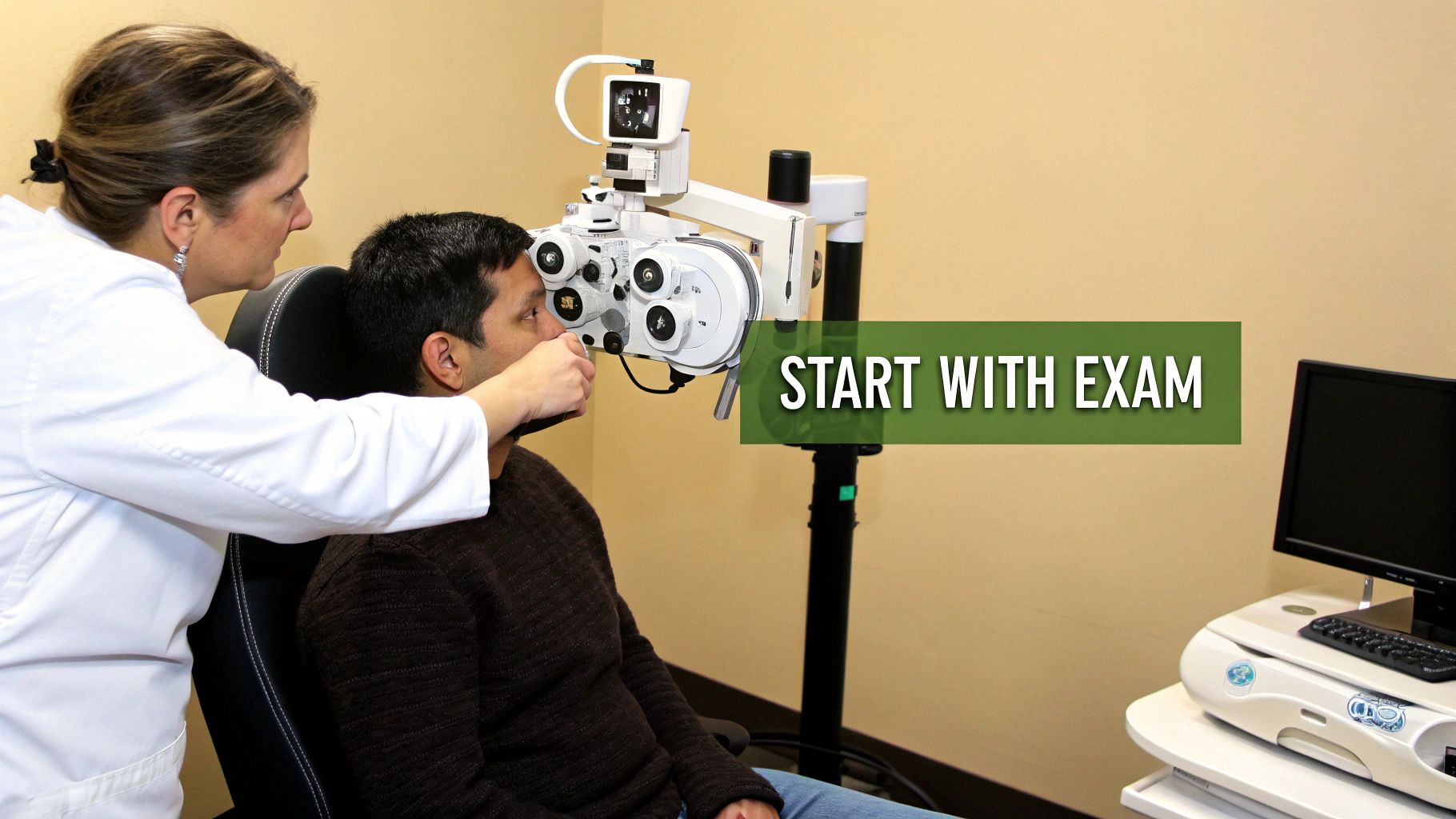
Deciding to try contact lenses is a great move toward seeing the world without glasses getting in the way. But your journey doesn't start with buying lenses; it starts with a visit to your optometrist. This initial appointment is, without a doubt, the most crucial part of the whole process.
Your eye doctor will perform a thorough eye exam and a separate contact lens fitting. They aren't the same thing. The fitting is what ensures the lens sits perfectly on the unique shape of your eye, which is absolutely vital for comfort, sharp vision, and keeping your eyes healthy for years to come.
Understanding Your Options
During that fitting, your doctor will walk you through the basic choices every new wearer has to make. The biggest one is the replacement schedule—how often you'll toss a pair of lenses and open a fresh one. Thanks to big advances in lens materials, modern contacts are safer and more comfortable than ever.
The contact lens market is always innovating, with a lot of focus on new users. This push for easier vision correction has led to the widespread use of materials like silicone hydrogel. It’s a game-changer because it allows much more oxygen to reach your eye, which is a huge factor in comfort and helps beginners adjust faster. The global demand for these convenient options continues to grow, as detailed by research from Future Market Insights.
The right lens isn't just about clear vision; it's about finding a product that fits so seamlessly into your life that you forget you're even wearing it. Your eye doctor is your best partner in finding that perfect match.
Decoding Your Prescription and Lens Types
Your contact lens prescription might look like a string of random numbers, but it’s actually a precise blueprint for your eyes. To get familiar with all the terms, our guide on understanding contact lens prescriptions breaks down everything from your power (SPH) to your base curve (BC).
To help you get a handle on the options you'll likely discuss with your doctor, here's a quick look at the most common types of lenses that are great for beginners.
Quick Guide to Beginner-Friendly Lens Types
This table breaks down the main contact lens types that are a good fit for new users. It highlights what makes each one different so you can quickly see what might work for you.
| Lens Type | Best For | Maintenance Level | Initial Comfort |
|---|---|---|---|
| Daily Disposables | Ultimate convenience, hygiene, and allergy sufferers | None – discard after each use | Very High |
| Bi-Weekly Lenses | A balance of cost and convenience | Daily cleaning and storing | High |
| Monthly Lenses | The most budget-friendly option for full-time wear | Strict daily cleaning and storing | High |
Each of these has its own set of pros and cons, which really comes down to your lifestyle, budget, and how much daily upkeep you're willing to do. Your eye care professional will help you make the final call based on your specific needs.
Choosing Your Lens Wear Schedule
One of the first big conversations you'll have with your eye doctor is about your lens replacement schedule. This might sound like a minor detail, but it really dictates your day-to-day life with contacts—from your morning routine to your budget. It’s all about how often you toss a pair and open a fresh one.
The decision really comes down to three paths: daily disposables, bi-weeklies, and monthlies. Each one is built for a different kind of person and a different lifestyle, so let's break down what they actually feel like to use.
Daily Disposable Lenses: The Ultimate in Convenience
Daily disposable lenses are as simple as it gets. You pop in a fresh pair in the morning and throw them away at night. That’s it. There is zero cleaning or maintenance required, which makes them the undisputed champion for hygiene and ease of use.
For anyone just starting out, this is a huge plus. You get to skip the whole learning curve of cleaning and storing lenses, which seriously cuts down the risk of infection from handling mistakes. They're a perfect fit for a few types of people:
- Occasional Wearers: Only need contacts for sports, weekend events, or a few times a week? Dailies are your best bet. Just open a pair when you need them.
- Allergy Sufferers: A brand-new lens every day means no time for pollen or other gunk to build up and irritate your eyes.
- Travelers: Forget packing bulky solution bottles and lens cases. Just count out how many pairs you need for your trip and go.
The main trade-off here is usually the cost. Dailies can seem more expensive upfront, but remember, you'll save money since you won't need to buy any cleaning solutions.
Bi-Weekly Lenses: A Balanced Approach
Think of bi-weekly lenses as the happy medium. You wear the same pair for up to 14 days, taking them out each night to clean and store them.
This schedule is great for people who wear contacts most days and want a good balance between cost and that "fresh lens" feeling. Since you’re swapping them out every two weeks, there’s less opportunity for irritating deposits to accumulate compared to monthlies. Many people with sensitive eyes find these are a lot more comfortable by day 14 than a monthly lens is by day 30.
Choosing a wear schedule is a direct reflection of your lifestyle. Prioritize what matters most to you—be it absolute convenience, budget-friendliness, or a mix of both—and the right choice will become clear.
Monthly Lenses: The Most Economical Choice
Monthly lenses are designed to be worn daily for up to 30 days. Just like bi-weeklies, they demand a strict nightly cleaning and storage routine. The big draw? They are almost always the most budget-friendly option if you wear your contacts full-time.
This is the schedule that requires the most discipline, though. If you get lazy about cleaning or are tempted to "top off" old solution, you significantly raise your risk of a nasty eye infection. As a beginner, you have to be totally committed to a solid hygiene routine to wear monthlies safely. If you’re diligent and wear your lenses every single day, they’re a fantastic, cost-effective choice.
For a deeper dive into two of the most popular options, our article comparing daily contact lenses vs monthly has all the details you need. In the end, the best move is to talk openly with your optometrist about your lifestyle and habits to land on the perfect schedule for you.
Comparing Top Contact Lens Brands for New Wearers
Walking into the world of contact lenses for the first time can feel like a lot to take in. But don't worry, a few standout brands consistently earn top marks for being beginner-friendly. When you're just getting started, the best contacts are the ones that nail three things: comfort, breathability, and ease of handling. Let's look at some of the most recommended options to see what makes each one tick.
Optometrists often point new wearers toward three trusted names: Acuvue, Dailies, and Biofinity. Each one brings something a little different to the table, with unique technologies designed to make your switch from glasses to contacts a breeze. We’ll break them down based on what matters most when you're learning the ropes.
Acuvue Oasys 1-Day with HydraLuxe
Acuvue is a household name for a reason. Their Acuvue Oasys 1-Day with HydraLuxe is a go-to choice for beginners because it hits that sweet spot of comfort and straightforward design. The lens is made from a silicone hydrogel material, which is just a technical way of saying it lets a ton of oxygen pass through to your cornea. That’s crucial for keeping your eyes looking and feeling healthy.
But here’s the real kicker for a first-timer: handling. The lens has a very light blue tint, which makes it much easier to see in the lens case or on the tip of your finger. It sounds like a small thing, but that little detail can be a real lifesaver when you're fumbling through your first few attempts at putting them in and taking them out.
The HydraLuxe Technology is what really makes this lens special. It weaves a tear-like molecule right into the lens material itself—it's not just a coating that wears off. This helps the lens work with your eye’s natural moisture to fight off dryness, a huge plus if you spend a lot of time staring at a screen.
Dailies Total1 Water Gradient Lenses
If you're after a truly premium experience where comfort is king, look no further than Dailies Total1. These lenses are engineered with a "water gradient," which means the center is a breathable silicone hydrogel that gradually transitions to a surface of nearly 80% water. The part that actually rests on your eye is essentially a gentle cushion of moisture.
For a beginner, this translates into a lens you can barely feel. That "nothing's there" sensation can really help ease the initial weirdness and anxiety of having something in your eye. This makes them one of the best choices for anyone who is particularly sensitive or just nervous about the feeling of contacts. The only real downside is that this cutting-edge tech comes with a higher price tag, but for many, the seamless comfort is worth every penny.
Biofinity Monthly Lenses
While daily disposables are fantastic for their sheer convenience, some new wearers would rather go with a more economical monthly lens. That's where CooperVision's Biofinity lenses really shine. They're a fantastic option for the disciplined beginner who plans to wear contacts every day and is ready to commit to a simple cleaning routine.
Biofinity lenses feature something called Aquaform Technology, which helps the lens material lock in moisture naturally. This means they stay comfortable all month long without needing extra surface treatments. Their breathability is also excellent, making them great for long days. As long as you stick to the cleaning regimen, Biofinity offers a forgiving and comfortable experience for a first-time monthly wearer.
This handy decision tree shows how your daily habits can point you toward the right wear schedule.
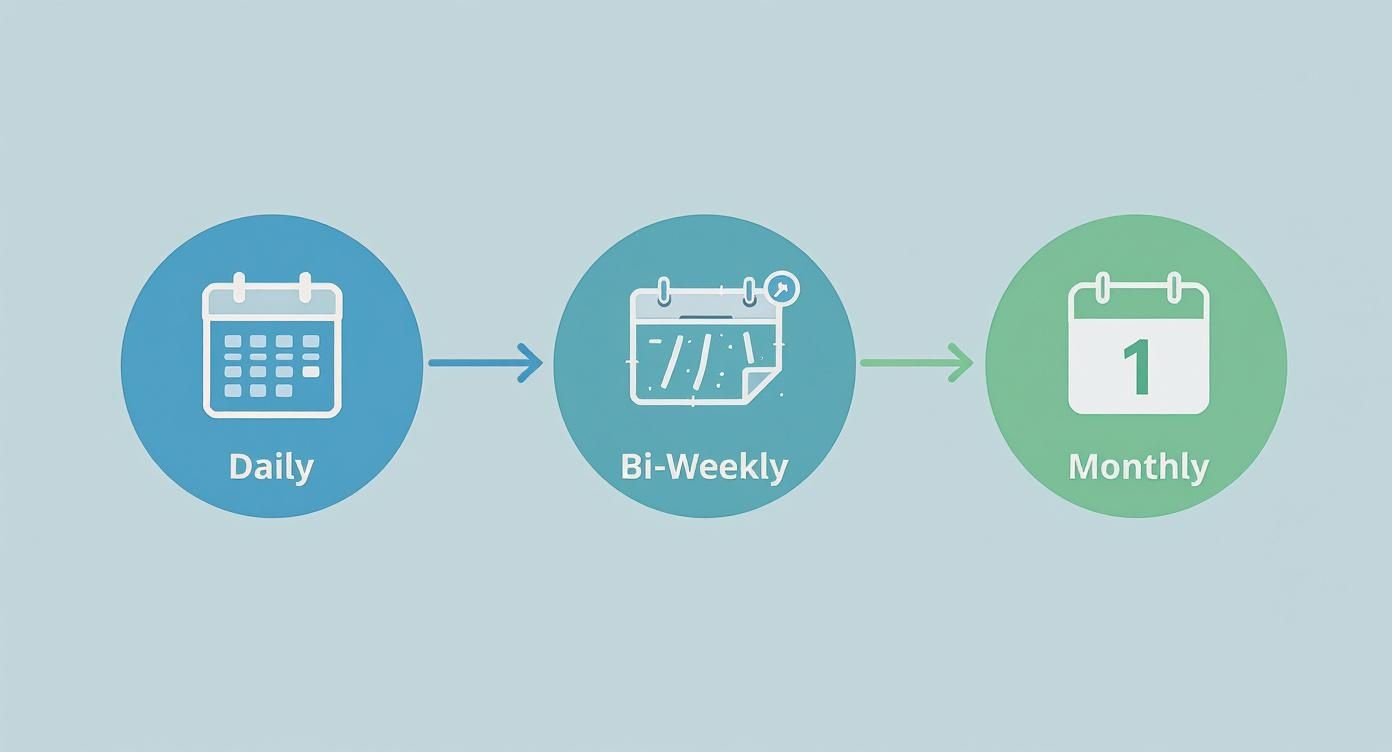
As you can see, if you value convenience above all, daily disposables are a clear winner. If you're more focused on budget, reusable monthlies are the way to go.
Feature Comparison of Top Beginner Contact Lenses
To help you sort through the options, I've put together a simple table that compares these top brands side-by-side from a beginner's point of view. It cuts right to what each lens does best and who it's for.
| Brand & Model | Primary Feature | Material | Replacement Schedule | Ideal Beginner Scenario |
|---|---|---|---|---|
| Acuvue Oasys 1-Day | Ease of handling and balanced comfort | Silicone Hydrogel | Daily | The user who wants a solid, all-around lens that's easy to insert and remove. |
| Dailies Total1 | Ultimate "no-feel" comfort | Water Gradient Silicone Hydrogel | Daily | The user with sensitive eyes or anxiety about feeling the lens. |
| Biofinity | Cost-effective, long-lasting comfort | Silicone Hydrogel | Monthly | The budget-conscious, full-time wearer committed to a daily cleaning routine. |
At the end of the day, your eye doctor will have the final say. They’ll perform a full eye exam and consider your specific prescription and lifestyle to find the perfect fit. That said, the trend toward soft daily disposables is undeniable. Data shows that around 75% of contact lens wearers are happy with the natural feel of their lenses, a huge selling point for first-timers. You can explore more data on North American contact lens market trends to see how preferences are shifting.
Think of this guide as your cheat sheet. It’s here to give you the knowledge you need to have a confident conversation with your optometrist and start your contact lens journey on the right foot.
Getting the Hang of Handling and Caring for Your Lenses
Picking out the right contact lenses is just the first step. The real key to a great experience is getting comfortable with the day-to-day routine of handling and caring for them. Good hygiene isn’t just a recommendation—it's the most critical habit you can form to keep your eyes healthy and your vision sharp. Let’s walk through the essentials, from putting them in to taking them out, so you can build the confidence you need.
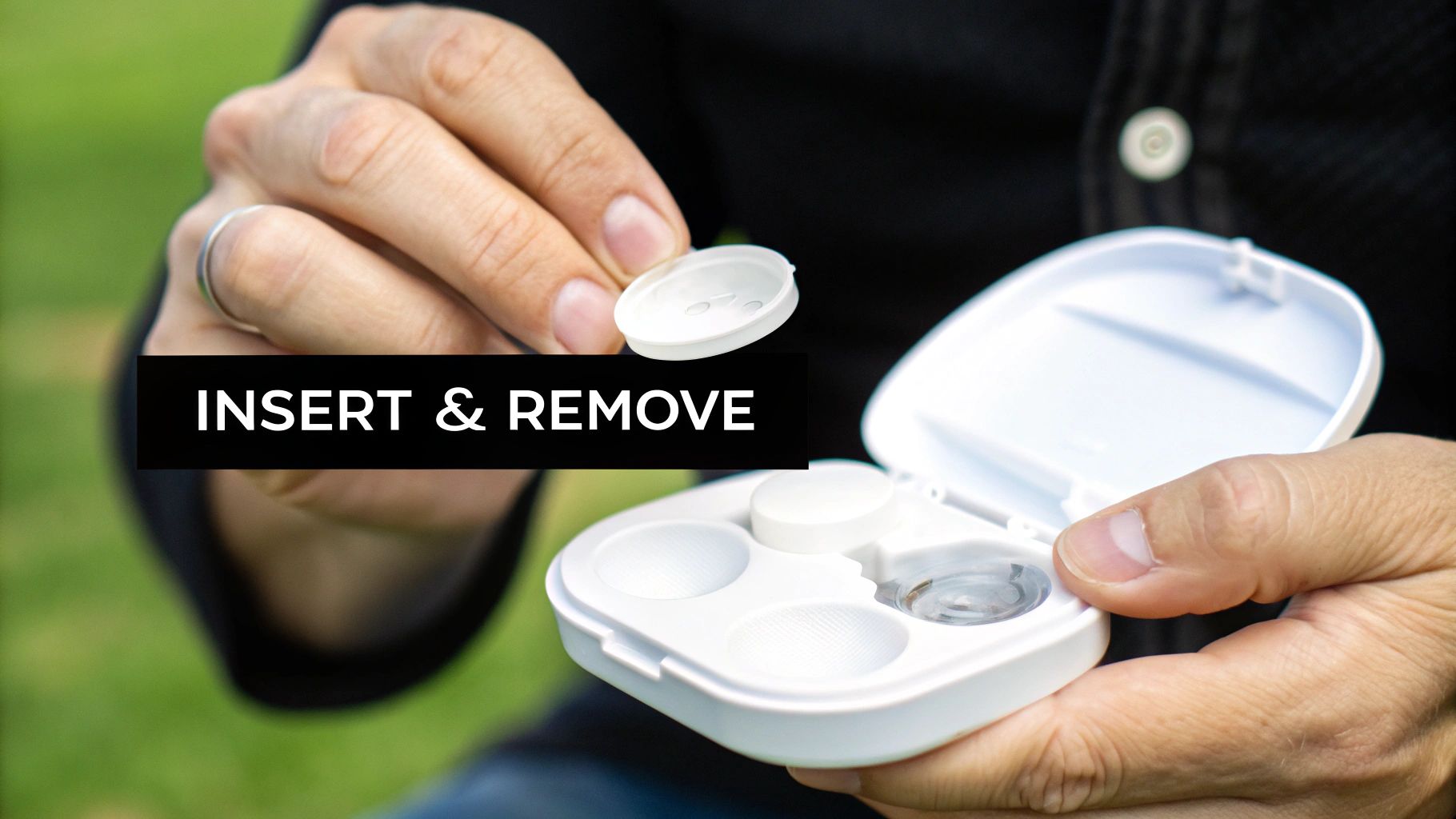
Sure, it can feel a little strange at first, but you'd be surprised how quickly these steps become second nature. The trick is to take a deep breath, be patient, and stick to the same routine every single time.
A Step-by-Step Guide to Inserting Your Lenses
The first time you try to put a contact lens in can feel a bit nerve-wracking, but following a clear process makes all the difference. Before anything else, always wash your hands thoroughly with soap and water. Dry them with a lint-free towel—you don't want any tiny fuzzies getting between you and your lens.
- Prep the Lens: Carefully slide the lens out of its case onto the tip of your index finger. It should sit on your fingertip like a tiny, open bowl.
- Inspect It: Give the lens a quick look to make sure it’s not torn or inside out. When it's right-side up, it has a perfectly smooth, upward-curving edge.
- Open Your Eye: With your other hand, gently hold your upper eyelid up against your brow. Then, use the middle finger of the hand holding the lens to pull your lower eyelid down.
- Place the Lens: Look straight into a mirror and calmly bring the lens to your eye. Gently place it directly on your iris (the colored part).
- Settle In: Let go of your eyelids slowly. Blink a couple of times, and the lens should settle comfortably into place.
If it feels off, don't panic. It might be inside out or have a speck of dust on it. Just take it out, give it a rinse with fresh solution, and try again.
The Taco Test: Your New Best Friend
Figuring out if a lens is inside out is a common hurdle for new wearers. An inverted lens feels scratchy and can make your vision blurry. That’s where the “taco test” saves the day.
Place the lens between your thumb and index finger and give it a gentle squeeze, like you're folding a taco. If the edges point straight up like a hard taco shell, you're good to go. If they flare out, it's inside out.
This little check takes just a second but can prevent a world of irritation. It's a fantastic trick for building confidence and making sure your lenses feel great from the get-go.
Removing Your Lenses Safely
Taking your lenses out at the end of the day is just as important as putting them in correctly. As always, start with clean, dry hands.
- Look Up: Tilt your head down a bit and look up at the ceiling.
- Pull the Lid: Use your middle finger to pull your lower eyelid down.
- Slide and Pinch: With your index finger, slide the lens down onto the white part of your eye. From there, you can gently pinch it between your thumb and index finger to lift it out.
A common fear is that the lens will get stuck behind your eye. The good news? That's physically impossible. A thin membrane called the conjunctiva covers your eye and connects to your eyelids, so there's nowhere for the lens to go.
Cleaning and Storing Reusable Lenses
If you have bi-weekly or monthly lenses, a solid cleaning routine is an absolute must. For a deep dive into the best methods, you can learn all about how to clean contact lenses properly in our guide. The golden rule is to always use fresh solution. Never top off old solution or use tap water, as it can contain nasty microorganisms. Remember to clean your case often and replace it every three months to keep bacteria away. Nailing these habits is what safe, comfortable contact lens wear is all about.
Navigating Common Hiccups for First-Time Users
Even with the best contact lenses for beginners, the first few weeks will feel like a bit of an adjustment period. That's perfectly normal. Running into minor issues as your eyes get used to something new is just part of the process, and knowing how to handle them will make the transition feel much smoother.
Most of these initial hurdles are temporary and have simple fixes. Whether it's a touch of dryness or vision that isn't quite as sharp as you'd like, these are usually just signs that you and your eyes are settling into a new routine.
Let's walk through some of the most common challenges new wearers face and how to troubleshoot them with practical, easy-to-follow solutions.
Addressing Dryness and Irritation
One of the first things you might notice is a feeling of dryness, especially as the day wears on. This is often just a reaction to your environment—things like air conditioning, heating, or staring at a screen for hours can dry out your lenses because you naturally blink less.
The easiest fix? Lubricating rewetting drops made specifically for contact lens wearers. A couple of drops can bring instant relief and rehydrate your lenses. It also helps to make a conscious effort to blink more often when you're focused on a computer.
If the irritation won't go away, it might be more than simple dryness. A tiny piece of lint, a microscopic tear in the lens, or even putting it in inside out can cause real discomfort. Your first move should always be to take the lens out, give it a good rinse with fresh solution, and check it over before trying again.
Handling Blurry or Fluctuating Vision
Don't panic if your vision seems a little blurry now and then. It's another common experience for beginners and rarely means your prescription is wrong. The real cause is usually much simpler.
First, double-check that you haven't mixed up your right and left lenses—it’s an easy mistake to make when you're getting the hang of things. If that’s not it, the lens might have just shifted out of its ideal spot. Blinking a few times is often all it takes to help it slide back into place on your cornea.
For those with astigmatism, toric lenses need to sit at a precise angle on your eye. If they rotate, your vision can get blurry. If this keeps happening, give your eye doctor a call. A different brand might offer a more stable fit for your eye shape.
What to Do If a Lens Feels Stuck
The thought of a lens getting "stuck" in your eye can be intimidating, but it's not what it seems. The lens hasn't gone anywhere it shouldn't; it's just dried out and is clinging to the surface of your eye. The golden rule is to never try to pinch it out forcefully.
Instead, here’s how to safely remove it:
- Wash and dry your hands completely.
- Add several drops of sterile saline or contact lens rewetting drops right into your eye.
- Close your eye and gently massage your eyelid for a few seconds. This helps the moisture work its way under the lens.
- Wait about a minute. The lens should feel loose and movable again, allowing you to take it out like normal.
This is another reason dailies are so often recommended as the best contact lenses for beginners. The growing popularity of daily disposables is largely because they remove handling errors by getting rid of cleaning and storage. Plus, specialized toric and multifocal lenses are now widely available in daily formats, giving new wearers with more complex vision needs convenient choices. You can learn more about the expanding contact lens market and these kinds of innovations.
Ultimately, while these tips can help with most minor bumps in the road, you should never push through persistent pain, redness, or severe blurriness. These could be signs of a more serious issue. Your eye care professional is your best resource—if a problem doesn't go away, stop wearing your lenses and book a follow-up appointment.
Got Questions About Your New Contacts? We've Got Answers.
Jumping into the world of contact lenses is exciting, but it's totally normal to have a bunch of questions pop up. Even after you've nailed the basics of putting them in and taking them out, the day-to-day stuff can bring a few head-scratchers.
We've put together answers to the most common things beginners wonder about. Think of this as your quick guide for those "is this normal?" or "can I do this?" moments.
How Long Until These Feel Normal?
Everyone's experience is a little different, but most people get the hang of new contacts within a couple of days to two weeks. Soft lenses, which are what most newcomers start with, often feel pretty good after just a few hours.
Getting to that "I forgot I'm even wearing them" stage usually takes about a week of consistent use. Your eye doctor will give you a specific schedule, probably starting with a few hours a day and slowly working your way up. This lets your eyes ease into the new sensation.
A quick heads-up: If you feel any sharp pain, serious redness, or discomfort that just won't quit, that's not part of the normal adjustment. Take the lenses out right away and give your eye care professional a call. It could be a sign of a bad fit or another issue that needs attention.
This ramp-up period is key. It allows your corneas to adapt and helps you build up the tolerance for wearing them all day long without a second thought.
Can I Hop in the Shower or Pool with My Contacts In?
This is a big one, and the answer is a hard no. You absolutely should not let your contact lenses come into contact with water—not from the shower, a pool, a hot tub, a lake, or the ocean. This is one of the most important rules for keeping your eyes healthy.
Here’s why: water is teeming with microorganisms. Even tap water contains a nasty little amoeba called Acanthamoeba, which can latch onto your lenses and cause a painful, vision-threatening infection. It’s no joke.
On top of that, soft contacts are like tiny sponges and will absorb water. When they do, they can swell up, change their shape, and stick to your eye like glue. This can be really uncomfortable and even damage your cornea.
If you need to see clearly during water activities, you've got much safer options:
- Prescription swimming goggles: This is hands-down the best and safest way to see while you swim.
- Daily disposables (with a catch): If you're at a water park and have to wear contacts, talk to your doctor about using a fresh pair of dailies. You'd need to wear watertight goggles over them and then toss the lenses the second you're done.
What Do I Do If a Lens Suddenly Feels Scratchy or Wrong?
If a lens starts bugging you, the first thing to do is take it out. Don't try to tough it out—your eyes are telling you something is off.
Once the lens is out, run through this quick checklist:
- Wash your hands with soap and dry them with a towel that doesn't leave lint behind.
- Take a close look at the lens in your palm. Is there an eyelash, a bit of fuzz, or a tiny rip along the edge?
- If you spot some debris, give the lens a good rinse with fresh, sterile contact lens solution. Never, ever use water. Then you can try putting it back in.
- If the lens is torn or nicked, throw it out immediately. A damaged lens can scratch your eye, so it’s not worth the risk. Grab a fresh one.
What if the lens looks perfectly fine but still feels irritating when you put it back in? Take it out, pop on your glasses for the day, and let your eyes rest. If the discomfort, pain, or redness sticks around even after the lens is out, it's time to call your eye doctor.
Is it Actually Safe to Buy My Contact Lenses Online?
Yes, buying contacts online is perfectly safe, but there’s one non-negotiable rule: you must buy from a reputable seller that requires your valid, up-to-date prescription. That prescription is more than just your power; it includes crucial measurements like your base curve (BC) and diameter (DIA) that ensure the lens fits your eye properly and safely.
Buying from sites that don't ask for a prescription is a huge gamble. You could end up with lenses that don't fit, leading to everything from blurry vision and discomfort to serious eye health problems. Legitimate online stores will always verify your prescription with your optometrist. This step is there to protect you and make sure you get the exact medical device that was prescribed for your unique eyes.
At Contact Lens HQ, our mission is to provide you with the most accurate and reliable information to support your vision health journey. For more expert guides and in-depth reviews, explore our resources at https://contactlenshq.com.


